![MaritimeJournal[Seawork]](https://www.maritimejournal.com/wp-content/uploads/2026/09/MaritimeJournalSeawork.svg)

Worlds first green fuel offshore vessel planned
Ørsted and ESVAGT are investing in a green fuel vessel for offshore wind operations
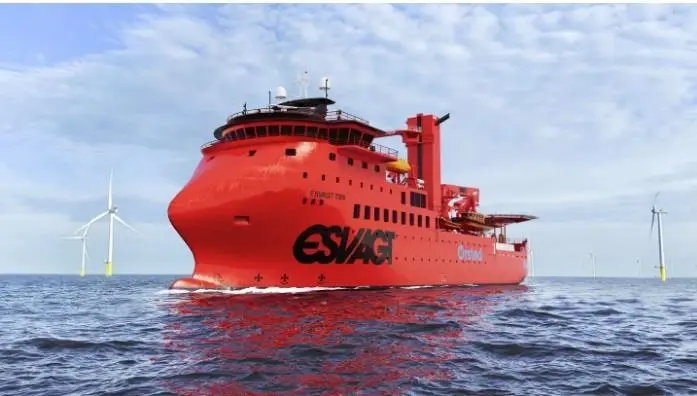
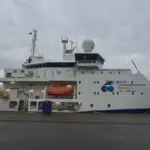
The partnership agreement will see both firms investing in what they call the ‘world’s first’ service operation vessel (SOV) that can operate on green fuel.
”The agreement with ESVAGT checks many boxes for us, as it both helps decarbonise our offshore operations while also demonstrating our strong belief that green fuels based on renewable energy is the most viable solution to create a green maritime sector,” said Mark Porter, head of offshore operations at Ørsted.
Battery powered
The SOV will be powered by batteries and dual fuel engines, capable of sailing on Ørsted supplied renewable e-methanol, produced from wind energy and biogenic carbon. This will lead to a yearly emission reduction of around 4,500 tonnes of CO2.
It is being designed for comfort and high workability, providing a highly efficient workspace and safe transfer of technicians at the windfarm via a motion-compensated gangway and transfer boats, as well as a crane to lift heavy spare parts.
As a floating home, it also offers recreational activities for the on-board crew and technicians, including fitness facilities, a game room, a cinema and individual accommodation. The SOV is also equipped with a helipad for fast access and transfers from shore.
The decision to invest in the new green fuel SOV supports Ørsted’s target of becoming carbon-neutral in its energy generation and own operations by 2025 and its science-based target of reaching net-zero emissions across the full value chain by 2040.
ESVAGT will start building the vessel in the second quarter of 2022. Once commissioned by the end of 2024, the SOV will start servicing the world’s largest offshore wind farm, Hornsea 2, off the UK’s east coast.
Over the past two years, Ørsted has built up a diverse portfolio of green fuel projects, three of which focus on producing e-methanol for maritime transport.
The portfolio includes a newly announced project on the US Gulf Coast, which will supply 300,000 tonnes of e-methanol for A.P. Moller – Maersk’s fleet of zero-emissions vessels, as well as the projects ‘Green Fuels for Denmark’ and FlagshipONE in Sweden. Both projects will be able to supply around 50,000 tonnes of e-methanol for shipping in 2024-2025.