

Maritime technology sector back on the agenda
The Romanian EU Presidency and SEA Europe recently co-organised a meeting with high-level representatives from EU Member States with interests in shipbuilding and maritime equipment manufacturing.
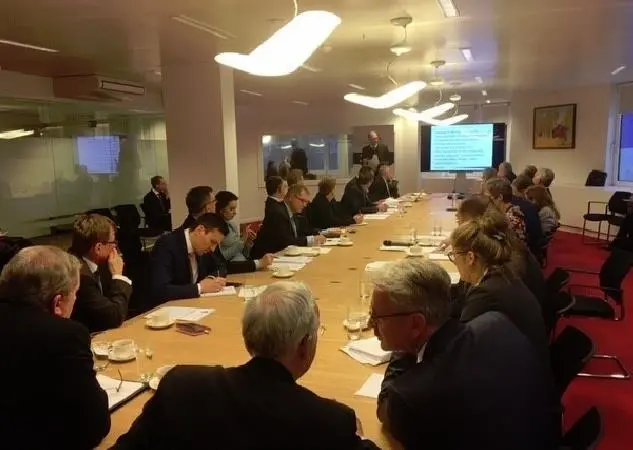
“This meeting allowed the maritime technology sector to raise political awareness of EU and national decision-makers on the challenges, needs, threats and opportunities of Europe’s shipyards and maritime equipment manufacturers. The meeting also enabled the participants to reflect on possible future political actions and policies in support of the maritime technology sector”, said Christophe Tytgat, SEA Europe’s Secretary General.
“The maritime technology sector is strategic for Europe in terms of value chain, value creation, job creation, security and defence”, Mr. Tytgat added. “Europe’s shipyards are global leaders in the building of complex ship types and structures and Europe’s maritime equipment manufacturers are global leaders in the production of (advanced) maritime equipment, systems and technologies. Europe, therefore, has a keen interest to recognize the economic and strategic importance of its maritime technology industry and to take actions in support of the sector to cope with its many global and societal challenges.”
Europe’s shipyards and maritime equipment manufacturers can furthermore play a key role in implementing Europe’s Blue Economy agenda. To do so, Europe’s maritime technology sector will need to make significant investments in research, development and innovation and with the financial support from EU programmes like Horizon Europe and others, the sector will not only be able to cope with its societal challenges but also be able to remain at the forefront of innovative shipbuilding and maritime equipment manufacturing.
“Europe cannot afford not to support its shipyards and maritime equipment manufacturers. This time, another political failure to support the maritime technology sector in Europe will no doubt result in significant economic and job losses and may ultimately lead to a disappearance of a strategic industry for Europe”, Mr. Tytgat warned.
By Jake Frith
Related Articles
 ACCESSORIES & EQUIPMENT
 MARINE CONSTRUCTION
 POWER & PROPULSION