


Another milestone in our collaboration


A winning team
Equipping a record-breaking pipelay vessel
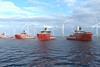
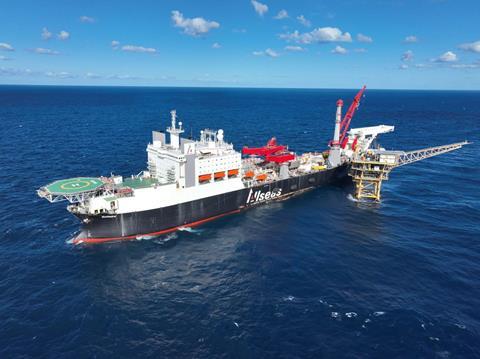
Allseas has equipped its record-breaking vessel, Solitaire, with a Next Ocean system, further strengthening the partnership between our companies. The installation represents an important step in the ongoing adoption of real-time wave and vessel motion prediction across the Allseas fleet.
Following the successful integration of our system on board Pioneering Spirit, the world’s largest construction vessel, this new deployment underscores Allseas’ ongoing commitment to innovation, safety and operational excellence in offshore construction.
Why Allseas chose Next Ocean
Clear insight, safer operations
Allseas selected Next Ocean for its proven capability to provide reliable, real-time predictions of motions, using the radar systems already installed on board. The solution integrates with existing bridge equipment and delivers clear, intuitive insights to operational teams.
With Next Ocean’s technology, Allseas strengthens both safety and efficiency across its offshore fleet. The system empowers crews to anticipate conditions, minimize downtime and execute complex operations with increased reliability. This supports Allseas’ ongoing commitment to innovation and operational excellence at sea.
Quick installation, ready for action
Predicting motion, protecting people
The Next Ocean system was installed on the pipelay vessel Solitaire with minimal disruption to ongoing pilot operations.
Using the vessel’s existing radar meant no additional sensors or structural modifications were required. Pilots and crew were quickly trained to interpret and act on the motion predictions, allowing them to benefit from the system immediately.
More uptime. Safer decisions.
Turning radar scans into safer operations
With Next Ocean on board the vessel, pilots can operate safely in a wider range of conditions. Real-time motion predictions help the crew identify safe moments for critical transfers, even in challenging sea states. The result: more operational days and better use of each weather window.