![MaritimeJournal[Seawork]](https://www.maritimejournal.com/wp-content/uploads/2026/09/MaritimeJournalSeawork.svg)



Enhanced life-saving equipment on show at Seawork
ACR Electronics and Ocean Signal will be promoting the enhanced benefits of their leading range of EPIRBs and PLBs enabled by a next generation satellite system.
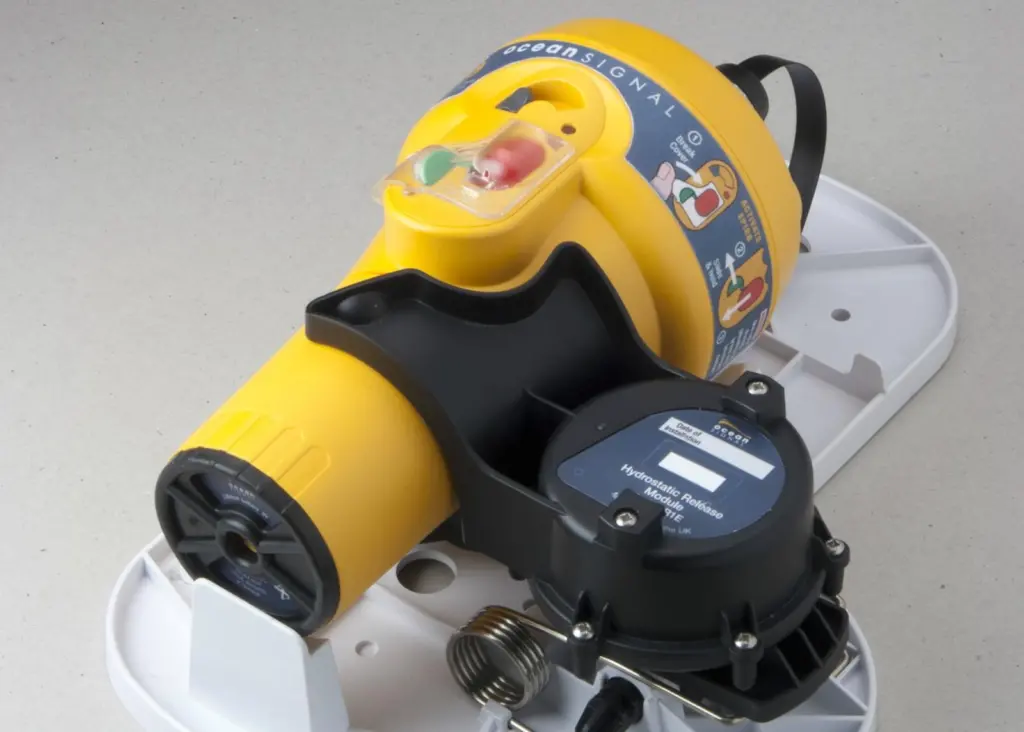
The life-saving capabilities of the companies distress beacons, including their Category 1 automatically-deployed, float-free EPIRBs, have been significantly enhanced by the Cospas-Sarsat’s next-generation Medium-Earth Orbit Search and Rescue (MEOSAR) system.
“As the representative of beacon manufacturers within the Cospas-Sarsat community, we work closely with companies like ACR and Ocean Signal to ensure that the needs of end users are taken into account when developing these new systems and enhancements,” said Chris Hoffman, Chairman of the Radio Technical Commission for Maritime Services (RTCM).
“The new MEOSAR network is poised to have a huge impact on search and rescue and will ultimately result in more lives saved.”
Increased safety
All ACR Electronics and Ocean Signal beacons, including the ACR GlobalFIX V4 and GlobalFIX Pro and iPro EPIRBs, the ACR ResQLink PLBs, plus the Ocean Signal SafeSea E100 and E100G EPIRBs, rescueME EPIRB1 and rescueME PLB1, are compatible with the next-gen satellites.
This means that they will offer much faster signal detection, greater location accuracy, strengthened coverage and greater reliability to improve alerting times for distress beacon owners in emergency situations.
Estimates indicate that when using the next-gen network, anyone activating a GPS-enabled ACR or Ocean Signal EPIRB or PLB can expect their beacon to be located within 100 metres (328 feet) 95% of the time, within five minutes of the distress signal instead of taking up to the one to two hours typical with the current LEOSAR and GEOSAR system.
Visit ACR Electronics and Ocean Signal on Stand PY67 at Seawork International.
By Anne-Marie Causer
Related Articles
 ACCESSORIES & EQUIPMENT
 ACCESSORIES & EQUIPMENT
 ACCESSORIES & EQUIPMENT