![MaritimeJournal[Seawork]](https://www.maritimejournal.com/wp-content/uploads/2026/09/MaritimeJournalSeawork.svg)






CEDA publishes AM position paper
The Netherlands based Central Dredging Association (CEDA) has published a new paper which aims to further the debate on Adaptive Management (AM) as an important tool in managing dredging and reclamation projects in an environmentally friendly manner.
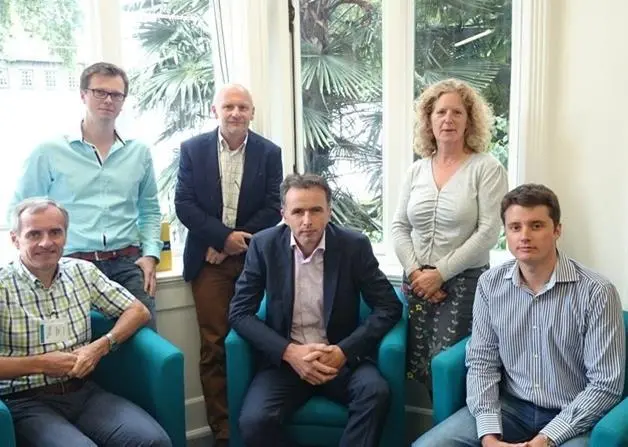
The paper, ‘Integrating Adaptive Environmental Management into Dredging Projects’, has been prepared by the CEDA Working Group on Adaptive Management under the remit of the CEDA Environment Commission.
According to the paper itself, AM is a decision framework that facilitates flexible
decision-making that can be refined in response to future uncertainties, as outcomes from current and future management actions become better understood. Adaptive management typically involves developing and implementing a management plan that defines the project goals, reviewing progress towards those goals periodically, and, in response to the outcomes of (environmental) monitoring, implementing corrective actions (and refining the plan), as needed, in future.
AM is a formal process, with specifically agreed upon steps to deal with uncertainties. AM in dredging projects prescribes a process wherein management actions can be changed in response to monitored system response, so as to maximise efficiency while maintaining or achieving a good ecological state.
Chairman of the working group, Gerard van Raalte said: “We encourage all stakeholders in this field to carefully look at the opportunities presented by adaptive management, as an alternative to applying the precautionary principle which may lead to inefficient use of resources without delivering environmental gain.
“The position paper is the product of an experienced group of individuals, representing a broad cross section of the industry, from agencies, project owners, and environmental consultants, to contractors. Together, with our vast pool of experience and expertise, we were able to bring together and present the latest knowledge in the application of Adaptive Management.
Even within the Working Group we experienced that working with people from various disciplines, in an open dialogue, is a very fruitful way of achieving a common goal. This is a prerequisite for successfully applying Adaptive Management in dredging and reclamation projects.”
CEDA/WEDA members who volunteered their time and expertise include Mr van Raalte (Boskalis / Hydronamic – Netherlands) who served as Chairman, Chris Adnitt (Royal Haskoning DHV – UK), Marijn Huijsmans (Witteveen+Bos – Netherlands), John Kirkpatrick (HR Wallingford – UK), Ram Mohan (Anchor QEA, LLC – USA), Marcel Van Parys (Jan De Nul – Belgium), Henrich Röper (Hamburg Port Authority – Germany) and Craig Vogt (Craig Vogt Inc – USA).
The position paper can be downloaded from the from the Resources section of the CEDA website under CEDA position paper: Integrating adaptive environmental management into dredging projects.
‘Integrating Adaptive Environmental Management into Dredging Projects’ has been prepared in conjunction with the soon to be published CEDA information paper ‘Environmental Monitoring Procedures’. The activities of the two working groups have been closely harmonized because of the clear interaction and connections between the two subjects. AM is heavily dependent on good monitoring while environmental monitoring itself can be done in an adaptive manner.
By Larz Bourne