![MaritimeJournal[Seawork]](https://www.maritimejournal.com/wp-content/uploads/2026/09/MaritimeJournalSeawork.svg)





Dutch launch new CSD for Panama Canal
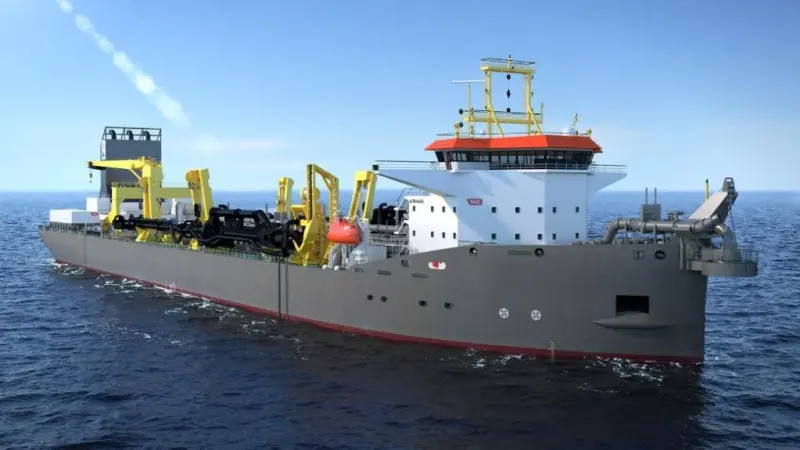
A new custom built cutter suction dredger destined for the Panama Canal was launched at IHC Merwede’s Sliedrecht yard in the Netherlands last week.
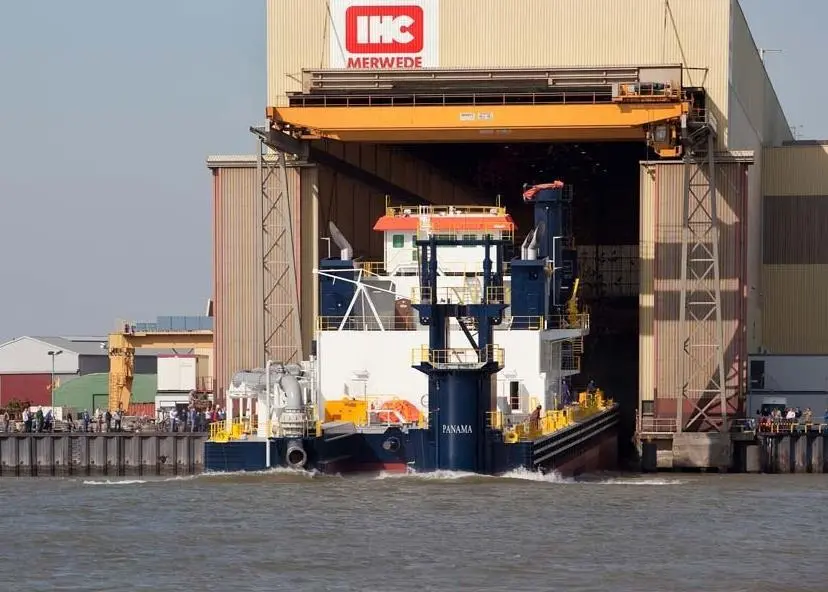
The 12,000kW vessel was designed and built by IHC Beaver Dredgers for the Panama Canal Authority (ACP), the Panama Government’s autonomous agency.
Quibian I was named and launched before invited guests and will be delivered to ACP in April 2011, within the schedule agreed when the contract was signed in March 2008. The cutter suction dredger will work on the Panama Canal’s ongoing expansion programme in the run up to its centenary in 2014. After this notable historic landmark, it will continue to be used for ongoing maintenance work and future modernisation projects.
The new addition to ACP’s fleet will have the capacity to dredge along the entire 80km shipping route that joins the Pacific Ocean to the Atlantic Ocean. Quibian I has the capacity to achieve high outputs at a relatively low cost. It can work to a depth of 25m and under the challenging conditions it will encounter on the Canal.
The vessel has been equipped with the latest dredging technology, including rock cutting capabilities. Other features include an electrically driven cutter and winches for dredging hard soils; Cutter Special pumps, which combine a large spherical passage with high efficiency and suction performance; and three dredge pumps (one submerged and single walled, and two onboard and double walled) with identical wear parts. The engine rooms and onboard pumps are on the main deck level for easy access and wear resistant material protects onboard pipelines. There is heavily insulated daytime accommodation, which along with engine watch and dredge control rooms are placed on vibration dampers to improved the crew’s comfort levels. Special equipment ensures minimal impact on the environment and there are also special provisions to ensure safe operation with regard to the heavy traffic in the Canal.
The total estimated cost of the Panama Canal expansion project is $5.25bn and it is designed to allow for an anticipated 65% growth in traffic tonnage by 2025. A number of major improvements include the widening and straightening of the Gaillard Cut (the narrowest stretch); the deepening of the navigational channel in Gatun Lake and the Atlantic and Pacific entrances to the Canal; and the addition of new locks to handle the size of the post-Panamax (the size limit for ships in the Canal) vessels. Annual traffic has risen from around 1,000 ships in the Canal’s early days to 14,342 vessels in 2009. Increasing volumes of imports from Asia, which previously landed on the American west coast, are now passing through the canal to the east coast. This has been coupled with a steady rise in average ship size and in the number of Panamax vessels passing through.
The total tonnage carried has risen by more than 35% overall in the past decade. This represents considerable growth in capacity and the Canal is positioned to be an important feature of world shipping for the foreseeable future. However, variations in shipping patterns, particularly the increasing numbers of post-Panamax ships, will necessitate changes if it is to retain a significant market share. Almost half of transiting vessels are already using the full width of the locks and it is anticipated that 37% of the world’s container ships will be too large for the present Canal by 2011.