![MaritimeJournal[Seawork]](https://www.maritimejournal.com/wp-content/uploads/2026/09/MaritimeJournalSeawork.svg)






JWP completes major land reclamation
One of the biggest land reclamation and dredging projects in German port history officially ended with the inauguration last Friday of first phase operation at the €1bn JadeWeser Port (JWP) container terminal in Wilhelmshaven.
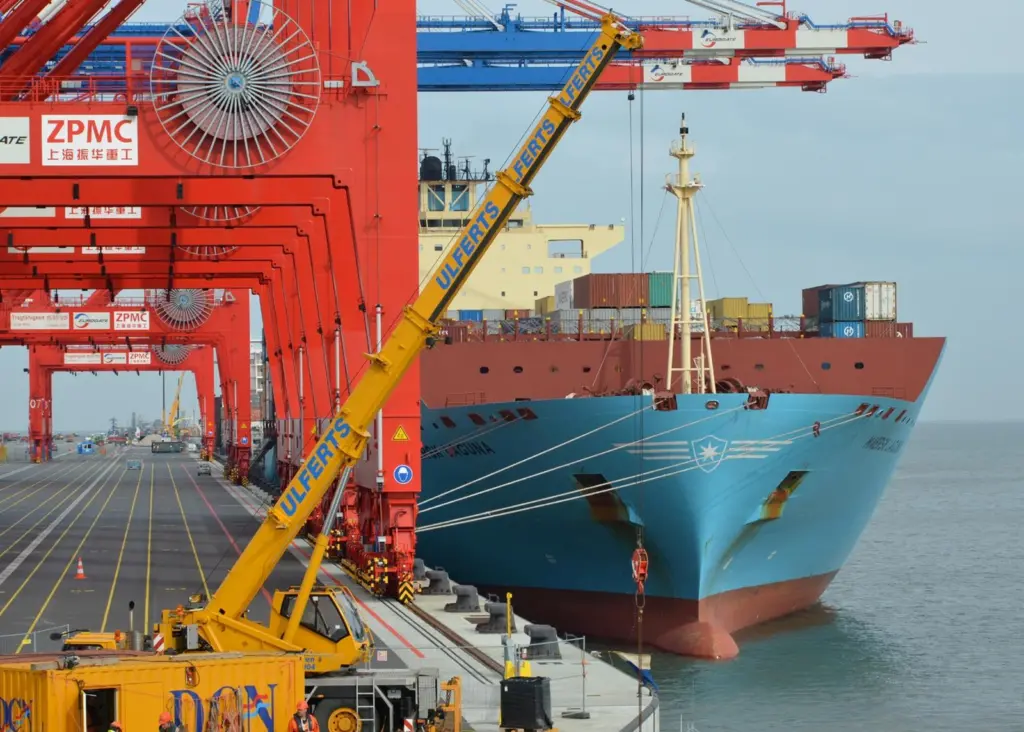
The JWP, which is Germany’s future deepwater answer to Rotterdam, went into two berth operation for operator Eurogate (70%), which guarantees 640,000 TEUs in the first year, and Maersk (30%). It has taken more than a decade to plan and build.
The first official caller was the 7,500 TEU Maersk Laguna. However, four days earlier Maersk’s 2500 TEU feeder Anna Schulte offloaded 553 empty containers and other ships have called this year to test equipment and new facilities.
JWP spokeswoman Susanne Thomas told Maritime Journal that since fill-in and dredging began in May 2008 46m m3 of sand had been fed via a 4 km long pipeline into the now 360 hectare site. She said the sand had been dredged from three extraction sites in the Jade Estuary, north and south of the terminal and in the Jade approach channel itself.
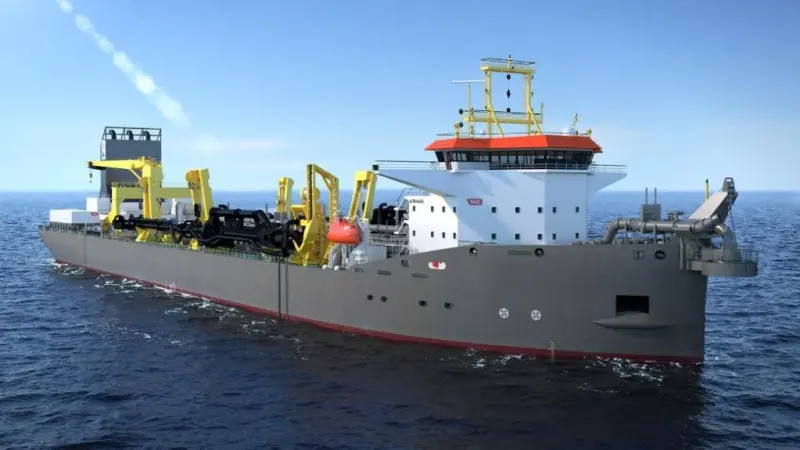
Responsible were the construction firms Möbius in Hamburg and Johann Bunte in Papenburg, both members of the terminal construction consortium. A fleet of big dredging units and specialist workboats was involved. They included the most modern and efficient cutter suction dredger built in Germany, Bunte’s €20m Pirat X. With an installed power of 7,000 kW, the 104m LOA 16.8m wide unit boasts three pumps and moves 12,000 m3 of water and sand an hour at depths to 50m.
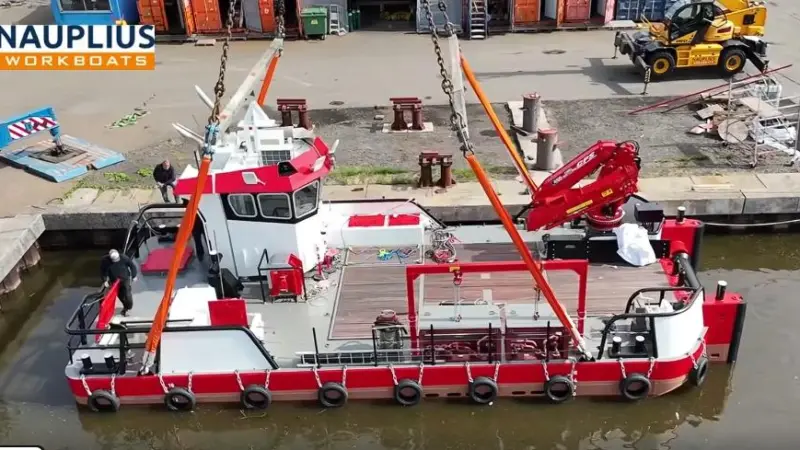
The specialist workboats involved in the operation included the 21.6m by 9m Acta Marine multicats Coastal HunterandCoastal Warrior, both of 1,215hp output and carrying 140 t/m deck cranes.
The inauguration of the JWP was more than six weeks behind schedule. It was held up by construction faults involving anchor bolts and discovered along the first 1,000m of the JWP’s total 1,725m quayside. The faults have now been rectified by means of a second quay wall built since the summer immediately in front of the one found faulty.
However, as late as just two weeks before the delayed opening, flaking concrete was reported in the newly created chambers between the two quay walls. JWP managing director Axel Kluth told Maritime Journal, “It’s no big deal. It has not affected the port’s usability and has not had the slightest effect whatsoever on the stability of the quay.”
Built on 18m of water the JWP, when fully operational in a year’s time, will boast four berths and 16 portal cranes for container ships of 430m LOA, independent of tide. It will do what Bremerhaven and Hamburg will never be able to do satisfactorily and provide a deepwater German port alternative to Rotterdam for fully-laden mega boxships.
By Tom Todd