![MaritimeJournal[Seawork]](https://www.maritimejournal.com/wp-content/uploads/2026/09/MaritimeJournalSeawork.svg)


Sinking dredger salved off UK coast
The Netherlands based salvage specialist Multraship Salvage successfully salved a sinking dredger off the coast of Kent in the UK last month.
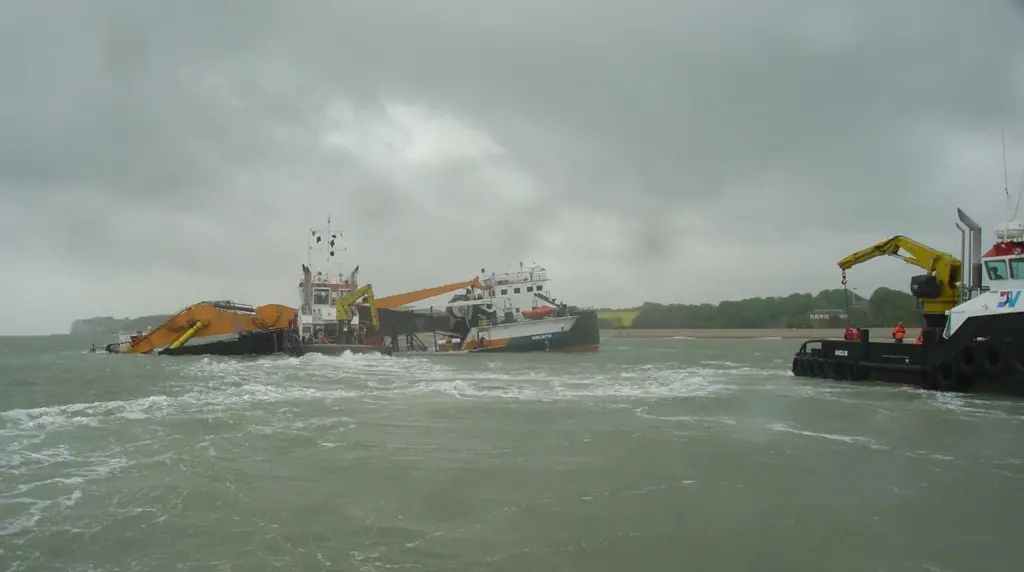
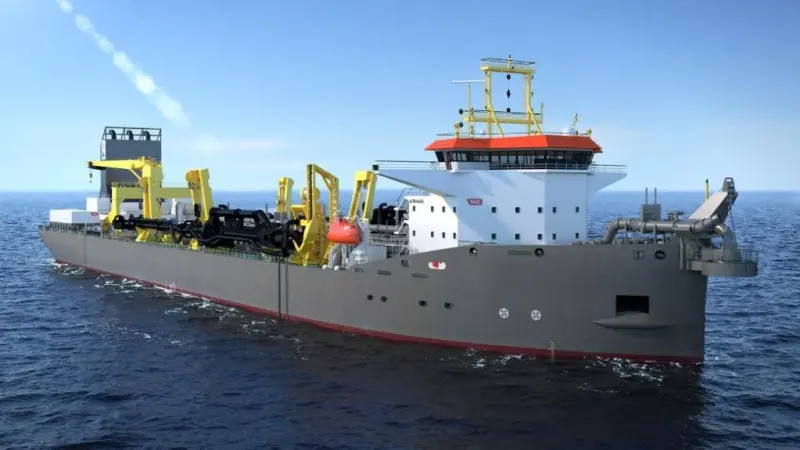
The newbuild VanOord dipper dredger
Goliath
is the largest hydraulic dredger in the world. It has now been towed to the Van Oord yard at Moerdijk, where it was christened in January, for further inspection. The Backacter 1100 features three spuds on a 67m pontoon, can be fitted with buckets of up to 40 m³ capacity, and dredge to depths of 26m. Total installed power is 5,000hp.
The Goliath was under tow from the Netherlands to work at Killybegs in Ireland by the SeaContractors tug ‘Sea Alfa’ when it began taking on water and sinking off the Kent coast last Friday. The MCA’s counter-pollution team was alerted, as was the ETV ‘Anglian Monarch’.
Multraship salvage specialists were called in and advised the tug master to beach the dredger on a beach between Deal and Kingsdown on the Kent coast to prevent the vessel sinking. Sea Alfa manoeuvred the dredger onto the beach near Walmer Castle, securing it with 30m lines and allowing an incoming tide to lift it onto the beach.
A full salvage spread was then mobilised by Multraship on the tug Viking and by helicopter from Nieuwpoort. Working on site with the added assistance of fast response craft Multraship Responder, salvage divers conducted a thorough inspection. The sources of water ingress on both sides and via one vent cover were established and sealed. The vessel was then pumped out, refloated and after a full diving inspection towed to Holland.
The Goliath was unmanned and had 130 tons of fuel oil aboard. There were no casualties and, as apparently no tanks had ruptured, no spillages.
Leendert Muller, managing director of Multraship said, ‘We worked closely with the UK SOSREP organisation and the MCA on this job, and we are pleased that the liaison went very smoothly and we were able to beach the craft to avoid the more difficult salvage, greater damage and potential pollution that would have occurred had it sunk out at sea.’