![MaritimeJournal[Seawork]](https://www.maritimejournal.com/wp-content/uploads/2026/09/MaritimeJournalSeawork.svg)




BP joint venture commissions hydrogen facility for CTVs
JERA Nex BP has commissioned a hydrogen bunkering facility in the Port of Ostend ‘to fill a critical gap in the flow of green hydrogen from production to maritime users’.
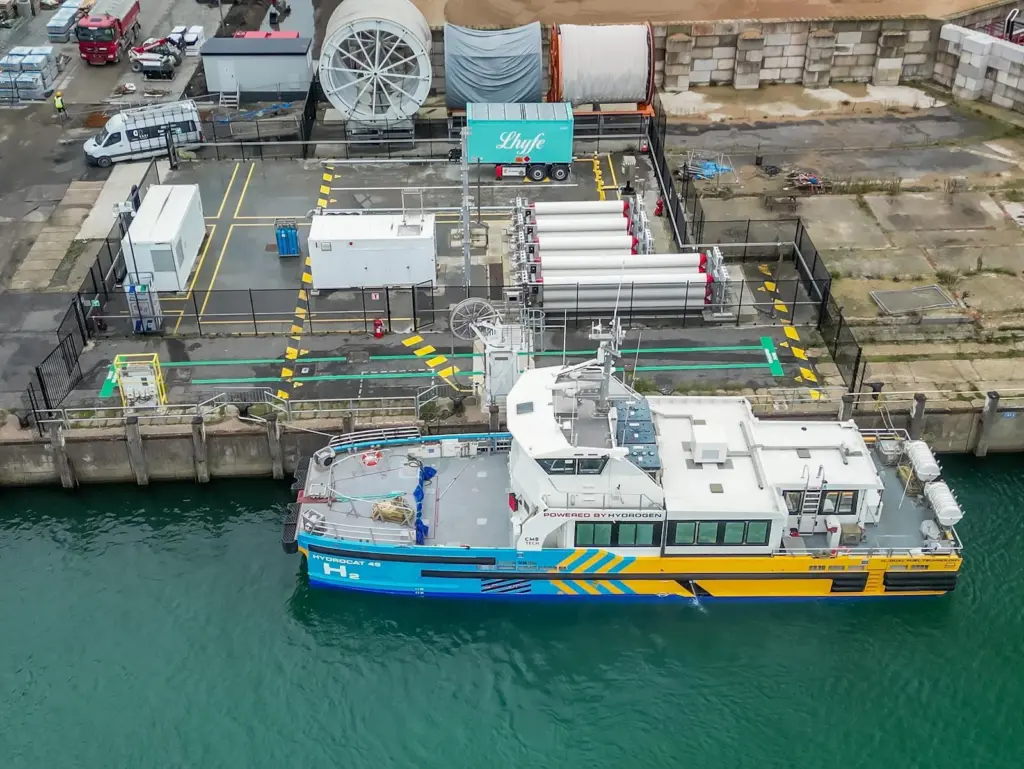
The joint venture, which was formed by oil major BP and the largest Japanese power generation firm JERA Nex, says it has fully commissioned the Ostend Hydrogen Refuelling Station into ‘an operational state’, it says.
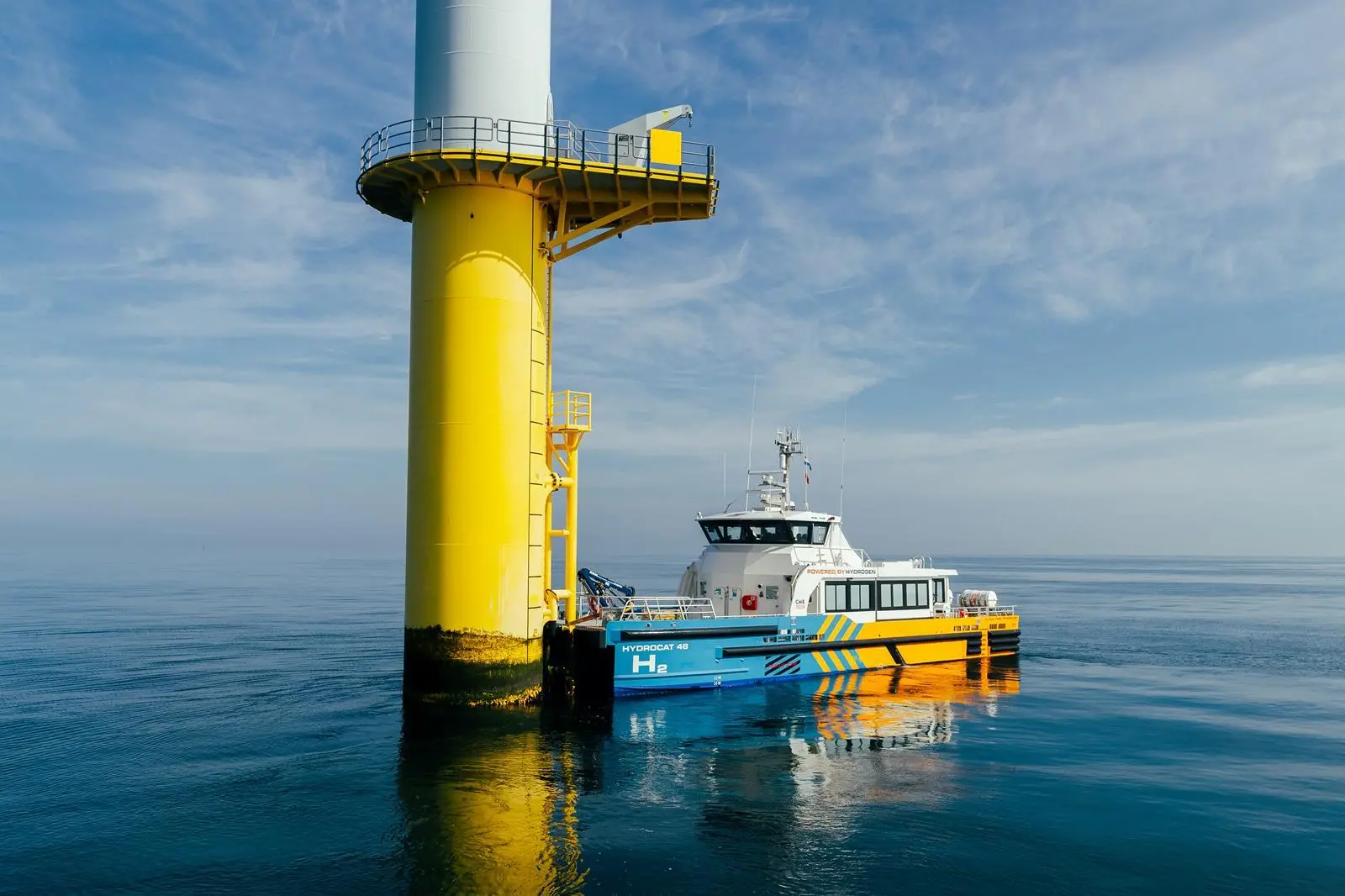
It will initially fuel one hydrogen-powered Crew Transfer Vessel, Windcat Workboats’ Hydrocat 48, though the JV says it has enough capacity to fuel several vessels a day.
The hydrogen is produced from ‘renewable electricity in France and Germany’ supplied by Lhyfe, a French company that produces green hydrogen.
More than 10 partners developed and demonstrated the facility, coordinated by the Port of Ostend, with Haskel leading the construction, head of global Operations & Maintenance with the JV Kristof Verlinden said.
Haskel specialises in equipment designed to generate and handle high-pressure fluids and gases.
“Research and innovation are at the heart of how we approach the full life cycle of offshore wind projects,” said Verlinden. “By investing in projects like this, we’re accelerating the shift toward cleaner, smarter offshore operations and proving that sustainability and performance can go hand in hand.”
“With this hydrogen station, the Port of Ostend reinforces its ambition to lead the way in the decarbonisation of the maritime sector. By embracing innovative technologies and strong partnerships with international players such as JERA Nex bp, we’re building a future-ready port. One that unites energy, innovation, and sustainability.” said Charlotte Verkeyn, First Alderman of the City of Ostend.
The first dual-fuel hydrogen-diesel CTV was launched by Windcat Workboats and CMB.Tech in May 2022. At the same time it announced an order of a further six hydrogen-powered vessels.
No fundamental changes to the engine are needed, making maintenance and repair simple and also allowing the vessel to be switched back to diesel when hydrogen is not available as a fuel – which it often isn’t, and which the JERA Nex BP joint venture is aiming to address.
While producing hydrogen for offshore wind vessels, BP has also announced six new major oil and gas projects being brought on line, adding 150,000 barrels of oil equivalent a day.
“With four more major projects planned through 2027, bp is building on this year’s momentum, and applying the same focus and teamwork to deliver these future projects,” the company said in its newsletter today.
Related Articles
 FEATURES & VIDEOS
 ENVIRONMENT
 OTHER NEWS