![MaritimeJournal[Seawork]](https://www.maritimejournal.com/wp-content/uploads/2026/09/MaritimeJournalSeawork.svg)

Coalition seeks offshore charging framework
An industry coalition is urging UK authorities to establish a clear framework to accelerate offshore wind vessel electrification and decarbonise offshore vessel operations.
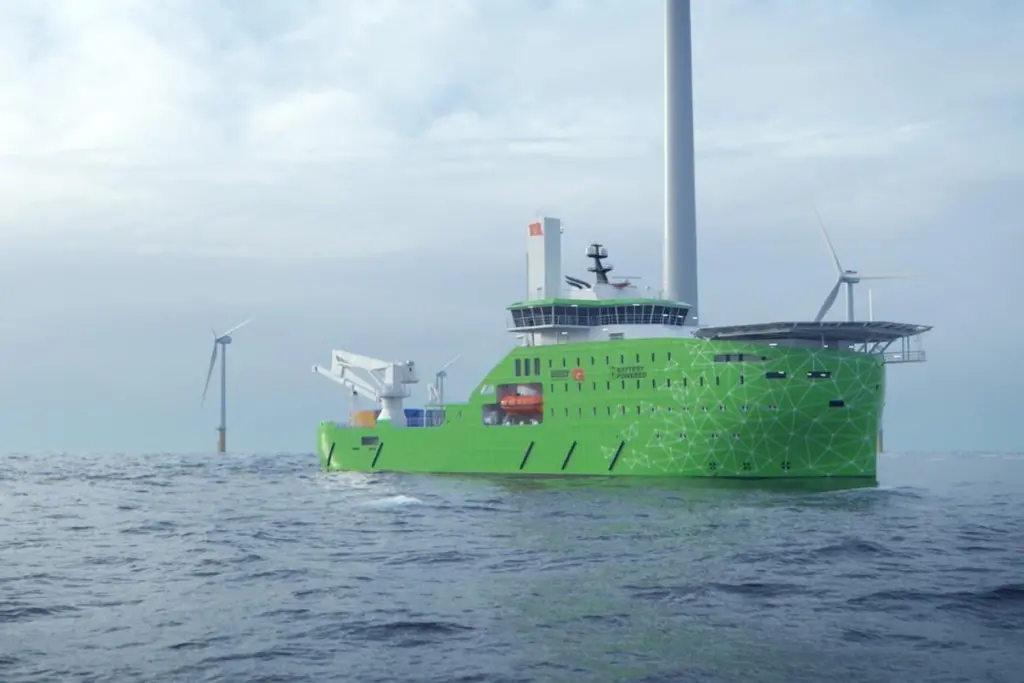
The Offshore Charging Working Group, representing stakeholders across the offshore wind and maritime value chain, is targeting barriers that limit the electrification of service operation vessels (SOVs) and crew transfer vessels (CTVs).
“Technology is no longer the limiting factor. What industry needs now is clear, practical guidance from authorities to enable offshore charging to move from concept to delivery,” said Øystein Huglen, representing Maritime CleanTech in the working group.
Early engagement
By engaging regulators and developers early, the group aims to secure design allowances, commercial clarity and reliable access to offshore power to enable routine charging at sea and support zero-emission offshore wind maintenance activities.
The coalition has identified early design consideration and commercial certainty around offshore charging access as the most significant unresolved issues.
Specifically, it is calling for defined provisions during front-end engineering and design (FEED), transparent pricing treatment under the Contracts for Difference (CfD) scheme and guaranteed physical connections to offshore charging infrastructure within wind farms.
The Offshore Charging Working Group argues that industry readiness for vessel electrification is advancing quickly. It argues that electric CTVs and SOVs are increasingly viable, provided operators can rely on predictable policy, infrastructure and commercial frameworks.
It said it is already engaging The Crown Estate, the UK Department for Energy Security and Net Zero and the Low Carbon Contracts Company to align regulatory and market mechanisms with deployment needs.
The group includes ORE Catapult, NOF, Norwegian Offshore Wind, Seaonics, MJR Power & Automation, Stillstrom by Maersk, Maritime Cleantech, Bibby Marine and Tidal Transit.
Related Articles
 FEATURES & VIDEOS
 ENVIRONMENT
 OTHER NEWS