![MaritimeJournal[Seawork]](https://www.maritimejournal.com/wp-content/uploads/2026/09/MaritimeJournalSeawork.svg)




Decarbonising smaller vessels: UK calls for evidence
As the UK government prepares to put emissions penalties on vessels below 400GT for the first time, it has issued a call for evidence (CfE) to help it decide how, when and how much.
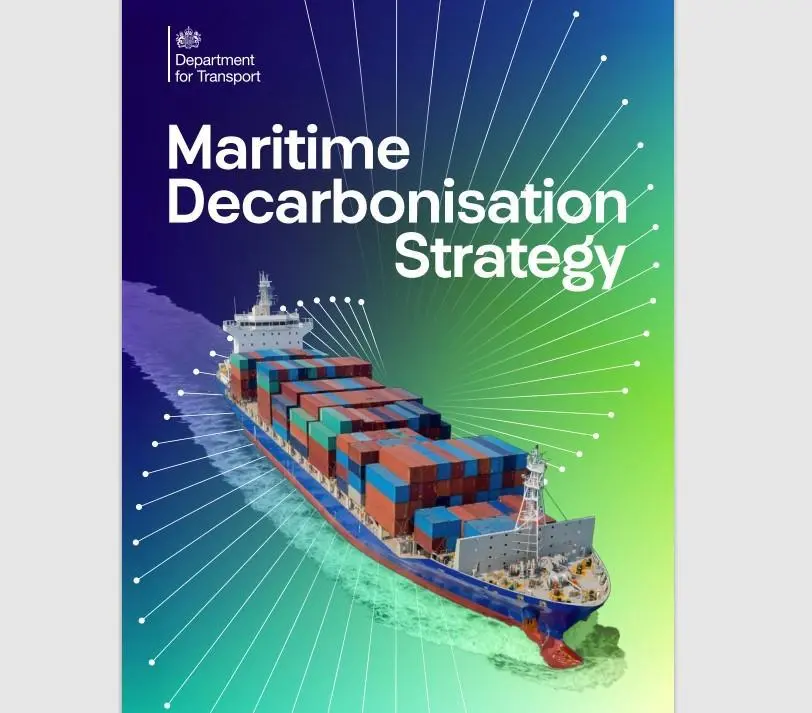
Setting out plans to achieve ‘net zero fuel lifecycle greenhouse gas emissions by 2050’ in the domestic maritime industry, the Department for Transport has published a Maritime Decarbonisation Strategy, available in full here.
In it, the paper acknowledges that to date, the government’s fuels regulation and emissions pricing policies do not cover vessels below 400GT, and that this is something it intends to address.
“Informed by our call for evidence and stakeholder engagement, we will develop proportionate measures to reduce emissions from smaller vessels, and to accelerate the uptake of zero and near-zero GHG emission fuels and technologies where there are clear technological pathways, subject to formal consultation from 2026 in some areas,” the strategy says.
With the government’s legally binding target of reaching net zero emissions across all sectors by 2050, the shipping industry is going to have its work cut out.
Larger vessels (initially over 5,000GT but now below that) already have to monitor their emissions with Automated Identification Systems transponders.
”A key challenge for the sub-sector is the relative lack of emissions data as currently only vessels of 300GT or above are required to have AIS transponders,” the report says. “This CfE will help plug this evidence gap to develop effective and impactful policies.”
Exceptions
The government recognises certain sectors that may be able to move more quickly in emissions reduction than others depending on its operations.
“For example, vessels that operate close to shore may be able to reduce their emissions more easily as there is more frequent access to refuelling and/or charging infrastructure.
“However, we recognise that there will be exceptions,” it says.
The vessels it has identified as having ‘a clear route to decarbonisation’ are those with short duty cycles; regular opportunity to recharge; and space on board for sufficientg battery or hydrogen storage.
Those that have ’an unclear pathway to reducing emissions’ include oil and gas vessels; deep-sea tugs; pilot boats; pipe/cable layers; research vessels; salvage vessels; light ships and fishing vessels.
“Gathering evidence on individual sub-sectors is an important first step and does not mean these sub-sectors will necessarily be impacted by future policy,” the call out says.
There are just seven questions in the call for evidence. The questions and how to respond is all here.
Related Articles
 FEATURES & VIDEOS
 ENVIRONMENT
 OTHER NEWS