![MaritimeJournal[Seawork]](https://www.maritimejournal.com/wp-content/uploads/2026/09/MaritimeJournalSeawork.svg)





UK port on track for net-zero
The Port of Heysham has reduced the carbon emissions of its landside plant, equipment and vehicles by up to 90%, in what is believed to be a first for any UK port.
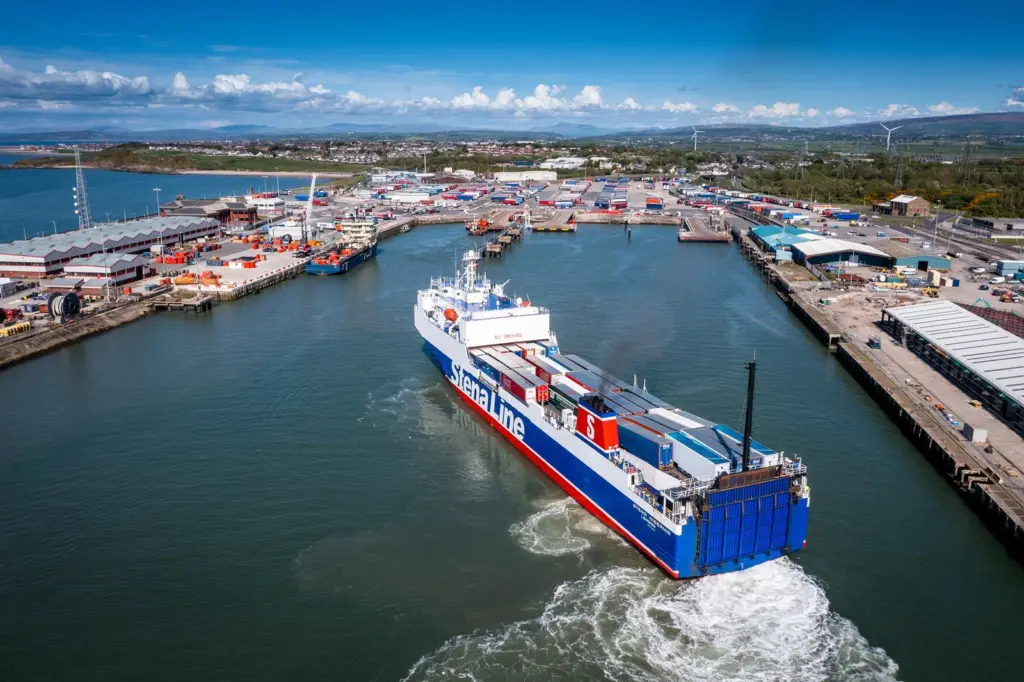
The port has confirmed all its vehicles, plant equipment, forklift trucks, tug masters and ancillary equipment are now operating on either electricity or hydrotreated vegetable oil (HVO).
“We are transitioning our entire vehicle fleet and landside equipment to run on either electric or HVO in our drive to become net zero across the group by 2040,” said Lewis McIntyre, managing director, port services at Peel Ports Group, which runs operations at the port.
Located in the North West of England, close to major industrial clusters, the Port of Heysham provides a direct gateway to the Republic of Ireland, Northern Ireland and the Isle of Man. The port handles a wide range of cargo including RoRo, agri-bulks, automotive, project cargo and energy products.
“Heysham requires less machinery and equipment in its operations compared to some of our larger ports,” continued McIntyre. “This means we’ve been able to reduce emissions much faster as part our conversion plans.
“We are confident that once we convert the rest of the equipment and transition from gas in our onsite office, Heysham will become one of the first UK ports to become 100% carbon neutral.”
Peel Ports’ ultimate goal is to use 100% renewable energy across its ports but until this is possible HVO is a useful interim fuel, reducing CO2 emissions by up to 90% and particulate matter by up to 65%.
““While HVO as a transition fuel offers a significant improvement, we are working with manufacturers and suppliers to explore longer-term solutions for the next generation of landside equipment,” said McIntyre.
Related Articles
 FEATURES & VIDEOS
 ENVIRONMENT
 OTHER NEWS