![MaritimeJournal[Seawork]](https://www.maritimejournal.com/wp-content/uploads/2026/09/MaritimeJournalSeawork.svg)

Windcat expands its offshore wind vessel fleet
The offshore renewables sector is still seeing significant growth and Windcat Workboats is responding by expanding its fleet with six new crew transfer vessels (CTVs) for the North Sea.
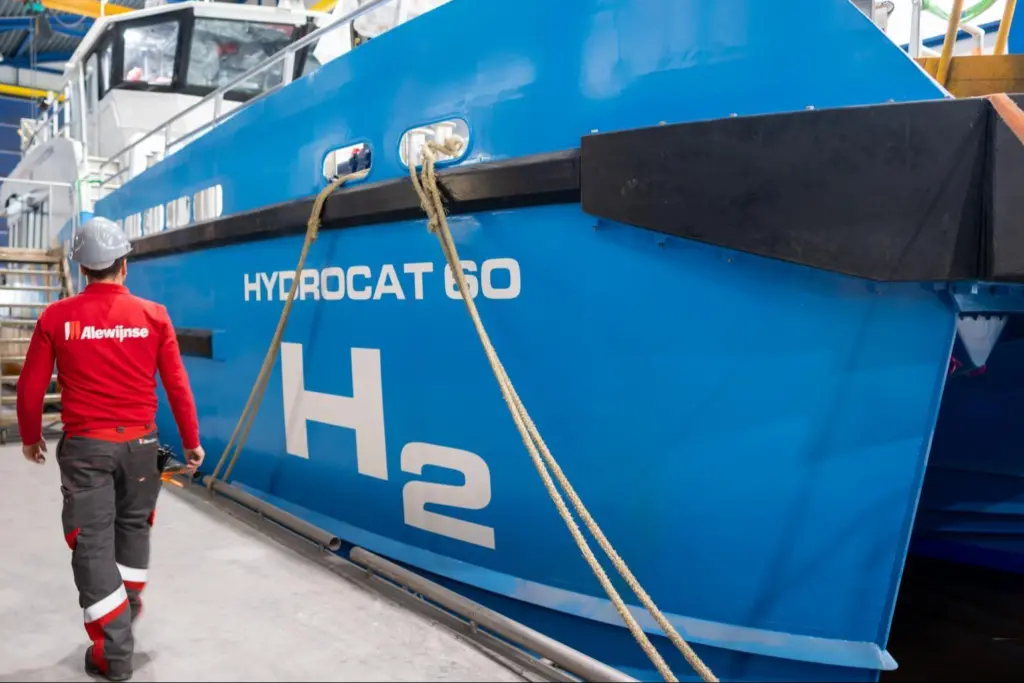
These vessels, currently under construction at Dok en Scheepsbouw Woudsend and Neptune Shipyards, will play a crucial role in supporting offshore windfarms by transporting crew and materials.
“We have been working at this shipyard since 2009 for the new build and refit of Windcat vessels,” said Bertran Smit, Alewijnse project manager.
“Both Woudsend and Windcat are very satisfied with the quality of the delivered vessels and the flexibility of Alewijnse.”
Meeting demand
The new additions mark a significant step in advancing infrastructure for wind power as the EU aims to double its energy production from wind by 2030.
Alewijnse, a specialist in electrical systems for offshore vessels, is equipping the new Windcat ships with complete electrical installations, including control consoles and monitoring systems. These advanced systems will help enhance safety and operational efficiency.
The new Windcat vessels will also feature innovative energy solutions.
Models from Windcat 57 onwards will include dual generators for robust power supply, and the Hydrocat 48 and 55 CTVs are the world’s first dual-fuel vessels running on both hydrogen and diesel-electric power, which will significantly reduce CO₂ emissions.
As offshore windfarms are built further from shore, Windcat said it is also developing Commissioning Service Operation Vessels (CSOVs) designed to accommodate up to 120 technicians, ensuring long-term offshore support for these larger wind energy projects.
Related Articles
 FEATURES & VIDEOS
 ENVIRONMENT
 OTHER NEWS