![MaritimeJournal[Seawork]](https://www.maritimejournal.com/wp-content/uploads/2026/09/MaritimeJournalSeawork.svg)




How to power the inland waterways?
The maritime industry is awash with bold claims and ambitious sustainability pledges – electric vessels, hydrogen-powered ports, methanol-ready tankers. However, beneath the fanfare lies a critical shortfall: the supporting infrastructure remains underdeveloped.

One fundamental question continues to be overlooked – how will we supply the necessary energy to support these zero-emission innovations?
This is the focus of Paul Simavari’s doctoral research: building a robust, data-driven understanding of energy demand across the inland waterway sector, and using that insight to explore scalable and operationally viable energy delivery strategies.
While propulsion and fuel technologies dominate the narrative, the infrastructure that underpins them often receives far less attention, and this is a much more complex challenge. Electrification, hydrogen and alternative fuels may offer lower emissions, but their success depends entirely on an energy system capable of reliably delivering power to where – and when – it’s needed. Right now, those systems are either incomplete, inconsistent or entirely absent.
Shore-based charging solutions are often positioned as a catch-all answer, but they’re only viable in specific use cases. Many inland waterway vessels follow dynamic, irregular schedules. They moor in rural areas, operate seasonally, and don’t always return to a central base. A fixed infrastructure approach risks serving only a fraction of the fleet, while creating new inefficiencies elsewhere.
Simavari’s research begins by tackling a key limitation: the lack of granular operational data on inland vessels.
“Before we can plan energy systems, we need to know how much energy is actually needed, where it’s needed, and how that demand changes depending on routes, vessel type and loading, and environmental conditions.” he says. “Without that, infrastructure planning is nothing more than guesswork.”
To address this, he is developing a vessel data portal that invites operators to anonymously contribute real-world data on fuel use, trip profiles, vessel characteristics and operational constraints. This data will then be used to generate energy demand models, which will simulate different operational conditions and will allow for the comparison of fixed and dynamic energy delivery strategies across different energy types and operational contexts.
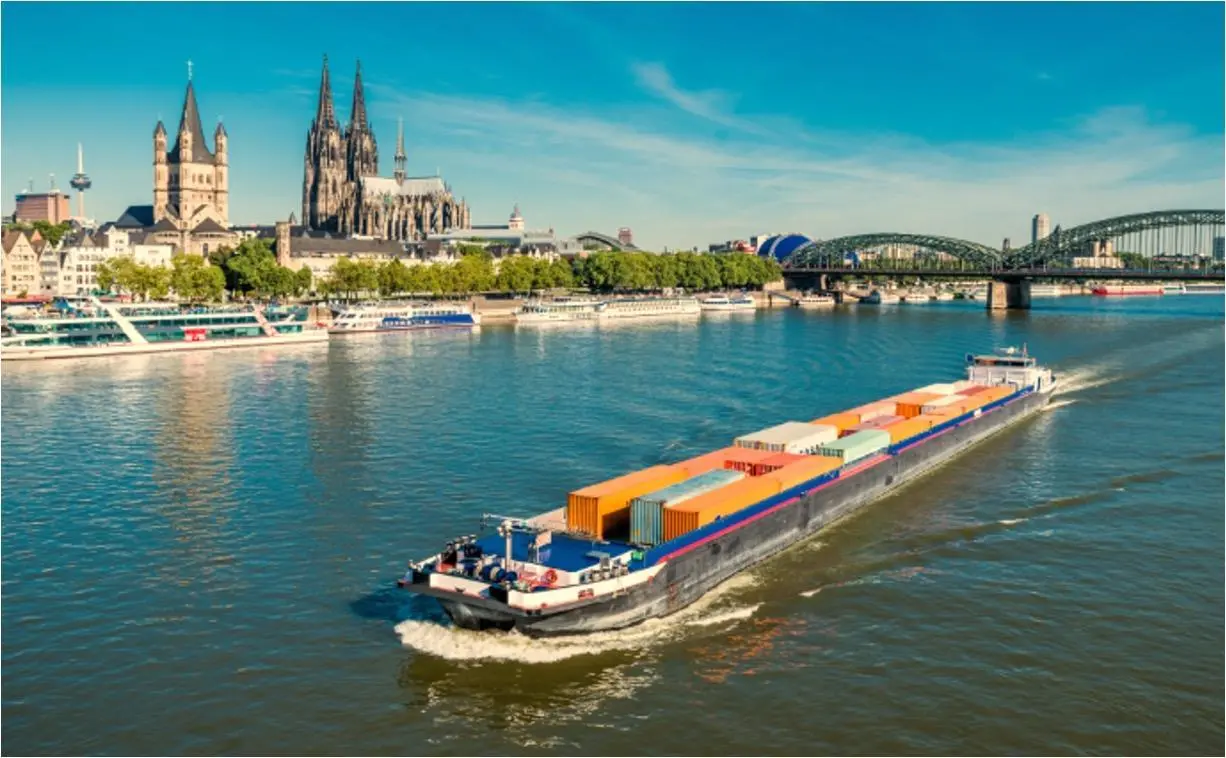
The portal aims to bridge the gap between engineering modelling and operational practicality. “Operators need tools that reflect the world they work in,” says Simavari. “If a battery-charging solution increases turnaround times by 30%, it’s not viable, even if it looks good on a lifecycle emissions chart. We need to model both the energy and the commercial realities.”
The second phase of the project involves stress-testing different energy delivery systems. These include looking at fixed shore charging, dynamic energy delivery, battery-swapping hubs and hybrid models that combine fixed and dynamic infrastructure.
By modelling how these systems perform under varied demand profiles, the research aims to identify approaches that can scale without creating bottlenecks or adding cost burdens for operators.
Simavari brings a commercially grounded lens to the project. Prior to academia, he spent more than two decades working globally in vessel hybrid and electric propulsion and power management design, including hands-on roles in refits, hybrid integration and shore power implementation. That background shapes how he approaches his research: “There’s often a disconnect between what looks good on paper and what actually works on the water,” he says. “My goal is to bridge that gap.”
One of the core insights emerging from the work so far is that energy infrastructure needs to reflect the diversity of vessel operations.
“There’s no such thing as a typical inland vessel,” he says. “From passenger ferries on urban routes to cargo barges serving agricultural areas, every operator faces different constraints. The energy solution can’t be a one-size-fits-all.
“Even similar vessels operating similar routes can have very different energy profiles due to a multitude of environmental and operational factors, which brings even more complexity into understanding the demand.”
Instead of prescribing a specific technology, Simavari’s research aims to develop a scenario modelling toolkit that will help infrastructure planners, regulators and industry stakeholders understand the trade-offs.
This includes metrics like energy efficiency, cost per kWh delivered, infrastructure use and potential emissions savings under different configurations.
As policymakers push for stricter emissions regulations and funding schemes increasingly prioritise green infrastructure, there’s growing pressure on the sector to adapt. But Simavari is cautious about quick fixes.
“If we invest in the wrong infrastructure now, we’ll be stuck with it for decades. We have a relatively small window to get this right – but we need to base early decisions on solid operational evidence.”
He also sees inland waterway decarbonisation as a proving ground.
“The inland sector is small in comparison to the rest of maritime, but it’s where flexible infrastructure models can be trialled at scale. If we can make it work here, we can inform broader strategies for short-sea and near-coastal shipping where similar constraints apply.”
Ultimately, the project is about alignment: between technology and reality, policy and operations, ambition and execution.
“Decarbonisation isn’t just about new fuels – it’s about building the systems to support them,” he says. “And that starts with understanding what the sector actually needs. What we know is that vessels will need energy – we just don’t know when, where and how much they’ll need.”
This is the first of a series of columns that Paul, a Seawork awards winner, is writing exclusively for Maritime Journal.
Related Articles
 SPECIAL REPORTS
 FEATURES & VIDEOS
 FEATURES & VIDEOS