![MaritimeJournal[Seawork]](https://www.maritimejournal.com/wp-content/uploads/2026/09/MaritimeJournalSeawork.svg)






TECHNICAL ARTICLE: Actuators on board
Regal Rexnord brand Thomson Industries, which has nearly 80 years’ expertise in linear motion, manufacturing actuators, bearings, guides, and screws for industrial and automation applications worldwide, explains how a new generation of linear actuators makes marine operations simpler, cleaner and more efficient.
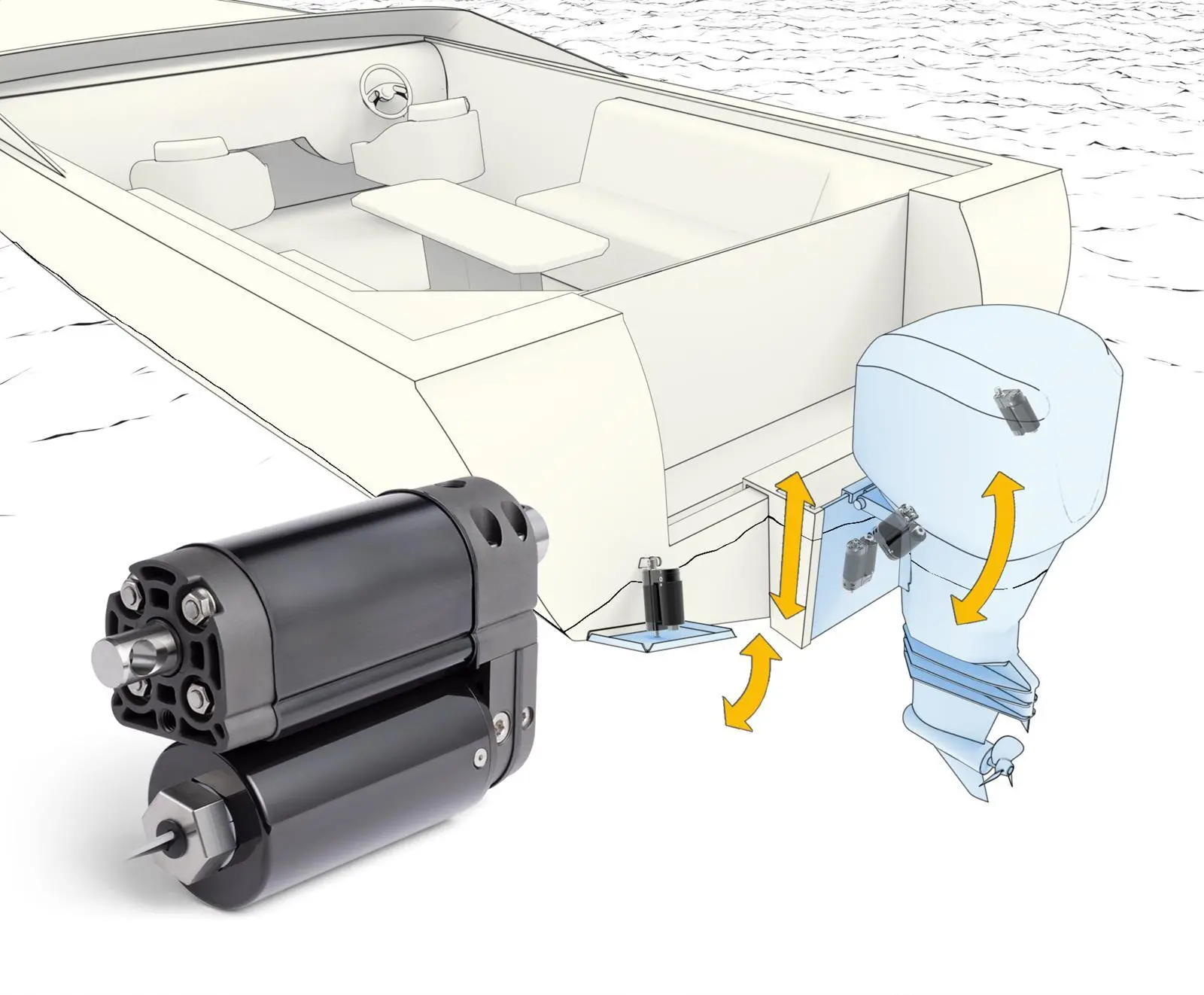
Whether it’s a 16ft outboard ski boat, a 40ft fishing boat, a 1,000ft liner or almost any other motorised watercraft, actuators are likely to be on board performing critical functions.
They tilt motors, open hatches, guide steering, adjust valves and perform numerous other tasks that contribute to the boat’s operation, comfort and aesthetics.
Historically, hydraulic cylinders provided the muscle for marine operations and still remain essential for many applications. But as motion engineering advances, new technologies are delivering cleaner, simpler and more compact electrohydraulic and electromechanical alternatives. Determining which is best for your marine application requires a look at your essential requirements and the actuation technologies available to meet them.
Marine Application Needs
As well a being able to carry a payload, marine actuators need protection from external forces, including water pressure generated as the craft moves ahead, steers or sits still amid waves. They must also be able to survive shock from collisions with objects and avoid corrosion. Marine actuators must also be compact to fit limited space and, increasingly, intelligent enough to support digital transformation strategies.
Resisting water pressure
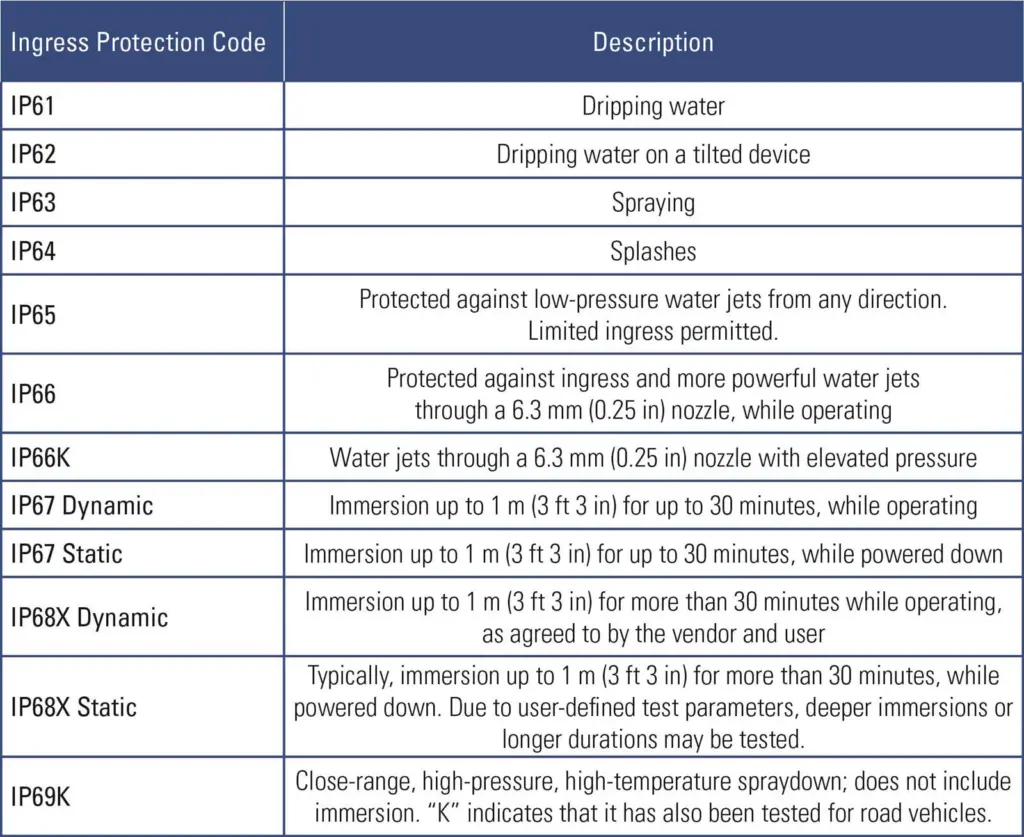
A useful guide for assessing the water-resistance capabilities of marine applications is the Ingress Protection (IP) ratings published by the International Electrotechnical Commission in IEC 60529. These provide a 2-digit “IP” code that rates the ability of electrical and electronic devices, including actuators, to resist dust and liquids (Figure 1). The first digit of the code rates dust ingress which, while not as important an issue for marine applications, remains relevant for the overall robustness of the craft, so we’ll assume the highest level of dust protection, level 6. An “X” here would signify that the product has not been tested for dust.
The second digit, which rates resistance to liquids on a scale from 0 to 9, is very relevant to marine actuators. It certifies a device’s resistance to various forces that may be present in marine environments. A trailing “X” is not an official IP code identifier but often denotes a particularly high protection. A “K” indicates that the testing applies to road vehicles as well, which would be relevant for amphibious vehicles.
The IP scale is the most widely used method for rating water ingress. Others include the American Society of Testing and Materials (ASTM), National Electrical Manufacturers Association (NEMA), the International Organization for Standards (ISO), the American Boat and Yacht Council (ABYC), and the US Coast Guard (USCG).
Although IP65 can withstand some water exposure, IP66 may be more suitable for marine applications. The IP level that best suits your application depends mainly on the motion profile, actuator characteristics and whether the unit will operate above or below the waterline. We’ll examine these in more detail in the next section when we evaluate actuator technologies.
Shock loading
Shock loading is another external force that could affect an actuator in a marine environment. It can, for example, result from unexpected contact with a log, rock or mooring. IP ratings do not address shock, which is primarily a mechanical issue. It can be measured by attaching instruments such as accelerometers, strain gauges and pressure transmitters.
Corrosion resistance
Corrosion is an ever-present threat to marine craft, mostly from saltwater immersion or exposure to salty air, high humidity and splashes. It mainly depends on the materials and coatings used for the actuator housing. Although water ingress can impact corrosion, it is not addressed by IP ratings but instead covered by other standards groups, such as the ASTM. (Corrosion Standards and Wear Standards – Standards Products – Standards & Publications – Products & Services)
Compactness
The space on any water-going vessel is minimal, so the smaller the application unit, the better. Actuators differ in the footprint required to support the hydraulic system and communications as well as the size of the housing itself.
Digitalisation
Thomson Like most industries, the marine industry is undergoing a significant digital transformation, becoming increasingly sophisticated in gathering and leveraging operational data to reduce costs, improve efficiency, and comply with safety and environmental standards.
Evaluating Actuator Technologies
Three actuation technologies address hydraulic cylinders, electrohydraulic actuators and electromechanical actuators.
- Hydraulic cylinders use the incompressibility of hydraulic fluid to translate rotary motion from a motor into linear motion. They use a centralised motor-driven pump system to push hydraulic fluid to extend and retract the pistons in the cylinders. Supporting this process requires an infrastructure of fluid reservoirs, pumps, hoses and valves. Hydraulic cylinders are designed for challenging environments. They can handle high load requirements with a relatively small cylinder and can withstand high shock loads.
- Electrohydraulic actuators integrate a self-contained hydraulic actuation unit in the space-efficient form factor of an electric actuator. They also use motorized pumps to deliver hydraulic fluid to the application points but on a much smaller scale. Electrohydraulic actuators can handle loads of more than 20,000 N (4497 lbs.) and have substantial shock handling. They can be specified for underwater and high-pressure environments, providing protection comparable to that of hydraulic cylinders. (Figure 2)
- Electromechanical actuators use ball or lead screws and gearing systems to convert rotary motion from a motor into the linear motion needed to move a payload. They can handle loads up to 25,000 N (5620 lbs) but have limited shock resistance and cannot operate under water.
Each type of actuator has different strengths and weaknesses depending on whether it is operating above or below the waterline.
Actuators above the waterline
On deck, in cabins, cabinets or otherwise controlled environments above the waterline, actuators perform numerous functions. They adjust hatches, covers, telecommunication masts, canopies and door locks. They open and close windows, control booms and bilge pumps, and extend boarding ramps.
Any of this might be subject to water splashes and spray downs, which would require an IP rating of at least IP65 or equivalent. Still, good practice calls for compliance at least one level above the minimum, so designers usually specify at least IP66 or equivalent protection.
Technically, hydraulic cylinders, electrohydraulic actuators and electromechanical actuators can be used above the waterline.
Hydraulic cylinders above the waterline
Designers traditionally specify hydraulic cylinder-based actuation systems above the waterline for high load applications. A centralised pump architecture also enables higher speeds. Implementing more capability than you need could also have the drawbacks discussed earlier, including the need for a higher-footprint support infrastructure, potential leakage, maintenance issues, and limited ability to integrate digitally.
Electrohydraulic actuators above the waterline
Electrohydraulic actuators provide high load-handling density, especially when compared to the infrastructure needed to support hydraulic cylinders. A Thomson electrohydraulic actuator with a 12-inch stroke length, for example, can handle up to 21,350 N (4800 lbs), including resisting water pressure and absorbing shock. Using self-contained pumps instead of gears enables higher speeds.
But as with hydraulic cylinders, electrohydraulics may provide more load handling capability than is needed above the waterline, leaving electromechanical actuators as the most cost-efficient solution there.
Electromechanical actuators above the waterline
Electromechanical actuators such as Thomson Electrak® XD are also available with an IP66 rating, which covers sprays and splashes and does not require a support infrastructure (Figure 3). Their compact plug-and-play structure makes it easy to integrate with other actuators or applications and they need only a few wires to connect to the power supply and a digital communications network, such as a CAN bus.
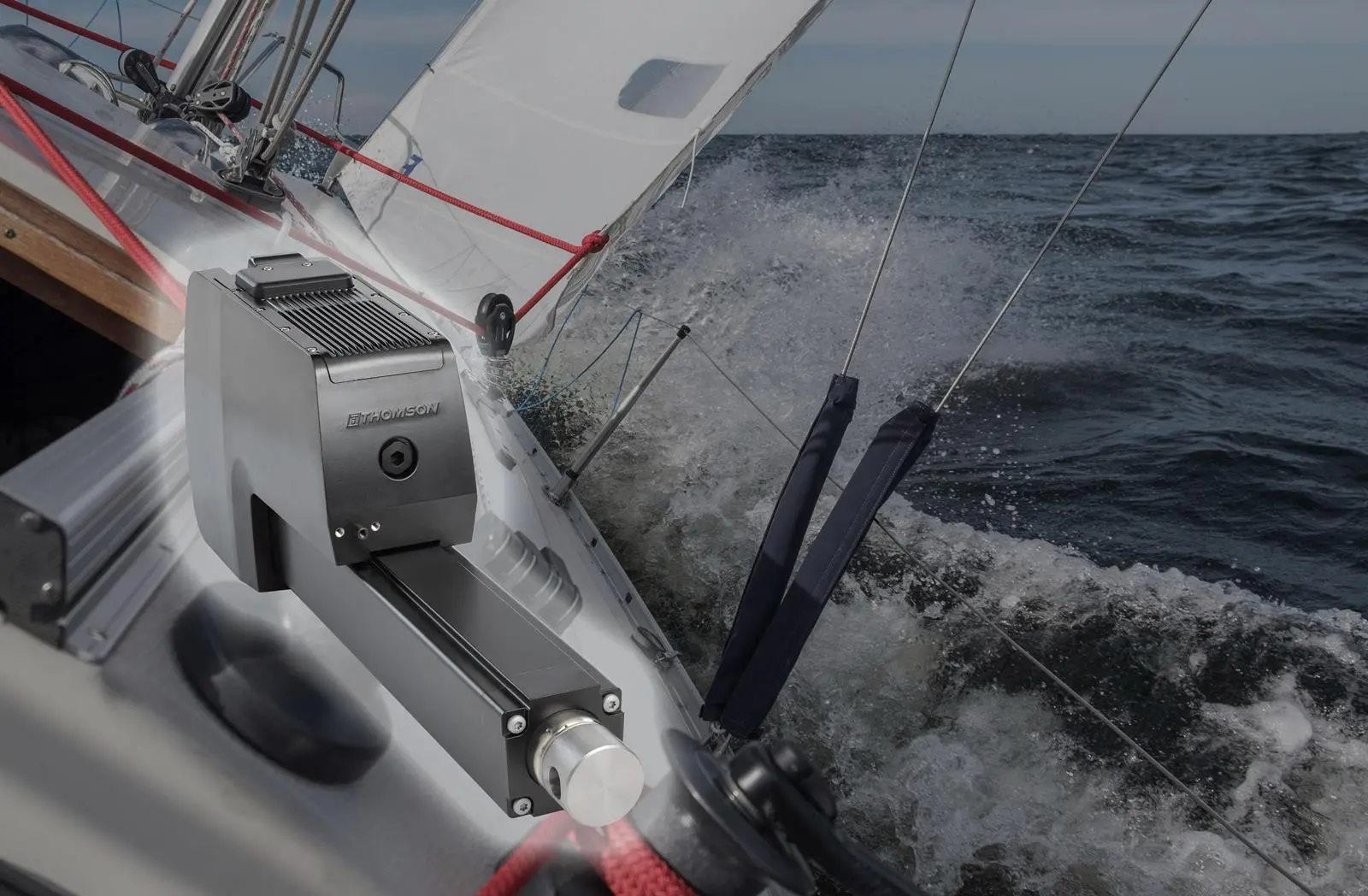
Figure 3. When water sprays and splashes find their way aboard a marine vessel, electromechanical linear actuators such as the Thomson Electrak XD are ideal. Image courtesy of Thomson Industries
And if the application calls for heavier load handling, electromechanical actuators can be designed for loads exceeding 25,000 N (5620 lbs), provided there is minimal risk of shock loading and that high speeds are also not required.
Speed is limited by the capabilities of the mechanical gearing system that translates motor torque into speed. Also, if the application will be subject to high-pressure, high-temperature water jets, as might be used in flooding or cleaning, electromechanical actuators are available with IP69K ratings.
Corrosion resistance above the waterline
Corrosion resistance above the waterline is primarily a function of exposure to spray, splashing and salt air. Electromechanical actuators composed of or coated with brass or zinc would tend to be adequate for most applications above the waterline.
Space efficiency above the waterline
Space will almost always be a premium on a watercraft, and because actuators are likely to be enclosed further in cabins, cabinets and other enclosed spaces, the smaller the unit, the more cost effective it will be. While hydraulic cylinders themselves are very compact, their infrastructure requires a centralised reservoir and pumping station for that fluid, which can take up valuable space. Both electrohydraulic and electromechanical actuators, on the other hand, take up considerably less space.
Actuators below the waterline
Below the waterline, actuators must resist external forces from the added water pressure, which can also include shock loading. Applications include trim tabs to control the angle of the boat hull in the water, as well as ballast tank valves, mooring hatches or underwater propulsion control.
Actuators with IP ratings of IP67, IP68 or equivalent are essential below the waterline. The exact depth and times that these actuators can be submerged are subject to test protocols established between users and equipment suppliers. A typical test protocol for an IP67 dynamic actuator, for example, might call for proof that it can be submerged in a metre of water for up to 30 minutes, while IP68 dynamic actuators would be tested for even longer submergence.
Actuators rated IP66 static can be used under water, such as supporting a table or holding a door open, and can be submerged indefinitely as long as they are not powered. Otherwise, an IP67 or IP68 equivalent rating is required. Only hydraulic cylinders and electrohydraulic actuators can be submerged. Electromechanical actuators cannot be used below the waterline.
Hydraulic cylinders below the waterline
When the application load, including both the payload and external force, exceeds 21,350 N (4800 lbs) and there is considerable potential for shock, hydraulic cylinders traditionally deliver the best performance. This would, of course, require all of the trappings discussed earlier, including the infrastructure, messiness and limited digital connectivity.
Electrohydraulic actuators below the waterline
For loads requiring moderate to high load handling, eg, in the 20,000 to 30,000 N (4497 to 6744 lbs) range, consider using electrohydraulic actuators. They can do most anything a hydraulic cylinder can, including substantial shock handling, don’t require an elaborate support infrastructure and plug easily into a digital network.
Corrosion prevention below the waterline
Applications below the waterline are the most susceptible to corrosion. Although materials such as bronze and zinc help reduce corrosion, the most effective protection comes from a housing composed of 316 stainless steel, which maintains its integrity for many years without coating.
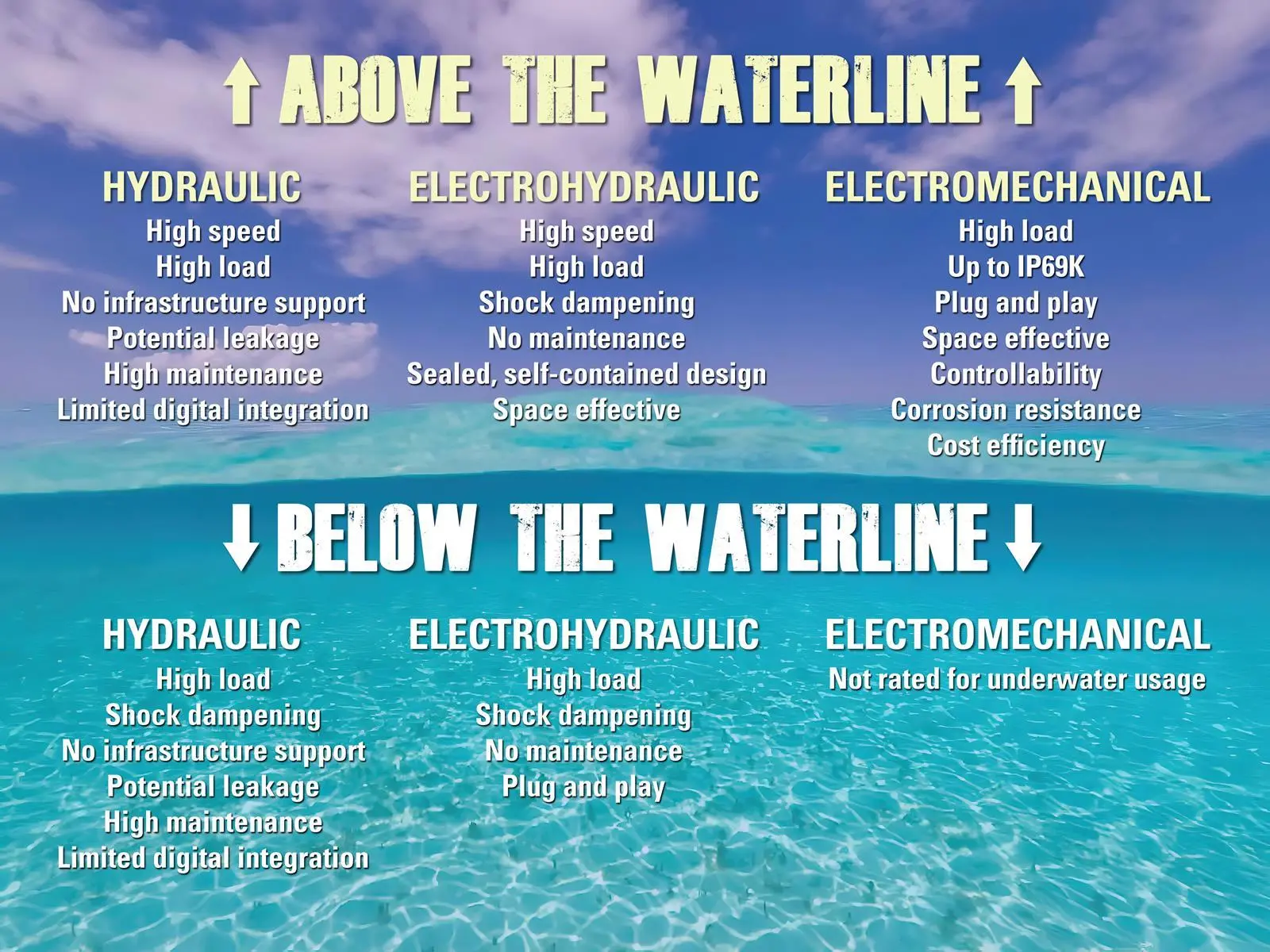
Figure 4. The position of marine applications plays a significant role in determining which actuation technology is most suitable. Graphic courtesy of Thomson Industries.
Conclusion
Getting the optimal actuator for your marine application depends heavily on whether it will be used above or below the waterline. Above the waterline, a high-quality electromechanical actuator with an IP66 rating would handle most applications with loads up to 25,000 N (5620 lbs), including external forces.
Anything above that payload may require a hydraulic cylinder with a full support infrastructure, maintenance requirements and limited interconnectivity, or an electromechanical actuator built from very large components, which is cost-prohibited based on size constraints.
Below the waterline, an electrohydraulic actuator could handle loads of 20,000 N (4497 lbs) or more and provide substantial shock protection without needing hydraulic infrastructure, maintenance or connectivity. Regarding corrosion protection, actuator housings made of zinc and brass would be adequate above the waterline, but 316 stainless steel housings would last the longest beneath the waterline without any coating.
Of course, every application is different, especially when water is involved. It has a way of finding its own unexpected path. Working closely with actuator vendors is critical to ensure you are all on the same page regarding the application’s requirements, and using online tools such as Thomson Motioneering Tools helps refine your choices and finalise calculations. Following these procedures will help keep your motion applications shipshape.
Related Articles
 SPECIAL REPORTS
 FEATURES & VIDEOS
 FEATURES & VIDEOS