![MaritimeJournal[Seawork]](https://www.maritimejournal.com/wp-content/uploads/2026/09/MaritimeJournalSeawork.svg)


£2.5 billion three-in-one project drawn up
A £2.5 billion project to provide an offshore deepwater container terminal powered entirely by tidal turbines that will also act as a flood defence barrier is being planned for eastern England.
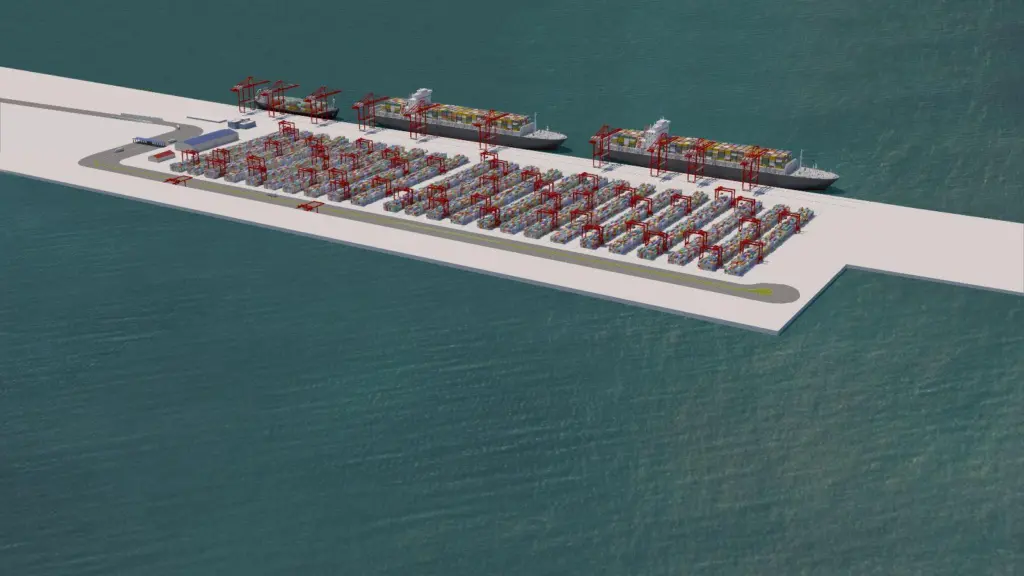
An 11-mile offshore structure with roads and rail on top of it will connect the Wash in Norfolk to Lincolnshire further north, slashing road journey times of up to four hours to just 20 minutes.
Approximately a third of the way along the structure, a container terminal will be installed that will be capable of accommodating the world’s biggest ships.
Cargo from the containers will go by rail, road or waterway by electric barges from the terminal, with the turbines providing shore power to charge them and independent operators providing services.
And underneath, in the middle of the 11-mile stretch, will be up to 15 gigantic tidal turbines that will generate electricity 24 hours a day, 365 days a year, entirely powering the container terminal and up to 600,000 houses and businesses in the area as well.
The turbines will weigh 700 tonnes each, and each will be the size of a 10-storey building.
“This is a once-in-a-lifetime project, a fantastic story to tell,” says Sam Owen, group commercial director of Port Evolution Management (Port Evo), the company behind the project, which has set up Centre Port Holdings to run it.
“I’ve not seen anything like this, especially not in the UK, in terms of the size, the scale, the magnitude and the legacy it will have for the next hundred years. I think this will be the cornerstone for other similar marine projects to follow our lead on this.”
Early moves
The project is still at an extremely early stage, says Owen, although a construction engineering group has been set up and there is a ‘frontrunner’ for the turbine supply.
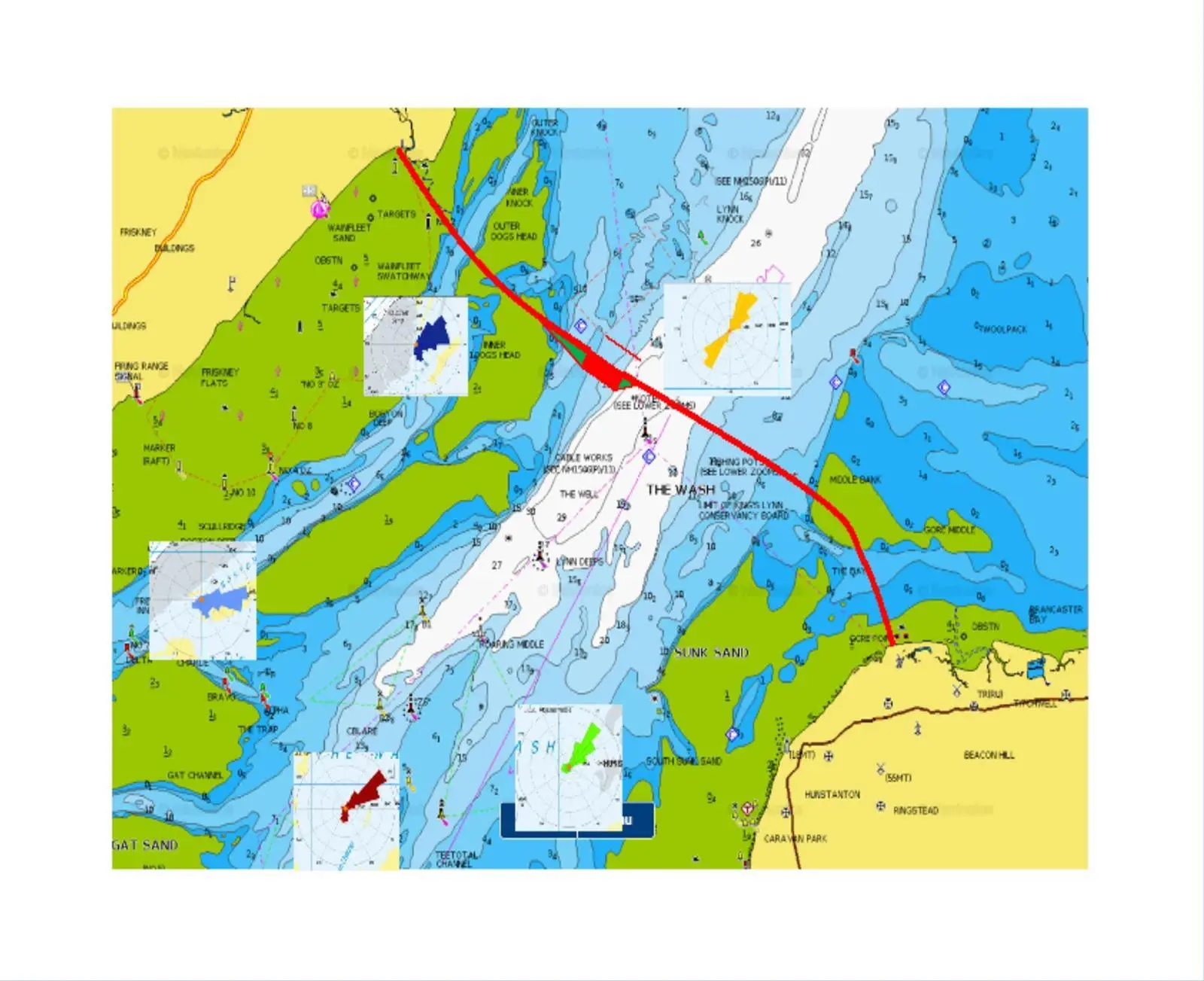
It could take another two years before spades break ground, and the next step will be to carry out a £8 feasibility study.
“Until we get the water flow assessments and the amount of cubic water going in and out of the system every day, we can’t determine what the final product will be,” he says. “A vast amount of work needs to be done.
“We can’t say yet, for instance, how much dredging will be needed, but we can say it will be done by one of the world’s leading dredging companies. We can’t say yet how the structure will be fixed to the seabed, but we do have one of the world’s leading marine technical advisories involved in the construction group.”
Centre Port will need to raise £8 million for just the feasibility study, but Owen does not think raising capital will be an issue for the entire project.
“We estimate we will need up to £2.5 billion to build the whole thing, and most of that will come from private finance,” he says. “There will be three streams of revenue to get the return: the power generated, which will be sold to an energy company – it fluctuates with the market going up and down, but will bring in a significant amount of revenue; there’s the container terminal operation; and road tolls will be levied as well.”
There are already plans to add a RoRo service at the terminal, and along another part of the structure, a beach and marina.
Flood barrier echoes the past
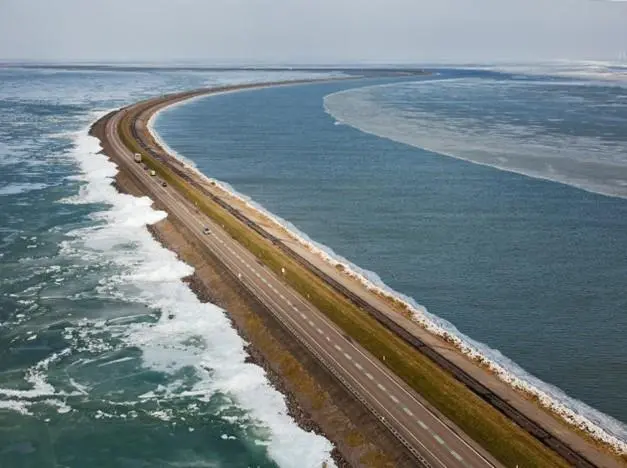
The idea for the hydro-electric barrier was conceived two years ago by company founder and CEO James Sutcliffe, an entrepreneur with vast experience of buying, developing and selling ports around the world.
Centre Port is likely to be especially close to his heart, as he comes from the area and knows it well – which means he is all too familiar with the flood risk there.
In fact, according to historian and archaeologist Dr Caitlin Green, who obtained her doctorate at the University of Oxford, Lincolnshire was protected from flooding by a similar but natural barrier until the 13th century, with a series of offshore coastal barrier islands. The islands, she says, extended down to northwest Norfolk and shielded the seaboard by creating a sheltered tidal lagoon between them and the coast – until they were destroyed in ferocious storms in 1287-88.
The Centre Port structure could be seen as a replacement to those natural barriers some 800 years later.
“It does flood here, and when it does it’s catastrophic,” says Owen. “It’s fundamental for us that we preserve and protect what’s here.”
One of the worst floods in living memory was in 1953, when the North Sea flooded the Netherlands, northwest Belgium and Scotland as well as the Wash, breaching sea defences, killing people and destroying farmland.
Port congestion
The new container terminal will in fact create competition for Britain’s other container ports, which have been afflicted by a wave of strikes in recent weeks, creating such headaches for shippers that some have even disembarked at European ports and sent their goods by truck the rest of the way.
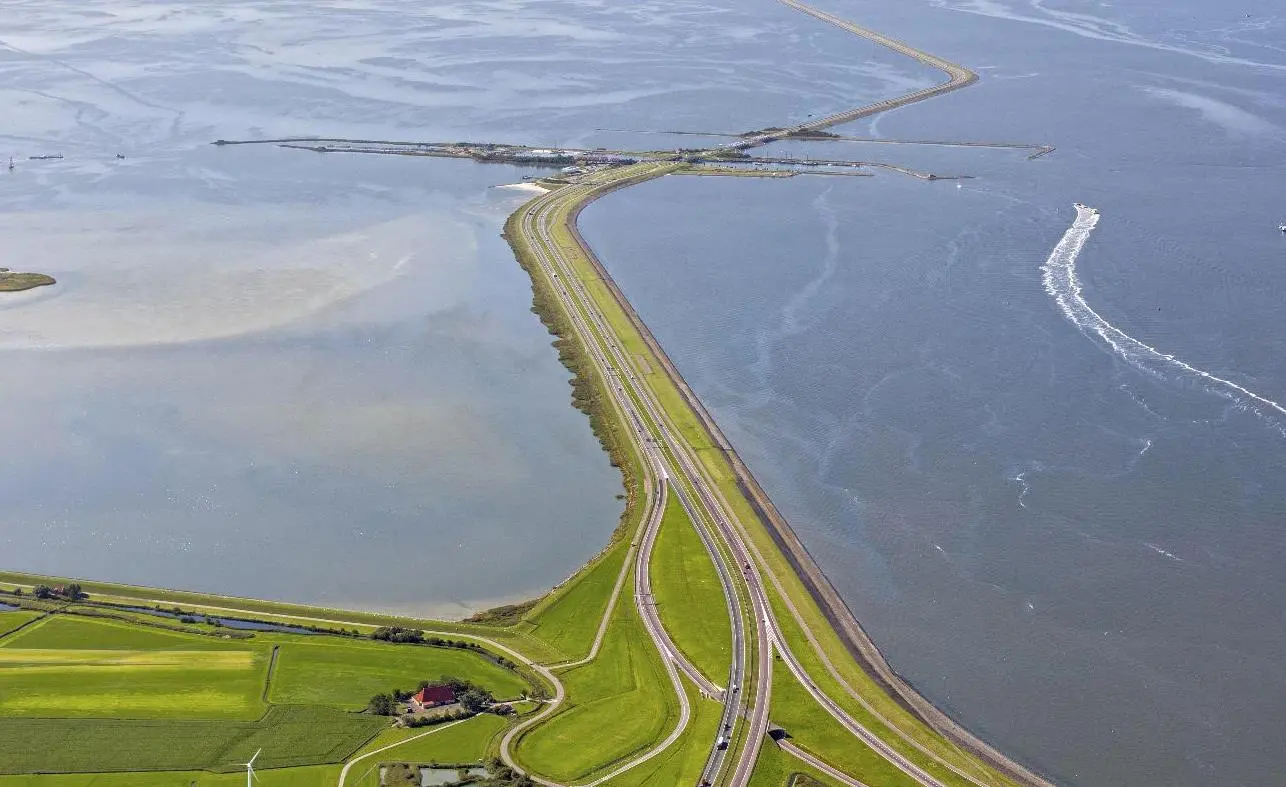
“The logistics of that are challenging,” Owen says. “So we’ve done a study with a leading shipping line, and they said by the time they get through the bottlenecks of the Thames Estuary, for instance, it would make more sense to them to just get straight in and out to Centre Port.”
With a RoRo service being put in as well, it creates rest opportunities for drivers too.
There is still a lot of work to do.
“We’re keeping lines of communication open with wildlife groups, with local communities – we want to be completely transparent,” he says. “We’re engaging with the engineering and construction group, which will take about two years, and in parallel with that we’ll be raising the capital then get the green light and get to work.”
The company has set an ambitious target date of 2028 to see the project in full flow.