![MaritimeJournal[Seawork]](https://www.maritimejournal.com/wp-content/uploads/2026/09/MaritimeJournalSeawork.svg)

Could floating nuclear ignite an energy revolution?
Floating Nuclear Power Plants (FNPPs) are poised to deliver gigawatt-scale output — potentially supplying almost an entire nation’s power demand – under designs unveiled by UK maritime technology firm Core Power.

CEO Mikal Bøe described how industrial-scale nuclear reactors will be mounted on ships or barges and towed out to sea or be berthed at ports, fulfilling short-term or permanent demand for a spectrum of industries, and each with a shelf life of more than 60 years.
And under Core Power’s method, where components would be manufactured in multiple sites at the same time, FNPPs could ultimately be rolled out every 10 days, Bøe told journalists at a press briefing held in London’s Mayfair last week.
“We are getting to the point where from laying the keel to delivering the FNPP could be less than two years, by building all the components at the same time, not one then the other,” he said. “We will be able to deliver a new FNPP every 10 days by the 2040s. The ability to expand the manufacturing base is the critical thing. Nuclear energy has to transition from a project-based industry to a product-based industry.”
The model
An FNPP could be ship shaped, including having its own propulsion, or barge mounted, in which case it would be towed and would act as a floating platform.
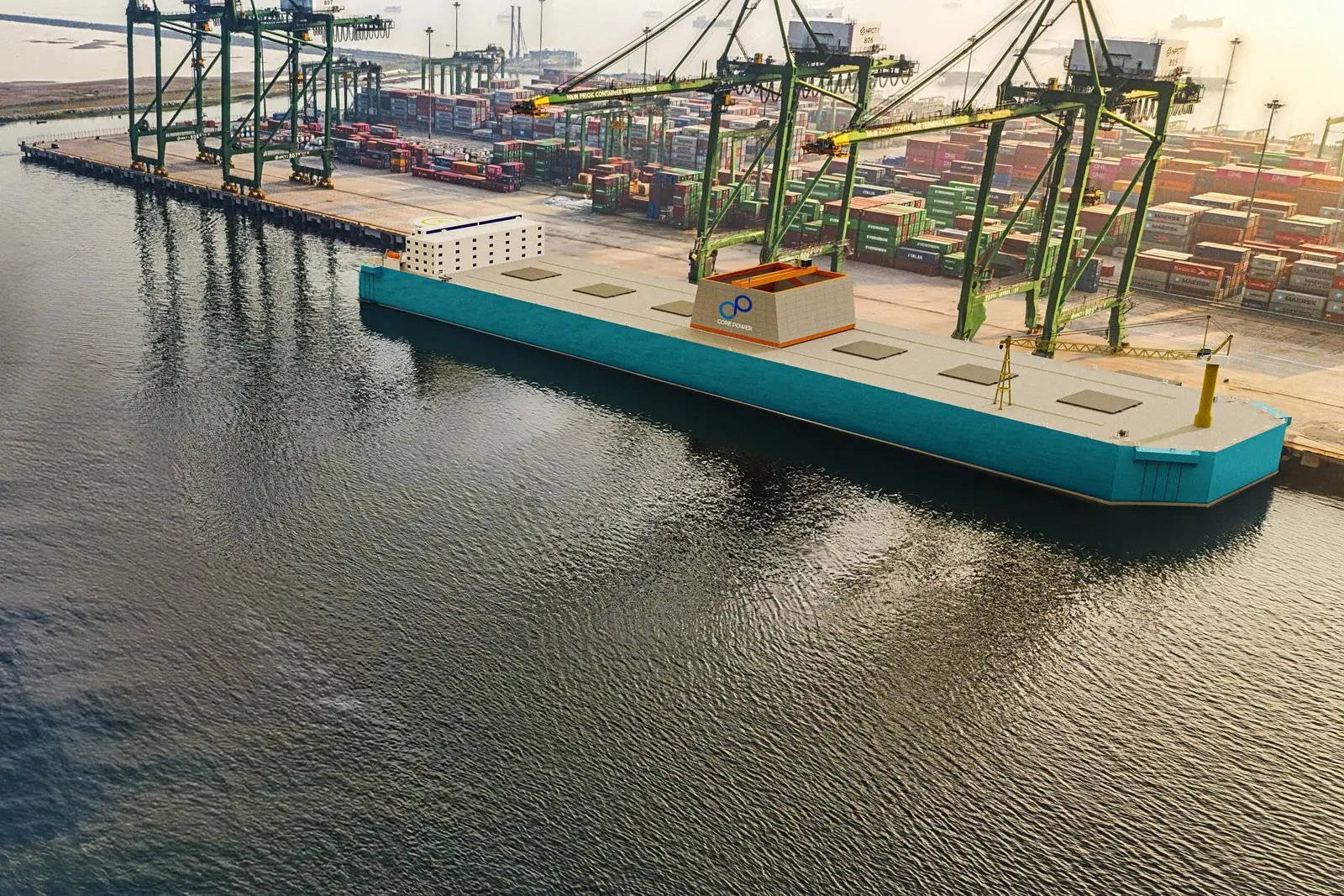
They could be any size – generating from 20 or 30 megawatts, up to 800MW or even higher, Bøe said.
For the UK alone, Bøe said they could deliver the country’s entire energy needs.
“So if you need to replace electric generating capacity in this country, I think the target is 24 gigawatts by 2050, which is why they’re building Sizewell C and Hinkley Point,” he said. “If you take if you take an 800MW floating nuclear power plant, you have the power-generating capacity on board that as a power station. To reach 24 gigawatts, you’d need 30 of those in this country, six locations, five in each.
“You have a jetty where you have them placed and you have the electrical infrastructure on there and they’re sitting there generating power.
“That will be 30 of them and at a cost of, call it, £1.5 billion pounds each? That’s £45 billion for the total replacement of energy-generating capacity in the UK. So it’s serious.”
Bøe said the energy would cost between £50 and £60 per MWh – which is about a quarter of today’s rates.
“That’s the whole life cycle included, the waste as well,” he said. “And at the end of their 60-year life, you simple replace them with shiny new models.”
Ripple effect
As well as the building of barges or ships themselves, FNPPs would prompt other opportunities in commercial maritime.
An obvious example is the tugs that will be needed to tow them out to sea or into port, and the workboats, offshore contractors and servicing contractors.
As FNPPs scale, new safety, inspection, and marine civils requirements will emerge, including operational zones, mooring systems, barge handling, marine construction and ongoing operations and maintenance.
There is also the subsea cabling that will be required, the anchoring of deep-sea plants and the survey and monitoring beneath the water.
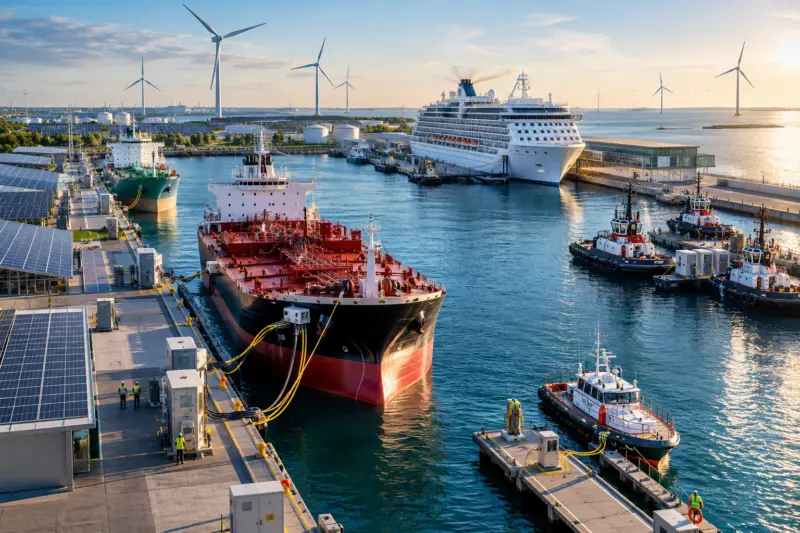
Ports accommodating the assets will need specialised tug capability, pilotage, escort operations and marine civils upgrades – and they could be rolled out to offshore wind farms, where operators are already discussing localised clean power for manufacturing and installation bases.
And that’s not just for offshore wind: “From mining companies through to desalination, from grid operators through to data centres, they fundamentally want electricity and they want it yesterday,” said Andrew Crowe, Core Power Group head Business Development.
“We’re having conversations with people who wouldn’t naturally associate nuclear as part of their energy mix, but what they want is electricity.”
Nuclear-powered vessels will also need port protocols, bunkering alternatives, and tug/harbour support standards that are not in place today.
Safety and waste concerns
The elephant in the room with anything nuclear is of course Chernobyl, or Fukushima.
But because of these events, nuclear power is now the safest and most regulated energy of all, said Bøe.
“The harm from nuclear power is negligible,” he said. “It’s become a bit of a superstition. But the British government is starting to open a debate and the younger generations are more interested.
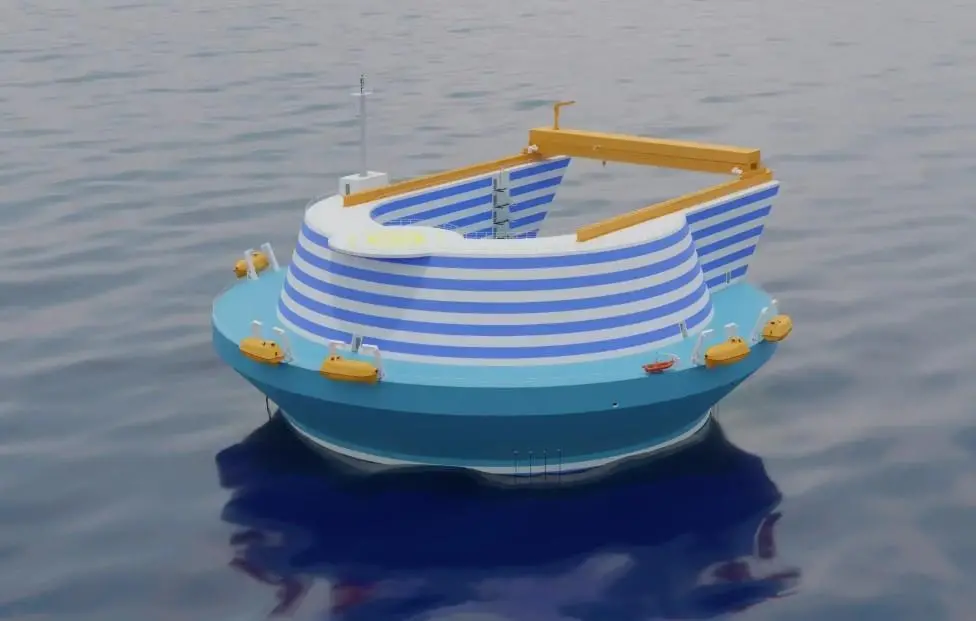
“Safety concerns around nuclear tend to be the release of radioactive material into the environment at a higher than acceptable dose. But the acceptable dose is set at a limit that’s lower than you’d get in everyday life. There’s an expectation that nuclear has to 100% not cause any harm, but the actual evidence of any harm being caused by any form of radiation, whether natural or power plant or fly ash from a coal plant – very little.
“There’s no scientific evidence that there’s harm above a certain level. This is science – it’s not pulling wool over people’s eyes.”
When it came to waste, nuclear was the only industry in the world, said Bøe, that had complete waste management control.
“It has to account for every gram,” he said. “It’s documented from mining to drilling to refining, to enrichment – all the way through to processing and recycling. It’s a birth-to-Earth responsibility and it’s the only industry in the world that has to do that. We should be doing it with all power generation.”
And the waste itself is tiny, he said.
“You get one gram of waste per 25MWh,” he said. “Per kilogram, that’s 30 grams. You’re talking about very small amounts that after about 30 years you can just throw in your garden.
“The total footprint of nuclear-generated capacity is about 11% of global power generation. Since 1956, total spent nuclear fuel is just over 250,000 tonnes. Well we have produced 35 billion tonnes of gas that you can’t capture from fossil fuels.”
Net zero and anti-net zero camps
Mikal Bøe believes Core Power’s emergence seven years ago was the perfect timing, when thinking was shifting away from gas but finding it difficult to go electric.
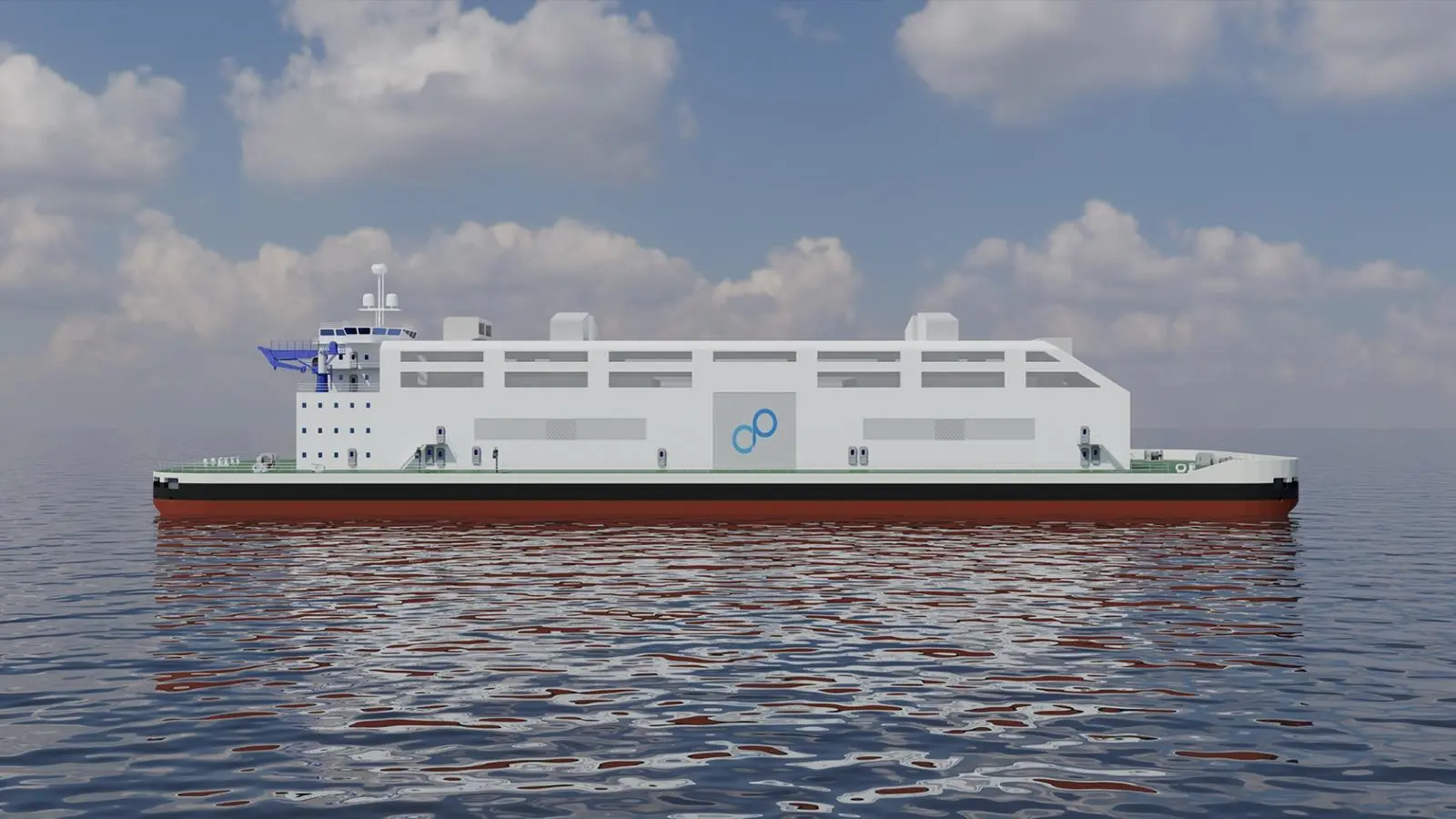
“There are a lot of seismic pieces moving under the surface – politics, regulations, tech developments, customer economics and of course climate change, which has been on the agenda for shipping throughout this year and will continue to be so despite the fact that the pendulum will swing from net zero to anti-net zero,” he said.
“In the climate change debate there are two camps – where net zero says we’ve got to save the planet, anti-net zero says the planet will be fine, we just have to deal with how it will affect us.
“These two things have to marry up and that’s why talks are breaking down – you can’t get people to gather around a solution that does both – lowers the environmental impact and at the same time creates more energy for the things we need to thrive.
“I see that these two camps are going to drift further and further apart. It’s almost like what we’re seeing in all of this, left and right, becoming much more polarized than it’s ever been before.
“And you would expect me to say this, but I see nuclear emerging in the gap because it’s the only thing that solves both.”