![MaritimeJournal[Seawork]](https://www.maritimejournal.com/wp-content/uploads/2026/09/MaritimeJournalSeawork.svg)

Detecting marine mammals with thermal imaging
For ‘always on’ tasks such as marine mammal monitoring in offshore windfarms, automation could be one way of easing a significant burden, writes Jake Frith.
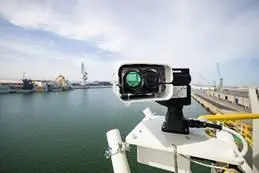
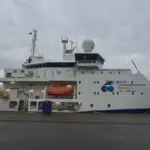
UK thermal camera manufacturer Seiche Ltd is collaborating with Belgian marine construction and dredging major Jan De Nul Group to start a two-month pilot project to test the A.I capacity and visual reach of Seiche’s new second-generation HD thermal cameras on board the Adhémar de Saint-Venant.
Jan De Nul Group believes that methods used for the detection and protection of marine mammals in the dredging and offshore construction business on projects worldwide are ripe for a major rethink.
Inge Van Tomme, Director of the KPI Department at Jan De Nul Group, said: “The idea of automated mammal detection originated from an internal JDN Innovation Challenge. We chose this competition entry as the outright winner, out of many other viable ideas.We are convinced that we can re-invent the way of detecting and protecting marine mammals for the whole dredging and offshore construction business on projects worldwide.”
The project was initiated by four employees of Jan De Nul as part of their internal innovation challenge, and proposed using this innovative technology during marine offshore operations.
A team from Jan De Nul and Seiche travelled to Rotterdam to install the detection system on board. The combined visual and thermal cameras, secured to high points on the vessel for an increased visual reach, will be fully tested over the coming two months.
Nicola Harris, Associate Director of Environmental Services at Seiche Ltd, said: “It is really great to see construction companies like Jan De Nul showing an active interest in developing such key tools for protecting the environment.” The trial will allow Seiche to collect the necessary data for testing and fine-tuning the A.I. capacity of the automated detection function and the visual distances these cameras can cover.
This is a first step towards the fully automated detection of marine mammals, setting a new standard to increase the level of protection of marine mammals and to reduce safety risks, costs and impact on the environment.
Related Articles
 SEAWORK NEWS
 INDUSTRY NEWS
 OTHER NEWS