![MaritimeJournal[Seawork]](https://www.maritimejournal.com/wp-content/uploads/2026/09/MaritimeJournalSeawork.svg)




Floodfighters? Call to Action!
Welcome to the first of our monthly ‘Editor’s Insight’ opinion pieces, with direct comment or opinion on some aspect of the commercial marine industry. On the eve of this year’s Seawork exhibition and conference, we hear from David Lane, director of the Professional Rescue Academy, who will be hosting events at Seawork in our new Floodfighters Pavilion.
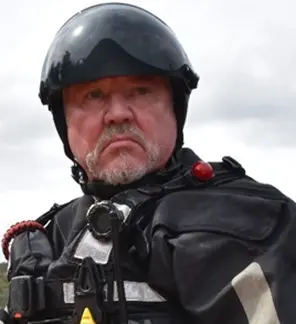
“For two decades my Floodfighters Conferences have focused on incident management principles and life safety tactics with calls to action like 2025’s Floodfighters@Seawork, come and join us in our dedicated pavilion at the event on 10-12 June.”
We’ve brought together UK, European and US Fire Chiefs and First Responders, and shared experiences and best practices with speakers from all over the world. Principles emanating directly from these events and research were put into practice to save more than 7,000 lives during the UK’s devastating summer floods of 2007.
Despite this, ‘Saving Lives’, ‘Life Safety’ or ‘Search & Rescue’ are phrases not found anywhere in the National Assessment Of Flood And Coastal Erosion Risk In England 2024 (NaFRA) document [1].
The NaFRA document shows around 6.3 million properties in England are at risk of flooding from one or a combination of sources.
“Our new data on depth of flooding also provides more information to help people understand the potential flood hazard they could face,” says the Executive Summary. “We have lived with and seen the effects of flooding and coastal erosion over many decades. This includes devastating events such as the east coast tidal surge in 1953, which resulted in hundreds of fatalities.”
The Intergovernmental Panel for Climate Change has also advised that a global sea level rise of two metres by 2100 cannot be ruled out [1, 4].
Although much is done for ‘Plans to manage potential impacts’ as referred to in the UK’s NAO Government resilience: extreme weather (report [3]), there is a distinct lack of specifically identifying the risks to life safety from floods that need to be mitigated by sufficient ‘fit-for-purpose’ rescue craft and trained rescue technicians. Risks to life are undeniable – we only have the 1953 and 2007 catastrophes look at, as well as subsequent floods, to predict that thousands will need saving by boat rescue.
Taking responsibility
In February 2025, a record £2.65 billion was committed by DEFRA (the government ministry responsible for flood management) to protecting more than 66,500 properties [5]. Yet on flood rescue assets – zero was spent.
While DEFRA has ministerial responsibility, no agency in England has statutory responsibility for flood rescue, which the NFCC [6] has made plain is needed. This contrasts with Scotland, Wales and Northern Ireland, where funded statutory responsibility was laid on the respective fire & rescue services. In England, nobody is directly, legally responsible for water rescue. Any organisation can choose to respond, but no agency has to.
In 2010, government funding was made available through the National Flood Rescue Enhancement Project (FRNEP). This funding, some £2.5m – less than 0.094% of the current flood defence budget – enabled approximately 140 flood rescue units, equipped with powered boats, to be formed. All other supporting capabilities, like high-clearance vehicles, command and control and logistics, were ruled out due to lack of funds. The fund, which was open to any organisation, whether public, private or voluntary, was heavily oversubscribed, such that only bids for boat rescue teams could be considered.
The FRNEP was a one-off and has not been repeated since. Other than maintenance of a handful of national advisors, there has been no continued funding from government to maintain flood rescue capabilities. Inevitably, in the absence of legal duties compelling participation, combined with severe long-term pressures on public sector budgets, the number of available teams has steadily declined.
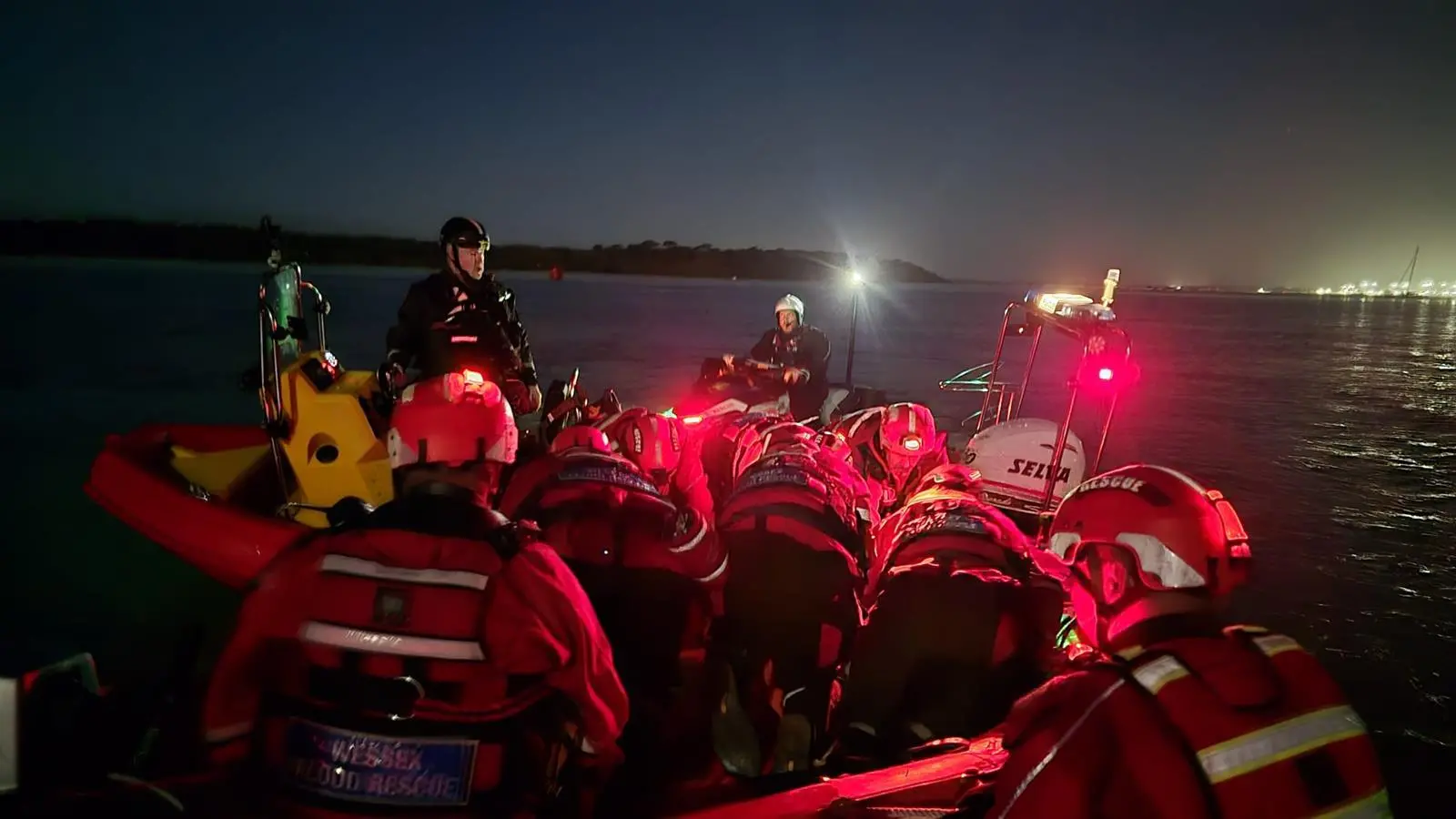
Many emergency services have retrenched to their core statutory functions, and the voluntary sector has similarly often been unable to generate sufficient funds to maintain a niche capability that sits outside their primary activities. Volunteer teams like Wessex Rescue have to work hard to raise funds to stay protecting their communities, despite having saved 332 lives to date.
In a nutshell
The total number of teams declared to the national flood rescue asset register is now well below 100. Many of these are unpowered boats, so capability has declined as well as overall number.
There are no central funds for research to improve search and rescue capabilities. Technology is changing rapidly: safer and different power systems; boat designs; sonar for casualty detection; game-changing aerial surface or sub-surface uncrewed vehicles/drones are currently left to private companies like my own and Specialist Small Craft.
You cannot conjure up rescue boat assets and their highly trained rescue technicians from thin air when required – much less get them on scene within 20 minutes*.
Government has a responsibility for response and resilience plans, including rescue assets, which are ‘fit for purpose’ by learning from past events.
One-off penny packets doled out after a high-profile wide area flood are a political gesture, not a sustainable life saving resource that can be relied upon to cope with the known threat.
Shifting a tiny portion of the flood defence budget would enable sufficient flood rescue assets to be ready to conduct the future rescue of thousands of lives.”
*Set by the 2006 Comprehensive Capability Requirement.
- National assessment of flood and coastal erosion risk in England 2024
- Cabinet Office, National Risk Register – 2025 edition
- National Audit Office, 2023. Government resilience: extreme weather.
- IPCC Report, 2019. (www.ipcc.ch/report/srocc).
- https://www.gov.uk/government/news/record-investment-to-protect-thousands-of-uk-homes-and-businesses
- NFCC’s Statement: https://nfcc.org.uk/our-services/position-statements/flooding-response-position-statement/