![MaritimeJournal[Seawork]](https://www.maritimejournal.com/wp-content/uploads/2026/09/MaritimeJournalSeawork.svg)





Green hydrogen tanker concept
A new liquid hydrogen tanker concept could be a critical element in realising a green end-to-end liquid hydrogen supply chain
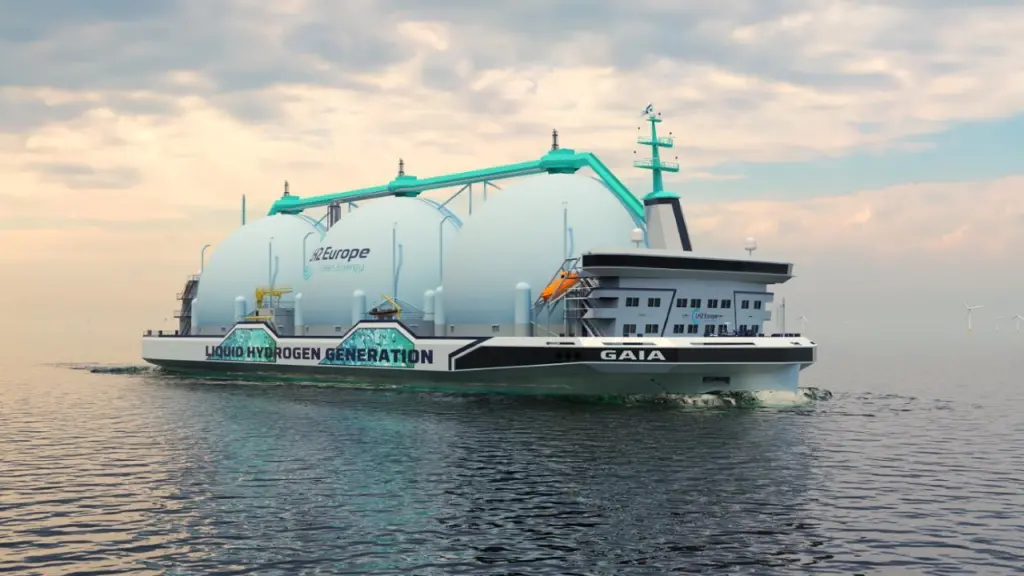
The tanker, developed as a partnership between C-Job Naval Architects and LH2 Europe, will transport liquid hydrogen from Scotland to terminals in Germany, with a strategic vision to expand supply to other markets as demand increases.
“Hydrogen will be essential to the future of energy. It is up to us how quickly we can make that happen. LH2 Europe aims to have a full liquid hydrogen supply chain ready by 2027,” said Dr Peter Wells, CEO of LH2 Europe.
“This tanker design is a key step in providing the infrastructure to make that clean energy future a reality. Current vessels in operation are not able to deliver hydrogen at the scale we expect will be required to meet the needs of the market.”
Grand plan
The liquid hydrogen tanker measures in at 141 metres and has a storage capacity of 37,500 cubic metres.
As liquid hydrogen is high in volume but 20 times lighter than LNG, the design required a unique solution featuring a trapezium-shaped hull design which creates enough deck space to fit the tanks without the need for ballast.
The vessel is powered by hydrogen fuel cells and will be equipped with three liquid hydrogen storage tanks with total capacity of 37,500 m3. This is enough to refuel 400,000 medium-sized hydrogen cars, or 20,000 heavy trucks.
Its tanks will have a much lower boil off than those currently used in the maritime industry. The limited remaining boil off will be captured and directly utilised in hydrogen fuel cells, providing power to the vessel’s propulsion systems, resulting in emissions made up of pure water.
LH2 Europe initially plans to deliver 100 tonnes per day (t/d) of green hydrogen using the tanker and ramp up production to 300 t/d within three years, depending on demand.
The ship is expected to be ready and commissioned six months before the first delivery of hydrogen in 2027.