![MaritimeJournal[Seawork]](https://www.maritimejournal.com/wp-content/uploads/2026/09/MaritimeJournalSeawork.svg)


High technology for ‘traditional’ barges
Spanish boatbuilder Aister has launched a pair of hybrid powered, aluminium-hulled barges for tourism duties in France.
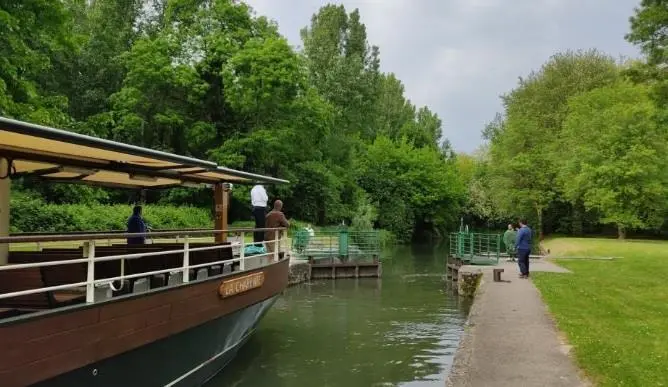
The Galician company, which led the way back in 2011 when it launched one of the first 100% electric boats for Spanish inland waters, has clothed the two efficient French barges in the marine engineering equivalent of traditional costume.
The two boats were built in Aister’s yard in Vigo Bay and have already been delivered to France to begin immediate operation.
Despite lightweight aluminium hull underpinnings, the vessels are covered in wood inspired by the historic barges that were used in the Charante River, famous for its landscapes, vineyards, food and traditions related to the production of cognac.
The design came from French naval architects SDI, with Aister responsible for the rest of the engineering. The boats measure 20 metres in length with a passenger capacity of 69, wi-fi connection, and the expected level of passenger comfort to cover three trips per day of an hour and a half.
With this quite demanding range in mind, the initial design brief was for half of the route to be completed in fully electric mode and the other half with some help from the integrated diesel engine. However, Aister managed to develop both boats so that they can cover the entire route in 100% electric mode without diesel assistance, which completely eliminates environmental pollution.
Aister is justifiably proud of this over-delivery and will be delighted to tell you more at stand F49 at Seawork international 2022.
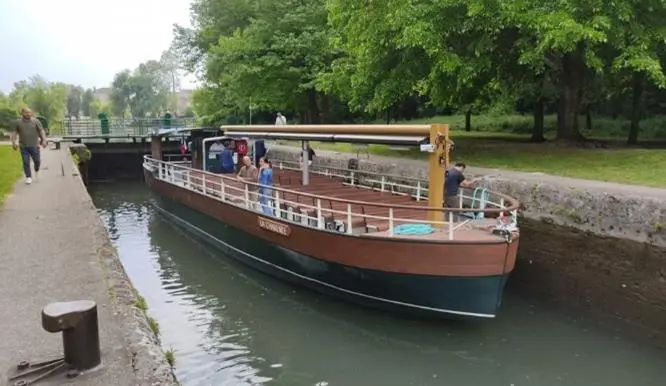
Main specification
Nº passengers seated: 69
PRM seats (passengers with reduced mobility): 1
Crew members: 2
Total number of people on board: 71
Bicycle capacity: 2
Total length: 20m
Beam: 4.5m
Draft: 0.45m
Hull material: Aluminium
Maximum speed diesel engine: 10 knots
Maximum speed in electric mode: 6 knots
Autonomy in electric mode: 4-5 hours
Related Articles
 SEAWORK NEWS
 INDUSTRY NEWS
 OTHER NEWS