![MaritimeJournal[Seawork]](https://www.maritimejournal.com/wp-content/uploads/2026/09/MaritimeJournalSeawork.svg)




More emissions rules ahead: UK government launches probe
The UK government has issued a Call for Evidence from ‘any organisation, group, business or individual with a view on air quality and the emissions of air pollutants from shipping in the UK and neighbouring waters’ with the prospect that the emission control area (ECA) of its waters could be expanded.
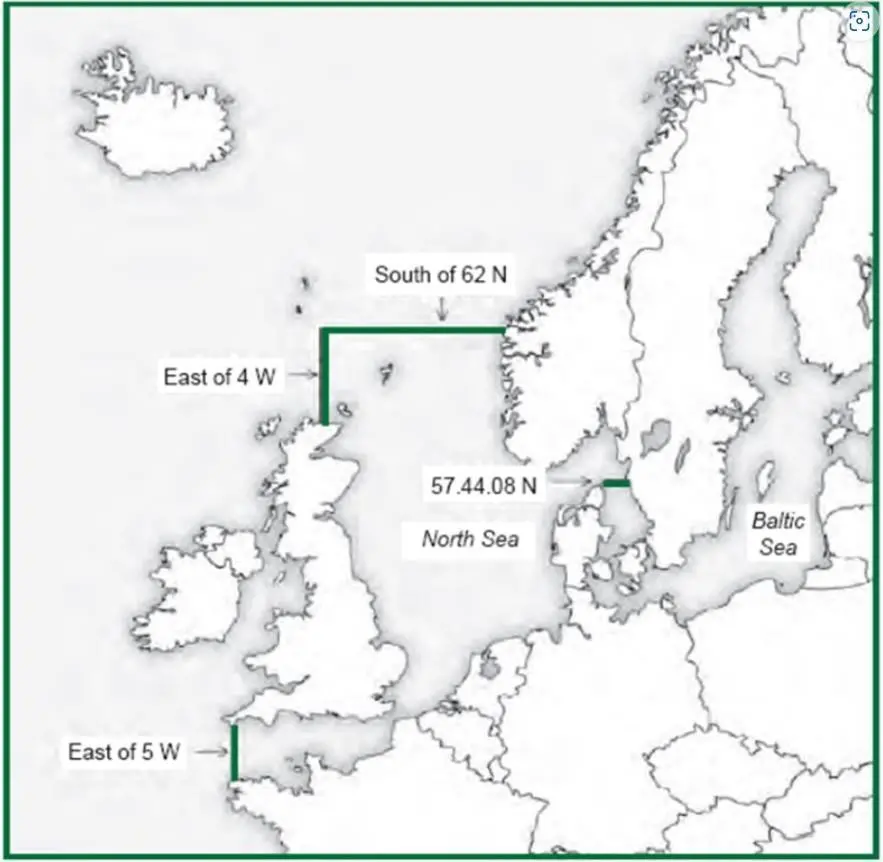
The North Sea ECA could ultimately be extended ‘beyond its current geographical limits’ or a ‘further, geographically distinct ECA’ could be established in UK waters.
“Emission control areas allow us to go further by applying stricter controls on air pollutant emissions,” the Department for Transport (DfT) says. “Working closely with neighbouring coastal states, the UK led international efforts to designate the North Sea and the English Channel as an ECA. The UK also supported the designation of ECAs across the world, from the Baltic Sea to North America. Last year, we supported the designation of the Mediterranean Sea as a sulphur oxide ECA and continue to support proposals by other countries.”
The Call for Evidence is clearly a first step towards imposing new restrictions – or penalties – on all vessels operating in the zone.
“Like other important sectors of the economy, the maritime sector is increasingly aware of its environmental and social impacts,” it says. “As set out in Maritime 2050, the sector’s air pollutant and greenhouse gas emissions require further attention.”
Workboat Association CEO Kerrie Forster said: “I think the concern here lies with the weighting of responses, for example who gets the larger say: A maritime trade organisation, green peace, a local nature group, or an enthusiastic individual with a passion for the environment and a grudge on marine pollutants? This is not a criticism – I believe that ensuring the wider stakeholder list on emissions is important to ensure a fair conclusion.”
The government will have to seek agreements with neighbouring coastal states and there is a long way to go before anything is put in force, but it seems inevitable that more regulations on vessels will ultimately be implemented.
“Decarbonisation offers a unique opportunity to address air pollutant emissions from the maritime sector on a permanent basis, by shifting to fuels and engine systems that either avoid combustion entirely or utilising clean burning fuels in engines optimised to minimise air pollutants,” the DfT says. ”Efforts to improve fuel efficiency will also reduce both greenhouse gas and air pollutant emissions.
“Shipping, as the backbone of international trade and the global economy, has an important role to play. Historically, the fuel used for shipping has been some of the most polluting fuel used across all transport modes. As a proud seafaring nation, the UK has led international efforts at the International Maritime Organization to limit pollutant emissions from shipping.”