![MaritimeJournal[Seawork]](https://www.maritimejournal.com/wp-content/uploads/2026/09/MaritimeJournalSeawork.svg)



Plans reveal first electric pushers in Europe
Designs for the first electric pusher vessel on Europe’s inland waterways have been unveiled by Lithuanian ship designer Western Baltic Engineering (WBE).
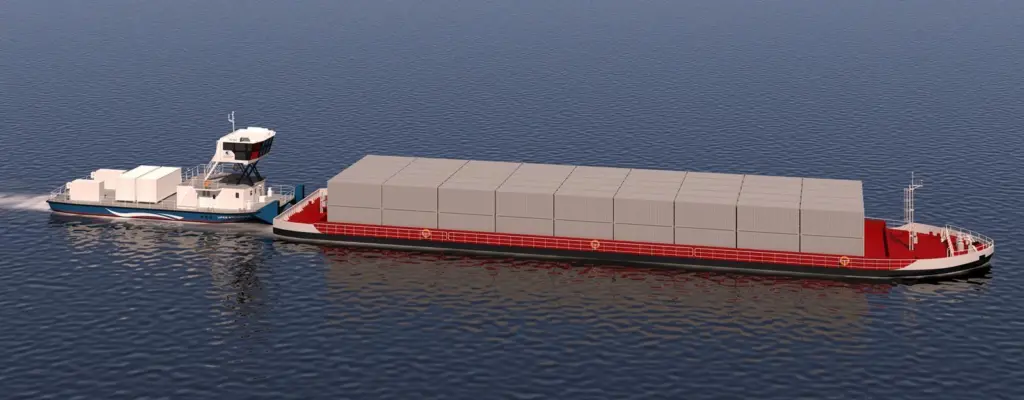
The 26m long Electric Eel pusher should be built next year for Lithuania’s Inland Waterways Authority in a bid to replace the diesel pusher vessels that dominate the market.
As well as using battery power, the vessel will have a wind turbine on deck to generate more electricity.
Three batteries with a combined weight of 74 tonnes will power the pusher, with two housed in TEU containers on deck, to be replaced by crane at harbour, while another is permanently held below deck and can be charged at the quayside in 9-10 hours.
“At the moment, recharge of the batteries is required after the end of a one-way trip in the case of a fully loaded barge,” says WBE. ”Each battery container, as well as the internal batteries, contain 2516kWh of energy, so totally 3 x 2516 = 7548 kWh of energy on board. The battery supplier will be revealed following talks at a later stage.”
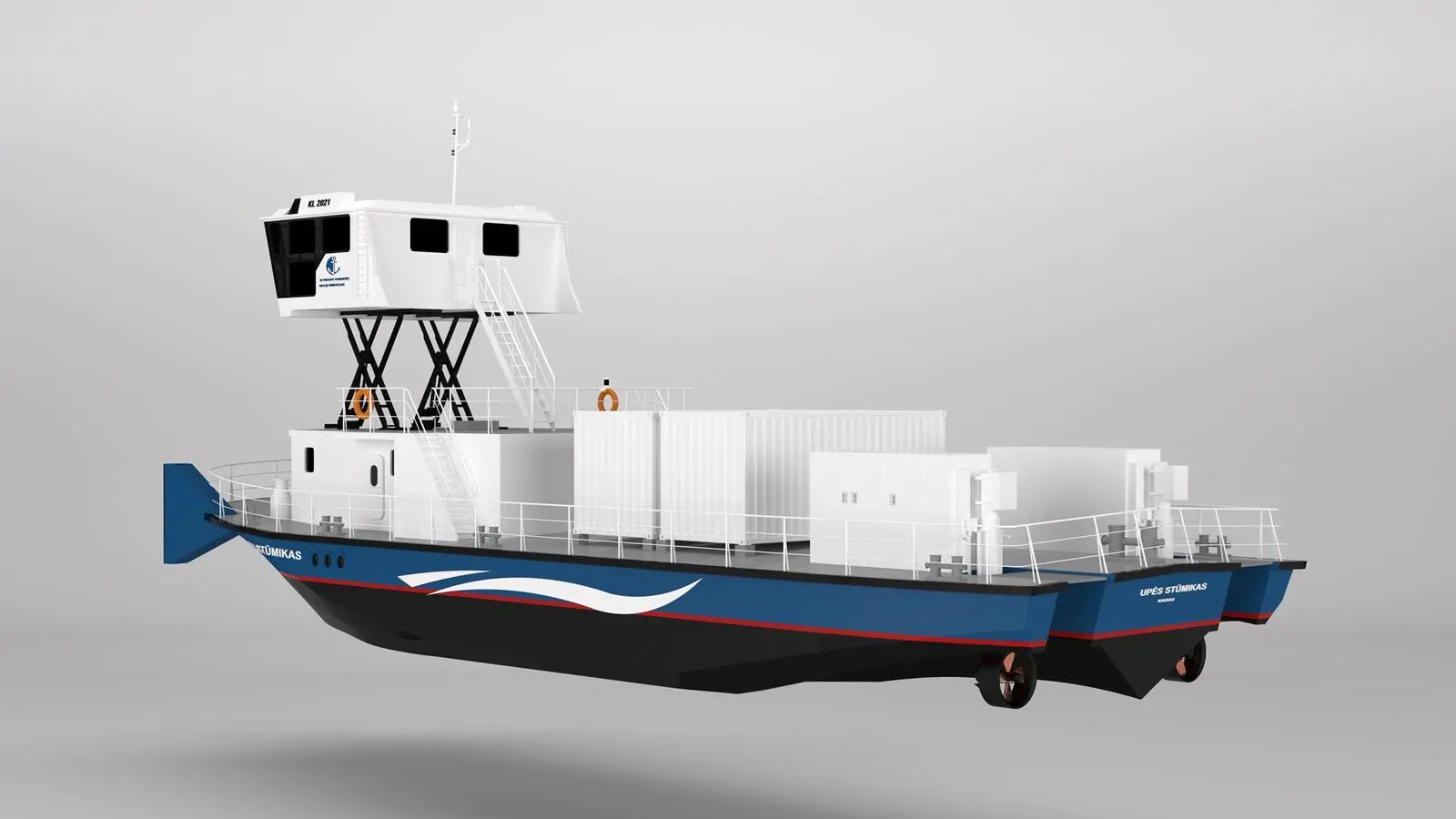
The batteries create an engine power of 500HP/400kW compared to a diesel equivalent which has 1,000HP/800kW, the firm says, and give the vessel a pushing capacity of 2,000 tonnes and a top speed of 22km/h downstream at 85% engine load.
”The idea came after we were approached by the Lithuanian Maritime Cluster to see if we could help the Lithuanian Inland Waterways authority create an eco-efficient pusher,” said Head of Sales & Marketing Eglė Mikalauskienė. ”The authority has big plans to ramp up use of the 450km stretch of waterway between Klaipeda on the Baltic Sea to Kaunas to switch cargo from the road network in line with EU policy.”
Mikalauskienė said the pusher would help remove 10,000 trucks a year from the country’s roads.

“The biggest challenge we faced was weight and draft,” she said. ”The Lithuanian inland waterway is very shallow so we had to design a vessel that was as light as possible, no more than 195 DWT, with a draft not greater than 1.2 metres. So we created a super-efficient hull design, and through trial and error using rigorous computerised fluid dynamic testing we have produced the smoothest possible hull resistance.
“We’re also using thin lighter steel, approved by class, to reduce weight while at the same time keeping safety of paramount importance. In addition, we have innovated the wheelhouse, using a jack up design made of aluminium, again to spread and reduce weight.”
Related Articles
 SEAWORK NEWS
 INDUSTRY NEWS
 OTHER NEWS