![MaritimeJournal[Seawork]](https://www.maritimejournal.com/wp-content/uploads/2026/09/MaritimeJournalSeawork.svg)


Scientists call for data from the ends of the earth
Data sharing could also have benefits for vessel operators themselves.
Scientists working at both poles are calling on shipping firms to share data as they pass through to get a more accurate picture of the true state of the environment in these remote regions.
Traffic in the areas – especially in the Arctic – has expanded rapidly, and the EU is urging the maritime industry to work with polar scientists to help them better understand the oceans.
Rob Hindley is head of Machinery & Structures at Aker Arctic, an independent company specialising in ice-going vessels, icebreakers, offshore marine structures, marine transport solutions and ports.
He is involved with the design of Arctic ships as well as consultancy work supporting the practical application of Arctic technology to new marine development projects.
Speaking on a panel at the recent SMM conference in Hamburg, he said it was vital the maritime industry understood that all the environment and bathymetric data it collected sailing through these icy waters should not just be left in data banks – it was ‘very, very low hanging fruit’ that could in turn help the oceans to be understood.
But it wasn’t just about handing over information to assess the oceans for the researchers’ use – the shipping and boating sector could also benefit because the data analysed could give clues to better route optimisation – avoiding ice, for example, which would mean reducing power consumption, as well as getting more accurate estimates of when and where it is safer to go faster.
“There’s a lot of talk about energy efficiency and emissions reduction, that we need more power to get through the ice – but not necessarily all the time,” said Hindley. “The aim is to reduce the power and we can do that by route optimisation and hull optimisation.
“Energy efficiency regulations take a very crude approach to ice-going ships because they are inevitably less competitive when it comes to sailing in open waters” – where ice-breaking equipment becomes redundant.
“This is where we have our heads stuck in the sand most of all,” said Hindley. More data, he said, could also perhaps influence decision making when it came to regulations.
The panel said research technology could easily be carried on commercial ships to measure ice thicknesses, temperatures and so on, and essentially act as measuring instruments.
The Arctic region in particular is becoming increasingly popular among tourists as well as researchers.
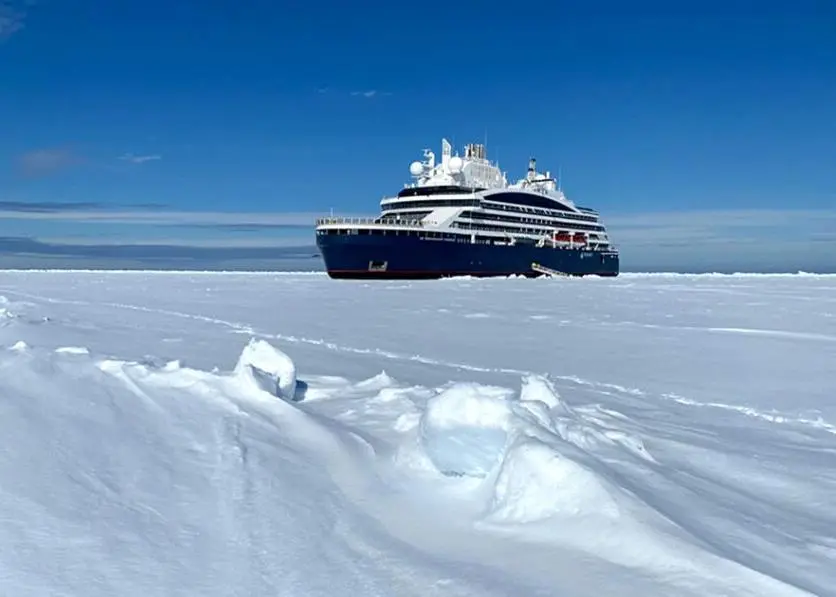
Earlier this year, a sightseeing boat was launched from Svalbard with a bespoke Volvo Penta engine, and last month we reported on PONANT’s new exploration vessel Le Commandant Charcot (pictured), which will set sail to collect ocean data among the icebergs.