![MaritimeJournal[Seawork]](https://www.maritimejournal.com/wp-content/uploads/2026/09/MaritimeJournalSeawork.svg)



Spotlight on Brest: the little-known city at the heart of French maritime
The recent SeaTech 2022 expo gave visitors a glimpse of a coastal city that’s the heartland of the maritime industry in France.
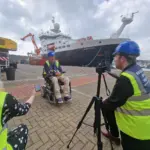
“Maritime is in the blood of the people of Brest,” says Eric Vandenbroucke, the director of the Division of Economic and International Development with Brest Métropole, the city’s council, which is instrumental in hosting the SeaTech Week expo every two years.
Known to leisure boat enthusiasts for its international nmaritime festival, which is held every four years (the next is 2024), Brest also hosts the bi-annual SeaTech Week, which attracts industry to a week of conferences on the latest innovations in maritime research and technology.
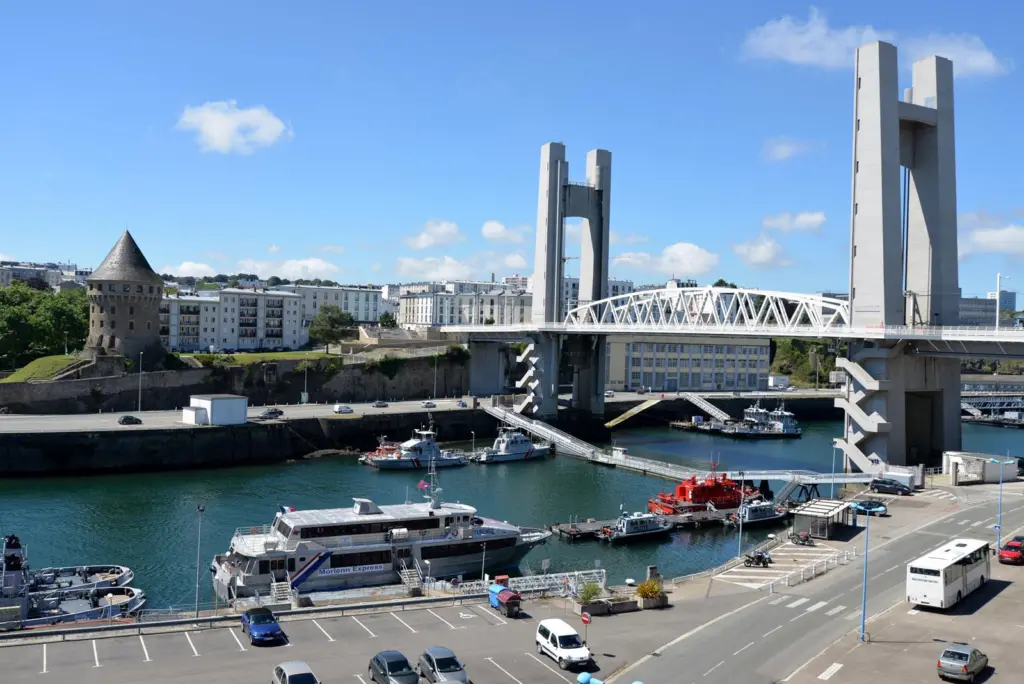
It’s an appropriate venue: in this city of around 220,000, which many visitors to France may never have heard of, the maritime industry is evident on every corner, from its naval base to its universities and research institutes, and the thousands of leisure boats moored at one of its ports.
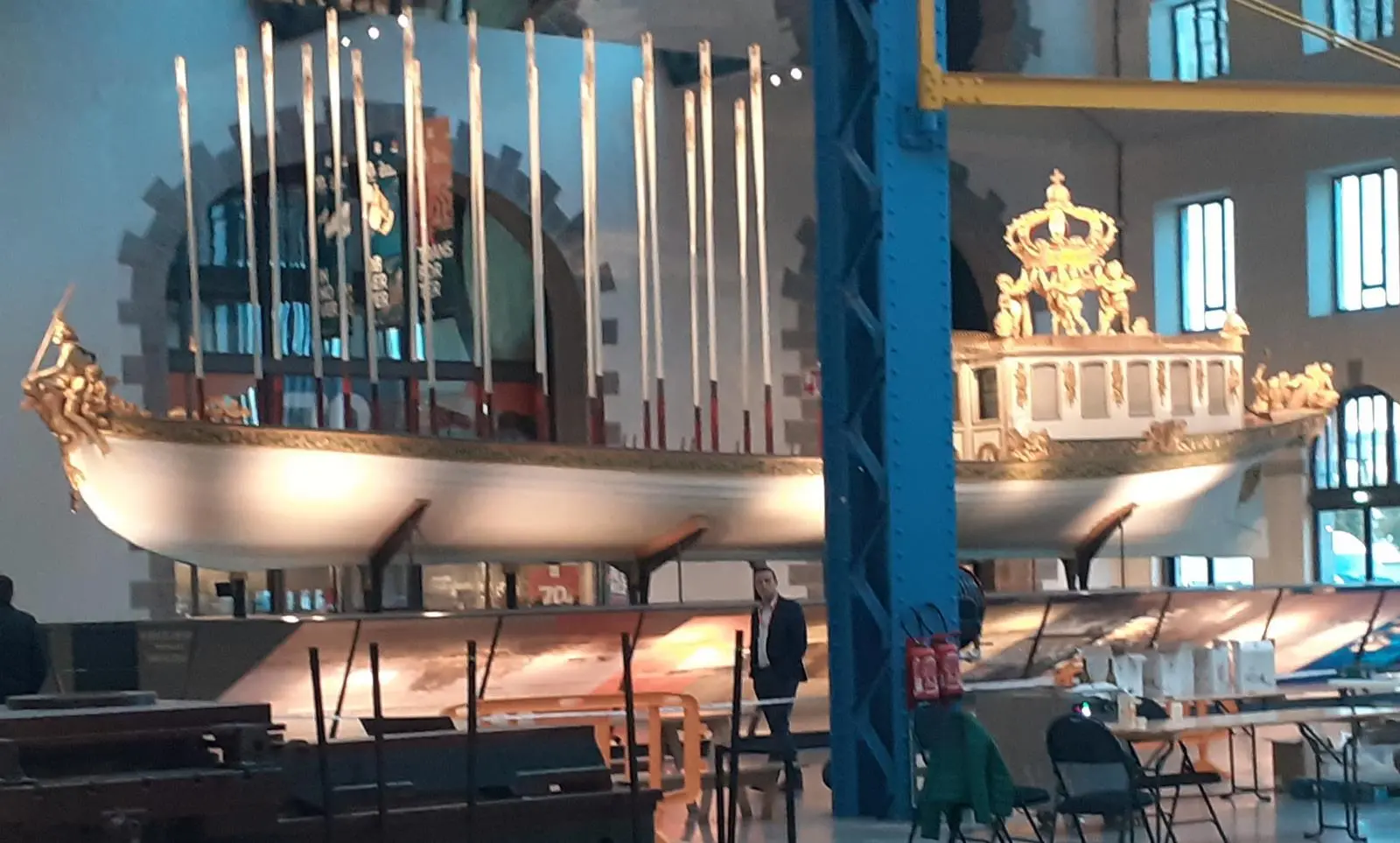
It even has the restored boat belonging to Napolean, the ‘Emperor’s Canoe’, installed at the impressive shipyard-turned-shopping mall Les Capucins, adjacent to the port.
Jobs in maritime total 42,600 in the Finistère region, which is a fifth of all maritime jobs in France. The port of Brest itself employs more than 6,000 people, with thousands more working in research institutes and universities.
Naval legacy still afloat
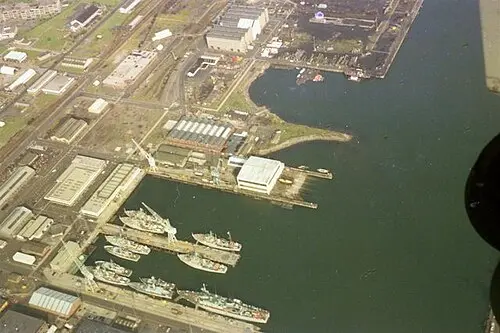
As the westernmost port in France, Brest was important to the Germans as a defence from Allies trying to re-take the country in WWII. The old city was demolished in a furious battle in September 1944 after which German General Ramcke eventually surrendered, but not before rendering all port facilities useless to incoming forces.
They have been rebuilt and Brest remains the largest port in Brittany, and for naval ship repair, it ranks top in France.
The Naval Group, a private company that maintains the French Navy’s entire fleet of submarines – four SSBNs (ballistic missile submarines) and six nuclear-powered attack submarines (SSNs) – is based in Brest, where each vessel undergoes a complete refit every 10 years. According to the Group, 220 different skills are required to maintain an SSBN.
This takes up 70% of the company’s activities in Brest. The other 30% is split equally between other domestic vessel construction and overseas customer services.
The Naval Group directly employs 2,100 people in Brest, and claims that when suppliers and equipment makers are taken into account, it supports 12,500 people in the Finistère region.
Naval ships are no longer built in Brest – this ended in 2000, with the building of the last military ship, the Charles de Gaulle, before building moved to Saint Azaire – but Brest remains the first place for ship repair.
Research, education, science
Brest’s leadership in research and technology has spawned a wide range of research institutes and universities to which it is home today – including, in 1964, the National Centre for Sea Applications – which became IFREMER (the French Institute for Ocean Science).
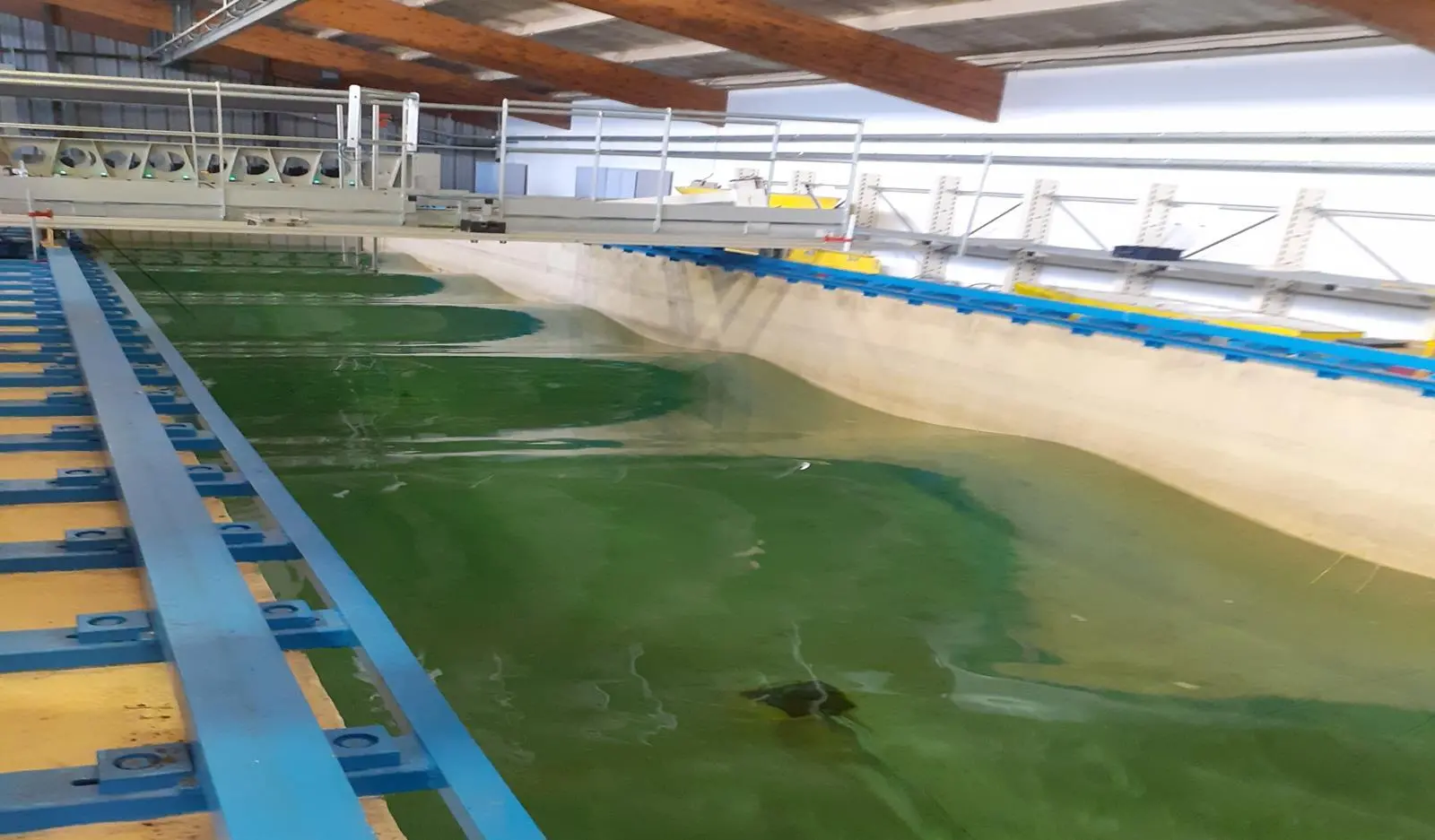
IFREMER was one of the world’s first institutes in marine science and technology. Today its research facilities include a wave tank facility, where structures from mooring lines to floating wind turbines, fishing gear to ROVs can be tested with controlled or randomised wave and tide behaviour before being deployed at sea. The facility has two tanks of different depths and is also fitted with a wind generator.
Brest is also home to the Corrosion Institute, which tests materials in special labs that emulate different scenarios – seawater, wind, humidity and so on – as well as cathodic protection testing. It also offers training.
As well as the Naval Academy, founded in 1752; and the Institut Universitaire Européen de la Mer (IUEM), a leading centre of marine innovation within the University of Bretagne Occidentale (UBO); Brest is home to the private college ENSTA Bretagne, which claims to have the biggest campus in marine engineering in Europe, training more than half of all naval architects in France in a three-year programme which includes ship design from scratch.
The campus has its own factory, in which a 3D hollow propeller had just been printed as a prototype for testing as we passed though – thanks to RAMSSES (Realisation of Advanced Material Solutions for Sustainable and Efficient Ships), a €10 million initiative funded by the EU.
Training and education are the lifeblood of the maritime sector in Brest, with an estimated 24,000 students descending on it every year. But there are worrying signs because the numbers are dropping, despite a rosy picture in terms of careers.

“They would have no problem finding jobs after graduating – the problem is a shortage in the work force,” says ENSTA general manager Bruno Gruselle. “But it’s just not as attractive as it was. The maritime sector is very keen to find staff and is working a lot with high schools and regions in France to attract people into the workforce and into shipyards.”
“Communities in Brest have always lived based on maritime,” says Brest Métropole’s Eric Vandenbroucke. “It goes back centuries – it was here in Brest that Napolean III transformed the naval base from sail boats to steam, and it remains the first place for ship repair today.”
The next SeaTech expo will be held in 2024, a year in which the next international maritime festival will also be held.