![MaritimeJournal[Seawork]](https://www.maritimejournal.com/wp-content/uploads/2026/09/MaritimeJournalSeawork.svg)




Zinus wins Europe and Asia contracts for port charging
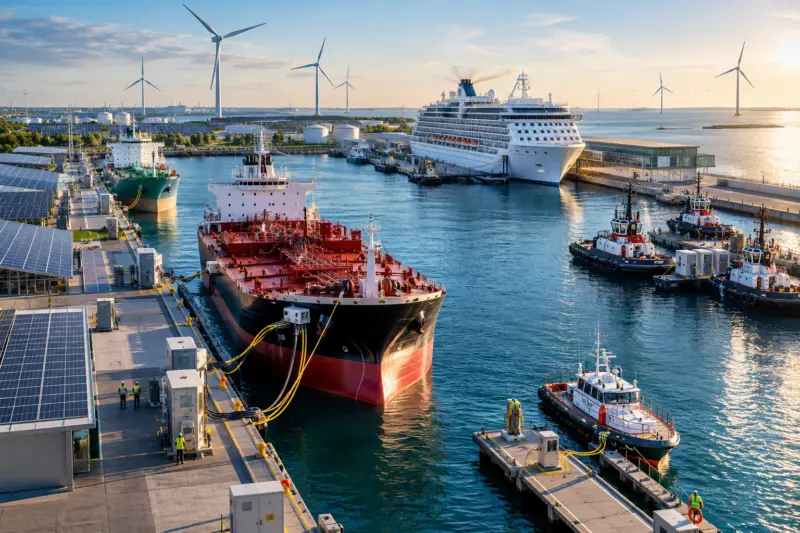
Port and vessel cable and charging infrastructure developer Zinus will deliver three cable-handling systems to help electrify the Port of Helgeland’s facilities in Sandnessjøen, Norway.
The company has also just secured an Asian breakthrough with a contract in Singapore, the firm said on March 10.
PSW Power & Automation, which has worked with Zinus since 2018, has ordered three Shore Power Compact units will primarily supply low-voltage shore power to platform supply vessels serving offshore installations in the Norwegian Sea, but can also be used with other kinds of vessels that call in to the port.
“By using clean electricity from shore during harbour stays, the vessels’ CO2 emissions are reduced compared to having their power requirements met by running on-board diesel generators,” Zinus sales director Ronny Olson said.
The units can deliver 2.5 MW of power, which would be enough to supply around 1,250 detached houses with electricity. The systems are particularly suitable for busy ports that need reliable, smaller shore power connections that can serve a wide variety of vessels.
Zinus has been contracted in Singapore to supply its automonous charging system to enable fully electric sea transport for workers travelling between the Shell Energy and Chemicals Park in Singapore.
The three electric passenger catamarans are owned by the Penguin International Shipyard in Singapoore, where three charging towers will be installed on land along with six receiving units for charging plugs on the vessels.
“This is an especially important order for Zinus, and we are pleased with our agreement with the renowned Penguin Shipyard,” said Zinus CEO Endre Eidsvik. The contract marks our breakthrough in Asia and is a key milestone that strengthens our position internationally. We see Singapore as a very interesting market by virtue of its great focus on environment and sustainability.”
Olson said Zinus has more than 120 of its systems installed in Norwegian and other international ports.
The systems are specifically designed for busy ports that need smaller shore power connections for a variety of vessels.
“Each unit has a small footprint, and the technology is thoroughly encapsulated and secured against seawater and harsh weather conditions,” says the company.
The units can be used as fixed or mobile installations.