![MaritimeJournal[Seawork]](https://www.maritimejournal.com/wp-content/uploads/2026/09/MaritimeJournalSeawork.svg)





Dredging and its drivers
The International Association of Dredging Companies (IADC) has released its annual statistical review, which highlights the drivers of the highly demanded modern dredging industry.
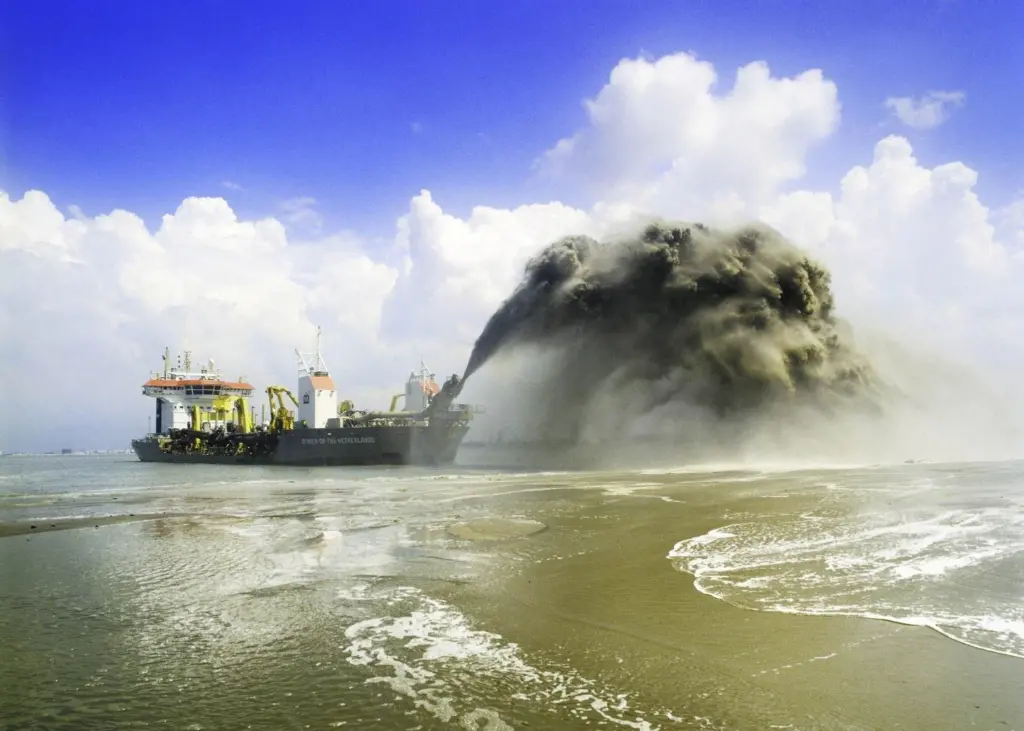
Since the economic downturn in 2009, the sector has seen a steady increase in demand, rising from -3.1% in 2009 to +3.5% per capita in 2012, according to Dredging in Figures 2012.
One of the main reasons for the surge is the ever increasing size of container ships. As the vessels increase in size, the capacity and efficiency of ports need updating.
Dredging solutions support ports in meeting this challenge by building involvement in the creation of new port and hinterland infrastructure, maintaining and deepening existing channels and ports as well as supplying dredged material for extending berths and quay walls.
Data and charts have also been compiled based on waterborne trade, which Lloyd’s Register says is set to double by 2030, as well as acknowleding climate change, consequential coastal defence demand and the other environmental protection issues.
The search for alternative fuel sources for the maritime industry, namely liquefied natural gas (LNG), is also driving the need for dredging services. With more and more resources being exploited offshore and often in remote areas at great depths, dredging is needed to prepare the seabed and dig trenches for pipelines carrying energy to shore. Offshore windfarms are also demanding of dredging support.
With the review, the IADC says it aims to answer questions about and provide insight into the major contribution of the industry to the world economy.
The review can be downloaded here.
Related Articles
 OTHER NEWS
 ACCESSORIES & EQUIPMENT
 ACCESSORIES & EQUIPMENT