![MaritimeJournal[Seawork]](https://www.maritimejournal.com/wp-content/uploads/2026/09/MaritimeJournalSeawork.svg)



EU gives go-ahead for major works at Gothenburg
€250 million engineering works at Scandinavia’s biggest port have been given the green light by the EU.
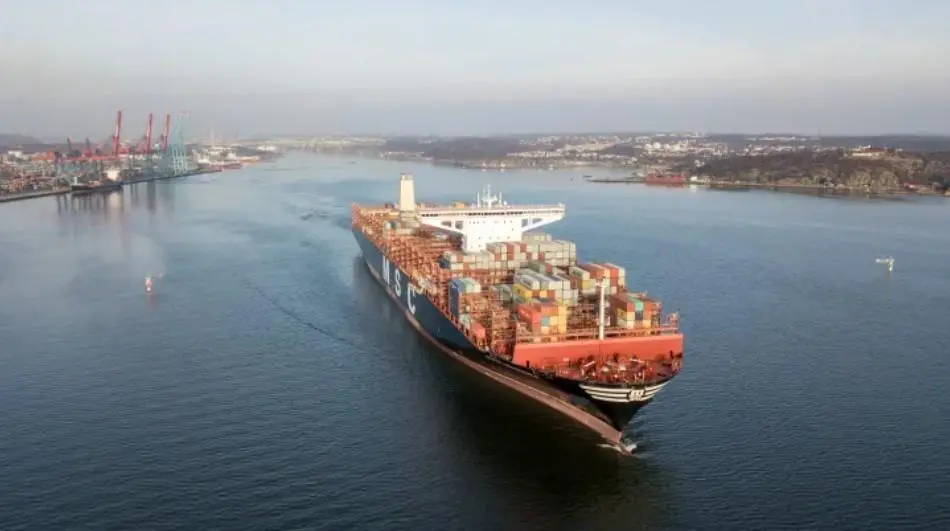
Eleven million cubic metres of clay will be dredged to deepen the fairway at the Port of Gothenburg by up to 17.5 metres, with 700 metres of quay undergoing reinforcement to accommodate larger vessels as part of the Skandia Gateway Project, which was conceived in 2019.
The first phase, the Western Quay, will include the excavation of 15,000 square metres of earth and rock at the terminal, sinking 1,500 piles and creating a 500-metre extension of the crane beam for the largest container cranes.
This will be followed by backfilling and the creation of a new land area at the terminal. Existing sheet piling at the quayside will be replaced with more powerful piling, an area of 50 metres from the quayside will be dredged, and the harbour basin will be protected against erosion.
The 700-metre quay reinforcement is also included in the first stage.
Jointly run by the Swedish Maritime Administration and the port of Gothenburg, preliminary studies, risk analysis, simulations, environmental permits and other preparatory work has already been done.
The final hurdle was the approval from the EU Commission, which has now been granted.
Offices will now be established next to the port of Gothenburg container terminal and a ground-breaking ceremony has been scheduled for February 2024.
“The stage has been set for a long time, and it is with great confidence that we can now press the button and proceed with this project, which is so crucial for the competitiveness of Swedish industry,” said Göran Eriksson, CEO of the Gothenburg Port Authority. “It is high time that we get started.
“As the largest vessels have become increasingly larger, a deeper fairway in the port is consequently required. Over 15 years, the capacity of container ships has increased by 50%, and today, the largest ships can only enter the Port of Gothenburg half-loaded. Meanwhile, shipping companies are envisioning even larger vessels.
“But this is not about the port’s raison d’être, but about ensuring that we continue to serve Swedish industry in the future. The current fairway depth is already a limitation as shipping companies are restricted in their choice of route to reach Gothenburg.
“With the fairway deepening, the largest vessels can enter fully loaded in the future, which in turn provides flexibility in existing traffic. It’s a climate aspect in itself, while the port becomes interesting in even more line setups.”
Quay reinforcement will begin in March next year, dredging in the summer of 2026, and completion is targeted for 2027/2028, said Jenny Röström, project manager at the Swedish Maritime Administration.
Gothenburg Port Authority will contribute about half, €111 million, of the funding, with EU member states putting in the rest.
Related Articles
 INDUSTRY NEWS
 MARINE CIVILS
 MARINE CIVILS