![MaritimeJournal[Seawork]](https://www.maritimejournal.com/wp-content/uploads/2026/09/MaritimeJournalSeawork.svg)

UK first: Semi-submersible FPF dry docked for decommissioning
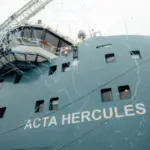
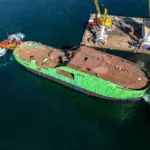
The first semi-submersible Floating Production Facility (FPF) to be decommissioned at a dry dock in the UK has arrived at the Scottish Port of Kishorn, where works will be carried out.
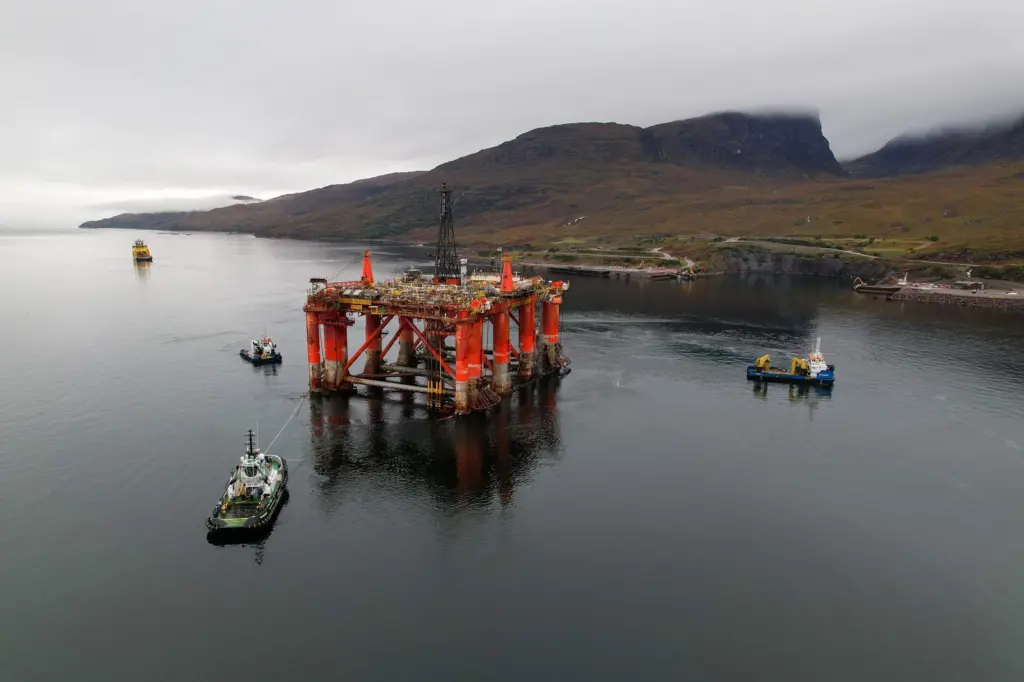
Northern Producer has been towed into Kishorn Port’s 160m diameter dry dock on the west coast of Scotland, where a brownfield site has been transformed into an operational port and dry dock.
Targe Towing’s Peterel and Muller Dordrecht’s En Avant 25 tugs brought her in, along with two workboats from Jifmar Offshore Services (the Voe Viking and Voe Vanguard).
“The owner of the asset, Northern Offshore, asked us to take it for decommissioning and we’re about to kick off,” Kishorn Port director Colin Ortlepp said. “It’s now in the dry dock, we are starting to pump the water out – we have had the two big gates put in and we are starting to pump it dry, which will take a couple of days.”
Dismantling will be done by Liberty Industrial, which will load steel and other materials onto a cargo ship and transport them to foundries in Europe, Ortlepp says.
“We think the amount of materials that will get recycled will be in the high 90s per cent,” says Ortlepp. “That’s what you really need to do – separate all the materials out and recycle as much as you can.”
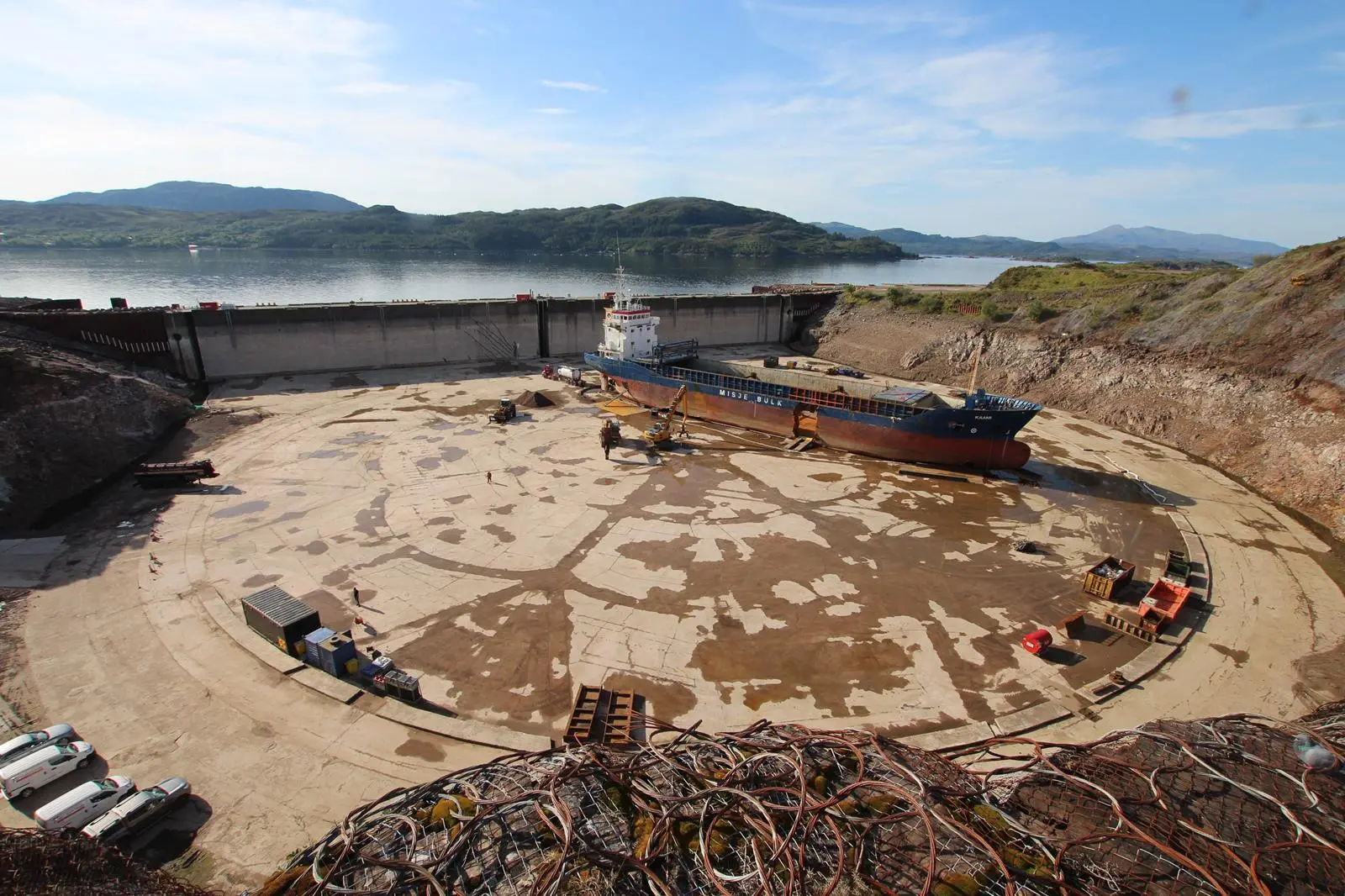
MV Kaani
This is what was done when the general cargo vessel MV Kaani was processed by John Lawrie Metals at the port in 2020 (see video).
The 89.8m x 13.19m vessel was recovered six miles off the northwest coast of the Isle of Sky after running aground.
Her full structure was dismantled and every piece assessed for recycling potential – and Ortlepp believes they managed to recover as much as 99 per cent.
“We’re well used to the size structure and the whole decommissioning and dismantling is a very well planned procedure,” he says. “A lot of safety and environmental planning goes into it – it’s not just a case of getting in there with a cutting torch.”
Site history
Kishorn Port in its modern guise has a brief history, only being taken over in 2019, as Covid was rearing its head.
The original yard was used for manufacturing and fabricating oil platforms in the 1970s and was owned and operated to 1987 by Howard Doris.
In 1975 the Ninian Central Platform was built, by far the largest project carried oout at the site and one that made full use of the 160m diameter dry dock.
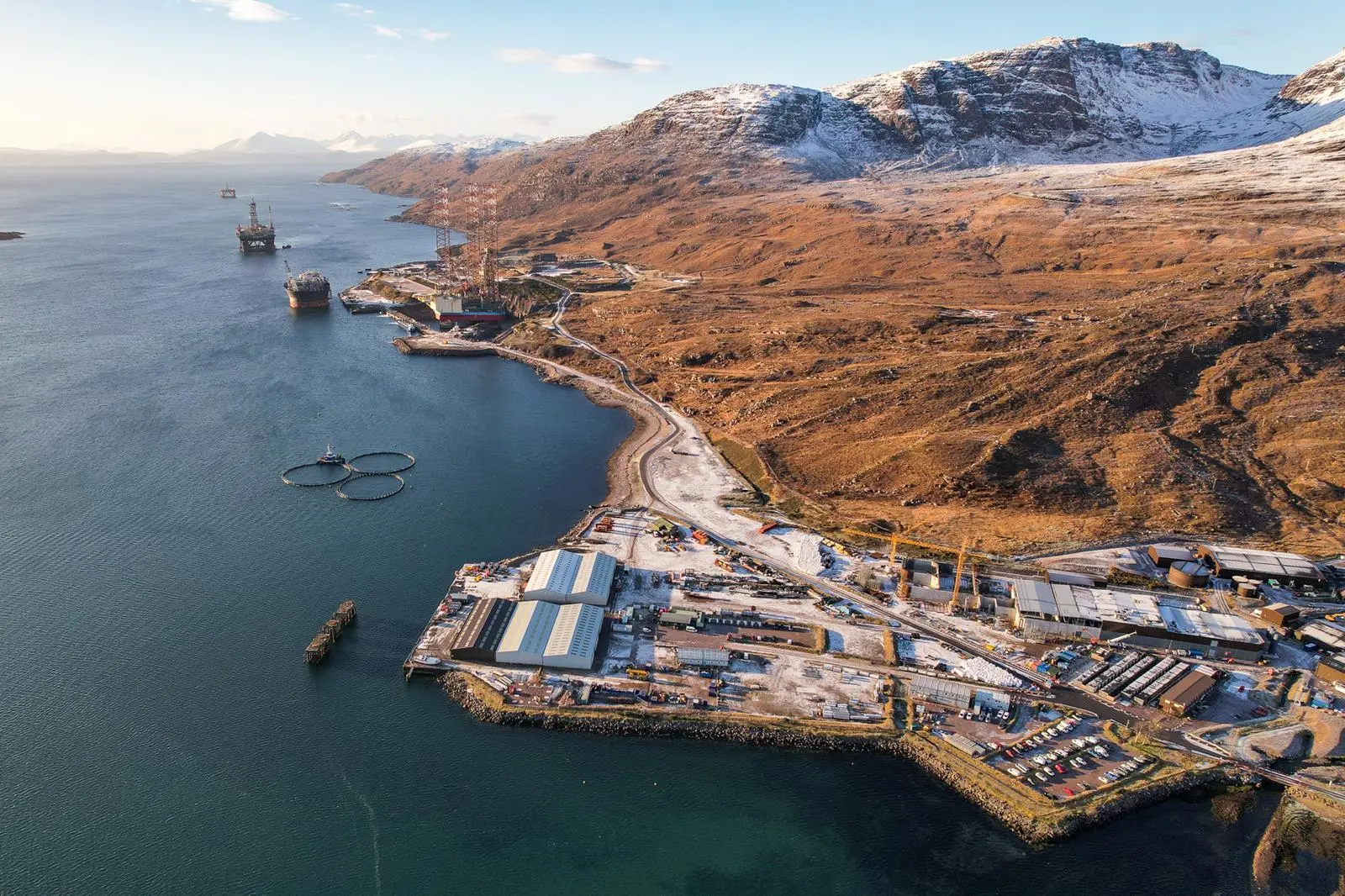
After that, Ortlepp says it had been used infrequently until it was taken over by Ferguson Transport (Spean Bridge) and Leiths (Scotland) in a 50/50 joint venture.
It already had a dry dock, but the rest of the 45 hectares that Leiths and Ferguson took over had been cleared and was semi grass, ‘semi tumbleweed’, says Ortlepp.
“From nothing we’ve put in offices, welfare canteen facilities, 120-bed accommodation, warehouses, storage areas – all the infrastructure you need to operate a port and dry dock,” he says. “We have upgraded some quay walls and are about to kick off a big expansion plan to give us more quayside space and reclaim about nine hectares of foreshore to give us more flat lead-in land. We’ve done most of the investigation and consulting and hope to start next year in a four-year programme.”
The port will focus primarily on offshore wind, says Ortlepp, and with three farms in the planning stages just off the west coast, there should be demand – but in any case with oil and gas and aquaculture clients, there will also be scope for that.
The port will not have its own fleet of vessels – those will be hired for clients or they can bring their own, he says.
“We’ve had a lot of interest from people looking for port space,” Ortlepp says. “The UK needs a huge amount more of flat land to store and assemble things, and also to manufacture things like turbine bases.
“But I do think there’s a real push from government and others to keep the value here. There’s a whole range of things: local economies, circular economies, keeping things local; there’s recognition particularly by the operators now about your corporate social governance, that you shouldn’t be sending things away and sticking them on beaches in far-flung places.
“It’s about keeping value in the UK. Why should we be sneding things overseas when we can do them here in an enviroinmentally sound way?”
Related Articles
 INDUSTRY NEWS
 MARINE CIVILS
 MARINE CIVILS