![MaritimeJournal[Seawork]](https://www.maritimejournal.com/wp-content/uploads/2026/09/MaritimeJournalSeawork.svg)






Automated monitoring helps ports make certain
In Europe, ports are continually looking for ways to improve all-important turnaround time, to maximise throughput and, ultimately, revenue.
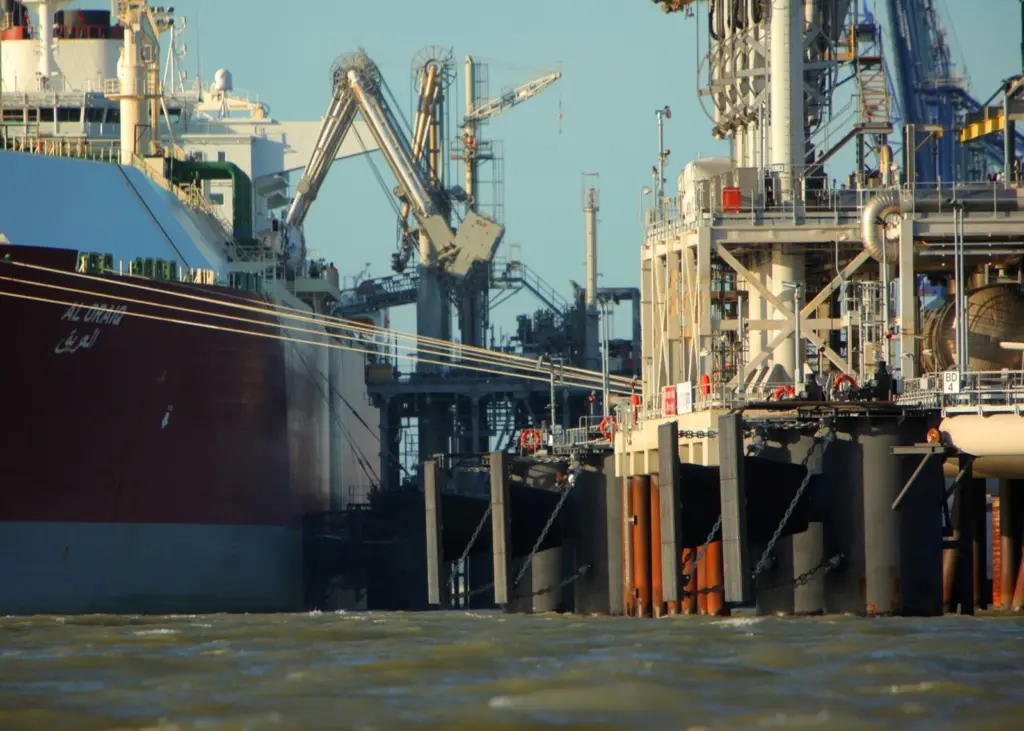
Automated monitoring, response and documentation are increasingly common, as they provide useful operational oversight and clarity.
Often, in the event of an incident such as excessive force exertion and resulting damage to the wharf structure, a dispute may ensue between port facility and shipping line. The downtime involved during investigations to resolve the issue can be extremely costly to the port. Monitoring and recording approach data has the potential to significantly speed up such investigations and, importantly, ensure an accurate resolution.
So important is the issue, that berthing speed and approach angle have been the subject of recent research by PIANC, which aims to produce a report providing data on actual recorded vessel approaches, under a range of environmental conditions. Ultimately, having clear guidelines on vessel design speeds will improve safety and efficiency.
This research was enabled by laser based Docking Aid Systems (DAS). It’s clear that automated monitoring, as well as providing more tactical benefits for individual facilities, is also an important tool in long term strategic planning.
Fender load monitoring is another, relatively new, concept that aids facilities in reducing downtime and improving throughput. Such systems allow port operators to collect valuable berthing data beyond speed of approach, such as information on the pressure exerted as the vessel continues to berth against the quay wall.
Additional monitoring of both the number of impacts a fender sees over its lifecycle and their initial force can also produce a clearer idea of maintenance requirements, and data can enable port owners to identify where efficiencies can be made.
A fender load monitoring system can even alert operators if an incident such as over-compression occurs, which in turn can help to avoid disputes in the first place, and subsequently the costly downtime that arises from lengthy insurance claims.
The industry is cognisant of the benefits of automation. Trelleborg’s latest Barometer Report highlighted that, along with improved safety, lower maintenance was seen as a key advantage. Indeed, half of the industry stakeholders surveyed believe an increase in monitoring and automation to be beneficial to their job role.
Any information that port personnel and vessel crew can receive about conditions in the field is valuable and greater use of automation means more data, which is in itself more reliably documented.
However, whilst positive about the benefits offered, the Barometer Report showed that less than 40% made use of DAS or GPS, suggesting that although the industry understands the benefits, stakeholders are not proactive in implementation.
Trelleborg’s Barometer Report is available as a free download from: urlm.in/rmyq
Related Articles
 INSURANCE, LEGAL & FINANCE
 EQUIPMENT
 EQUIPMENT