![MaritimeJournal[Seawork]](https://www.maritimejournal.com/wp-content/uploads/2026/09/MaritimeJournalSeawork.svg)


Motion monitoring for windfarm transfers
Fendercare and Strainstall Marine have received excellent results following work with subsea and offshore development experts Submarine Technology Ltd (STL) to test and validate their new Vessel Motion Monitoring System (VMMS).
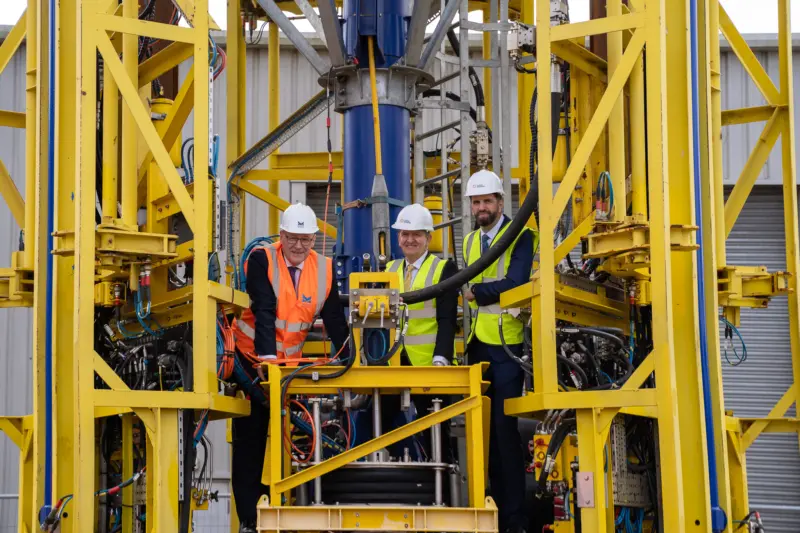
The VMMS was tested on STL’s ‘6 degrees of freedom Motion Platform in order to evaluate its performance when subjected to the pitch, roll, yaw, heave surge and sway motions normally experienced at sea. STL has been involved in many leading edge projects within the subsea and offshore arena, including: diving systems; ROV/diving bell launch and recovery systems; hyperbaric lifeboats; HP/HT valves; ship-borne space stabilised crew transfer solutions; well head control & monitoring systems, and automated ultrasonic NDT.
Scott Cruttenden, Strainstall Marine’s business development manager, commented on the results of the testing programme, “Utilising the STL motion platform, their instrumentation/software and expertise has provided corroborative data proving the accuracy of our system. The testing replicated various ocean conditions and will provide confidence to our customers and emphasise the importance of the VMMS and its operational value.
“Vessel motion monitoring is not new to Strainstall Marine as variations of the system have been supplied as a bolt-on to our Hull Stress Monitoring systems for many years. However, these have been engineered for much larger vessels as opposed to being specifically tailored to aid in offshore wind farm transfers.”
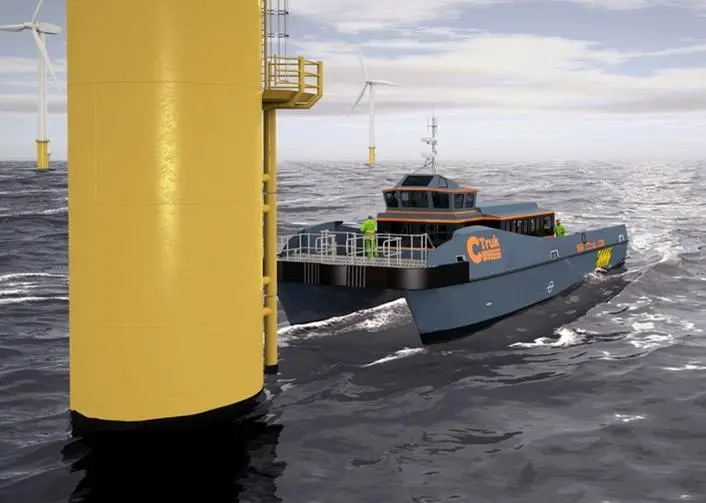
Fendercare Marine and Strainstall Marine have jointly developed the VMMS to provide accurate motion monitoring during wind turbine transfer operations offshore. Vessel motion is a key safety consideration when transferring personnel from shore to wind farm turbines. An accurate motion monitoring system can increase the available operating window considerably by providing objective data on all motion parameters rather than relying on significant wave height as the main limiting factor.
The VMMS can significantly improve safety levels during transfer operations and has the ability be used as a dedicated health and safety tool by collecting data for analytical purposes as well as supporting accident investigations. The software also includes GPS, enabling the user to create log files providing current data on a vessels location and the conditions.
When transporting personnel from shore to the work site (or between work sites) the motion trend displays can be used to quantify vessel motions, enabling effective changes in course and speed that mitigates against seasickness and provides a more comfortable environment for passengers. During docking operations and the offloading of personnel, the displays can be used to monitor heave levels and provide warning to the master when pre-set danger limits are about to be reached. All transfers can then be halted until conditions improve in order to safeguard personnel and avoid damage to vessels or equipment.
Related Articles
 INSURANCE, LEGAL & FINANCE
 EQUIPMENT
 EQUIPMENT