![MaritimeJournal[Seawork]](https://www.maritimejournal.com/wp-content/uploads/2026/09/MaritimeJournalSeawork.svg)






‘Rigwatcher’ developed for decommissioned rigs
The Northern Lighthouse Board (NLB), in cooperation with the Norwegian Coastal Administration (Kystverket) and the offshore oil and gas industry, has been at the forefront of developing new techniques for the marking of offshore facilities during the decommissioning process and post-decommissioning.
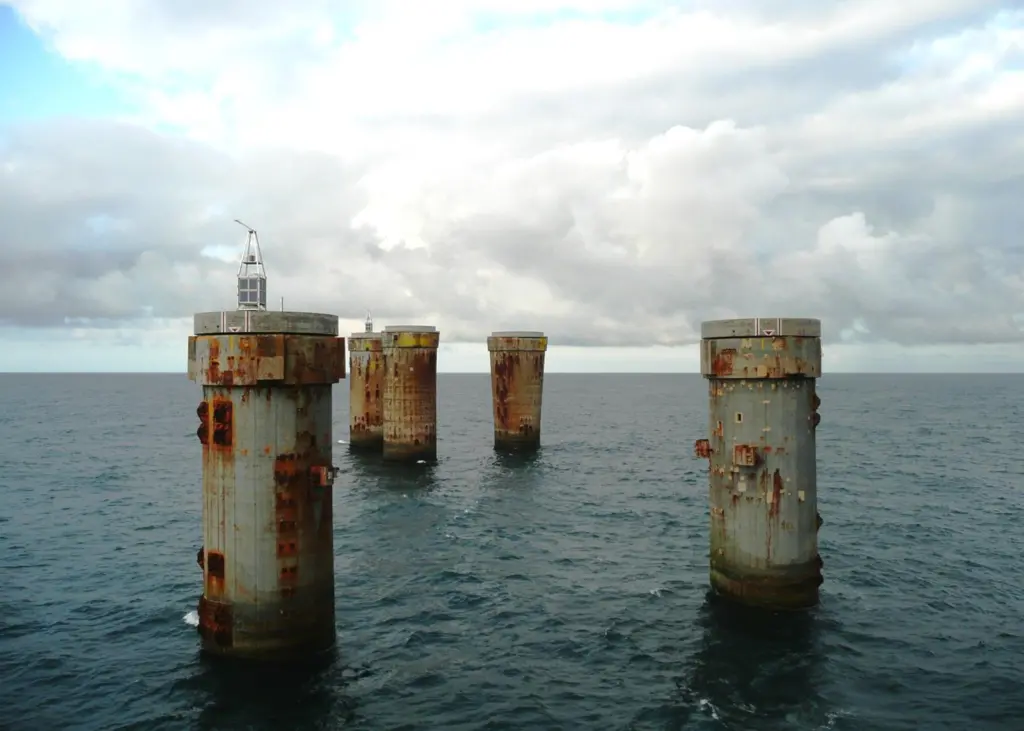
As the General Lighthouse Authority with responsibility for the oversight of all marine aids to navigation (AtoN) in Scottish and Manx waters, NLB has taken a keen interest in the navigational hazards posed by the requirement to decommission offshore structures as production facilities reach their end of life , power services are withdrawn and standard AtoN systems cease to be effective.
One of the first major fields to undergo full decommissioning was TOTAL E&P’s Frigg field, straddling the UK/Norwegian meridian. The decommissioning process took seven years, with the need for each structure to maintain continuous navigational marking throughout. This required the development of new AtoN configurations to fulfil the need of ensuring maritime safety.
During the decommissioning process, once platform power sources were withdrawn and while the topsides were dismantled, the structures were marked with Interim AtoN to provide a 10nm light and Racon. The Interim AtoN is a reconfigured NLB buoy superstructure fitted with additional solar panels, enhanced batteries and upgraded lantern. It could be moved about the diminishing structure to ensure it remained continuously conspicuous.
The most severe challenge was how to mark the remains of concrete gravity base structures which have been granted permission to leave the caissons and pillars in situ. Post-decommissioning, the remains of four structures rise up to 30m above sea level and are not accessible for manned intervention.
The Rigwatcher, developed jointly between NLB, Kystverket, TOTAL and AtoN suppliers, is an air-portable AtoN designed to be delivered and swapped out using helicopter long-line lifting techniques.
The resultant design is a fine balance between ruggedness, durability and portability. The Rigwatchers are designed to stay on site for up to four years, after which time they will be swapped-out for maintenance and replaced with units kept on warm stand-by. The AtoN incorporates a 10nm light, Racon, GPS synchronisation and satellite communications to allow remote monitoring from the Board’s headquarters in Edinburgh.
Related Articles
 VESSELS
 MARINE CONSTRUCTION
 VESSELS