![MaritimeJournal[Seawork]](https://www.maritimejournal.com/wp-content/uploads/2026/09/MaritimeJournalSeawork.svg)


Consultant considers Round 3 challenges
When it comes to UK Round 3 wind farms, it may be better to resolve some of the current issues and benefit from economies of scale, rather than relying on scaling up by using the operational experiences from Round 1 and 2.
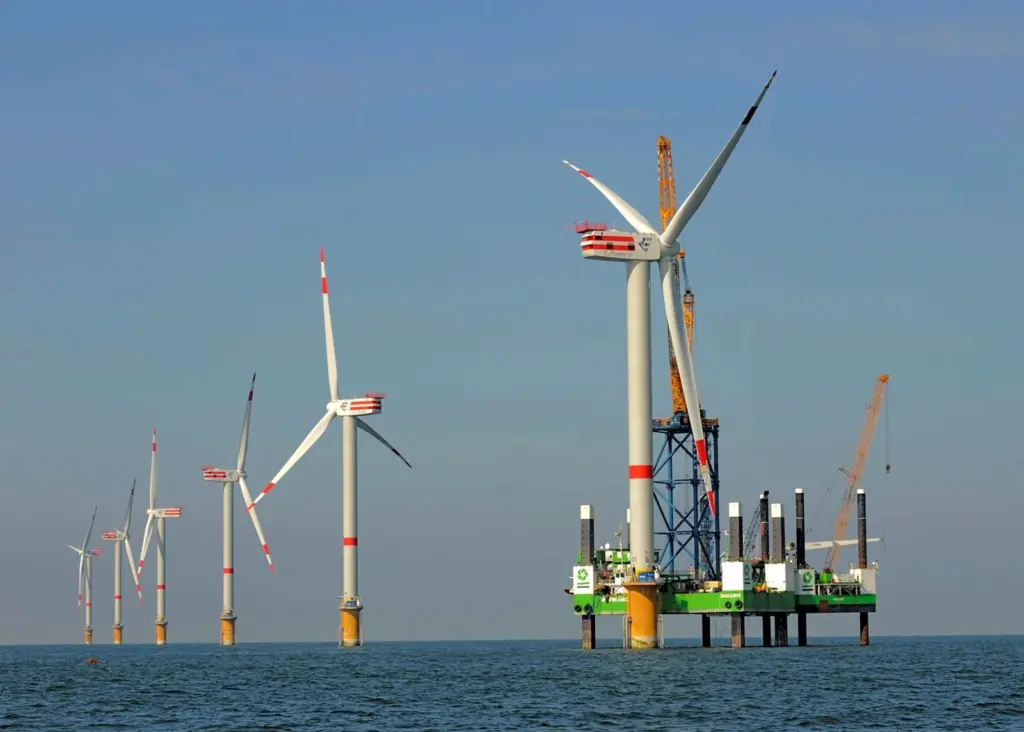
That is the conclusion drawn by Philip Codd of integrated maritime consultants Burness Corlett Three Quays (BCTQ).
Mr Codd said that the applications developed for Round 1 and 2 farms, which are generally located within 20km from shore with sea states of up to 2m, may not be so easily adapted for Round 3 “due to increased distances from the shore of up to 300km and sea states of up to 3m significant wave height”.
Environmental conditions are likely to reduce the availability of suitable weather windows for maintenance. Although more favourable conditions are likely to be found from April to October, with an actual window of only a few days it may be difficult to gain access.
The distance from shore will also mean that it will be more difficult to get equipment and personnel out and back in a day as is the case with closer to shore operations. It will thus require innovative solutions including use of fixed platforms, or mother and daughter ship arrangements. These are stationed at a safe distance from the wind turbines and can be a refuge in poor weather, whilst being used as a platform to launch smaller transfer craft from, making it a totally offshore operation.
An alternative may be to consider solutions in which turbines are assembled prior to leaving the shore, saving on offshore construction time and making use of available weather windows, but this will require a different technology and transport solutions than are currently being used for Round 1 and 2 works.
There are a number of designs under consideration, BCTQ having developed a mother and daughter craft arrangement as well as looking at novel assembly methods. Whilst the industry has evolved with much success during Round 1 and 2, it remains fragmented and there have been a number of players that have had their fingers burned financially.
Funding is currently provided from the balance sheet of the main energy companies, with interest also from equity players. However, with more expensive offshore projects, funding will continue to be an issue.
Related Articles
 OTHER NEWS
 FEATURES & VIDEOS
 MARINE CIVILS