![MaritimeJournal[Seawork]](https://www.maritimejournal.com/wp-content/uploads/2026/09/MaritimeJournalSeawork.svg)


EU economic recovery plan for offshore wind
The EU has published a mid-term evaluation of the European Energy Programme for Recovery (EEPR).
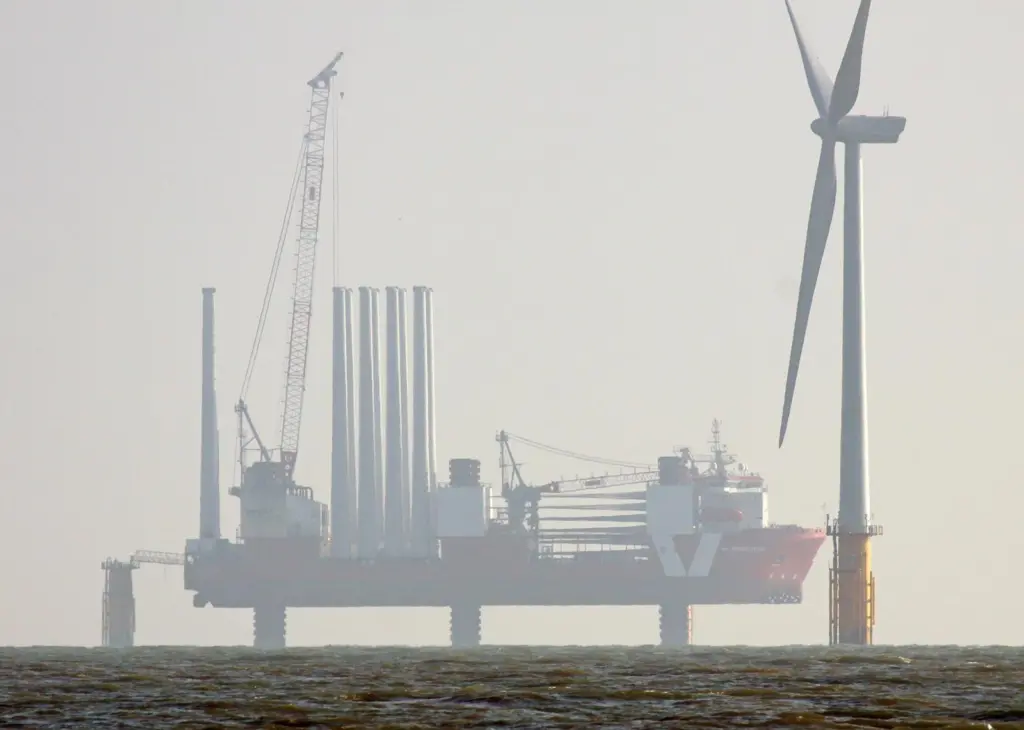
This is a funding project designed to address the effects of the 2008/9 economic crisis on member states’ energy policy objectives, including their support for the offshore wind industry.
The sharp downturn of the European economy in the wake of the global financial crisis came at a crucial time for the community’s energy policies, including a period of increasing global demand for greenhouse gas emission reductions, along with concerns about security of supply of energy resources.
As part of a larger EU economic recovery plan, the EEPR was aimed at the financing of measures that rapidly addressed both the economic crisis and energy policy objectives. The emphasis was on mature projects, capable of making efficient and effective use of significant amounts of financial assistance, in turn catalysing investment from other sources. Particular criteria were specified to seek out areas to receive assistance totalling €4bn. Three sectors were subsequently identified: gas and electricity infrastructure, offshore wind energy and carbon capture and storage. €146m of the total amount which was uncommitted by the end of 2010 was reallocated to a newly created European Energy Efficiency Fund.
Offshore wind funding totalled €565m for nine projects, the intention under the EEPR was that the wind farms should be at the frontier between demonstration projects and commercial development as developments moved into deeper waters further offshore, accompanied by the scaling up of innovative technologies. At the time, Germany was considered particularly relevant, not having the nearshore options of some other EU countries due to the risk to environmentally sensitive areas. Particular emphasis was placed on grid related projects, including the cross-border elements of transmission connections. The projects included Borkum West II, BARD 1, Thornton Bank, Baltic-Kriegers Flak and Aberdeen Offshore Wind Farm and Deployment Centre.
The report finds that while the EEPR role may not have been critical, it has had a real and important signalling effect to some projects and their funders. The EEPR contributed to mitigating financial and administrative risks (but not environmental risks) at the large and innovative projects. At the end of 2010, the sample projects were close to their budget consumption targets and in line with the objectives set out under the programme. The German EEPR projects are reported to have benefited, including making a short term contribution to economic recovery and the energy policy objectives of a low carbon economy. They have also been important in creating jobs and kick starting large scale deployment of offshore wind, associated industries and innovative clusters. It is suggested that this will, in turn, boost competitiveness of the EU industry as a whole with the potential for replication elsewhere in the EU.
By Peter Barker
Related Articles
 OTHER NEWS
 FEATURES & VIDEOS
 MARINE CIVILS