![MaritimeJournal[Seawork]](https://www.maritimejournal.com/wp-content/uploads/2026/09/MaritimeJournalSeawork.svg)






Marine renewables twenty-five years from now
As MJ celebrates its 25th birthday, we dig out the crystal ball and try to predict what the next 25 years of marine renewables will bring Europe’s maritime industries.
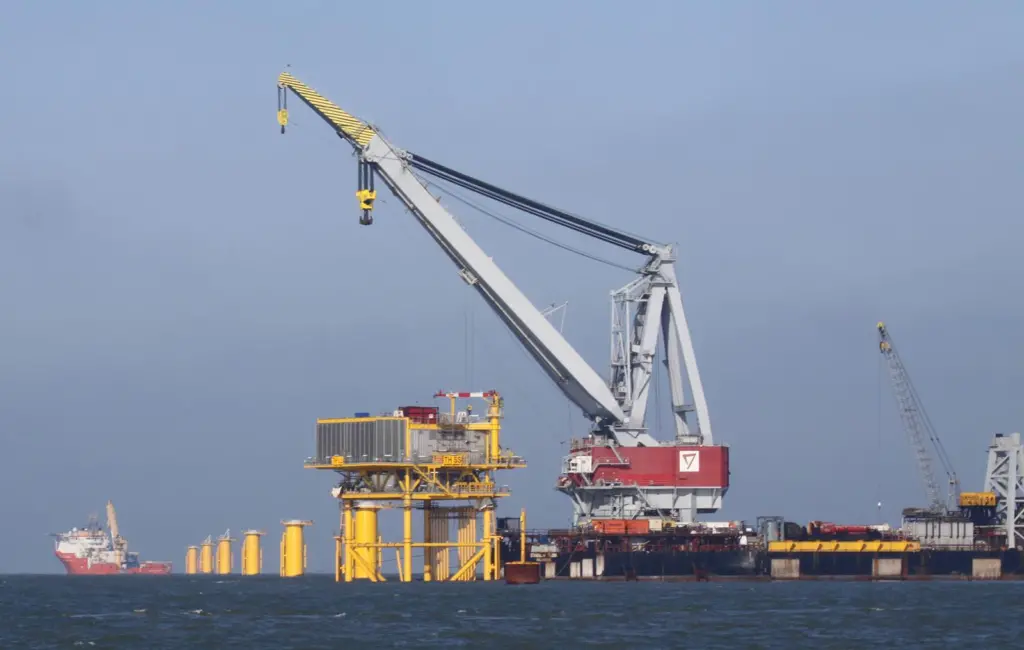
But we find the view within the ball currently somewhat cloudy and perhaps not an easy prediction to make. Important milestones will pass in the next 25 years. The EU has set a 2020 target for all 27 Member States that combined, 20% of the community’s gross final energy consumption, and 30% of electricity, should come from renewable energy (this includes all forms of renewables). Individual countries have different targets however depending on particular circumstances, including their position when the target was set. As an example, Malta has a 2020 target of just 10%, while Norway is aiming at 67.5%. The UK’s target is 15% by 2020, largely due to being somewhat behind other EU states at the start.
This target year is now just eight years away, no time at all in renewable energy project timescales. While there were early delays due to changes in the ownership line-up, the UK’s London Array windfarm will have been in the pipeline for over ten years when completed at the end of 2012. Many are now calling for at least 2030 to be firmly planted on energy policy roadmaps to provide the very minimum by way of pragmatic timescales for industries to plan for the future, based on firm policy commitments and confidence that their investments will deliver reasonable returns.
CLOUDY CRYSTAL BALL
Uncertainties surrounding long-term energy policies in a number of countries are making our hypothetical crystal ball somewhat cloudy however. The industry is showing signs of weathering the storm surrounding the protracted global financial crisis but it is the clouds perceived to be gathering over a number of government’s true commitment to green energy policies that makes predictions for 25 years’ time difficult.
The raison d’etre for renewable energy is complex and influenced by a number of factors including global warming, declining fossil fuel supplies and security of supply. No end of models and projections can be factored in by developers and investors determining their degree of involvement. Just as important however is taking into consideration energy policy landscapes put in place by politicians which at the end of the day determine the nature and size of the market.
A factor here is the distance of two inter-connected horizons. Back to London Array: for the developers, their horizon from first thoughts to decommissioning (or recommissioning) will be well over 30 years. For politicians however, their horizon understandably stretches only to the next election, perhaps just five years away. The EU collectively sets long-term targets, but slicing up the cake that is the energy supply mix is down to individual governments and politicians with varying degrees of interest in their own individual backyards.
Just as the fortunes of the oil and gas industries rise and fall with the price of oil, so their equivalent in the marine renewables industries will be partly influenced by the price we are prepared to pay for electricity. How we all consider the price paid by the environment is as important but something that as recent events show will follow its own course regardless.
THE GOOD NEWS
Enough bad news, let’s now take a more positive view and assume that the offshore wind and wave and tidal projects currently planned for Europe go ahead with the prospect for even more expansion Dare we even suggest a Round 4 in the UK? We are only considering Europe here but it must be remembered that while it is the current epicentre for marine renewables, the long-term potential in the global arena is truly enormous, important when considering the supply chain’s ability to handle a best case scenario.
Manufacturers of upstream components such as turbines are already developing machines of 6MW or more specifically for offshore applications. The location of facilities for their mass production, relative to location of the sites, will have a significant influence on cost reduction. Twenty five years from now will see existing windfarms approaching the end of their planned lifespan. Were they to be re-powered, the full cyclical potential for the industry will present whole new opportunities where, should this coincide with a ‘take-off’ on a global scale, even the most optimistic current hopes for future prospects could test supply capacity. A potentially tantalising prize for competing ports and regions will be the prospect of becoming established as long-term hubs for marine renewable industries, in a similar way to Aberdeen that has now established itself as a centre of global importance for oil and gas support industries, despite the backdrop of declining production in the North Sea.
The prospects for downstream sectors are also promising. Unlike actual wind, wave and tidal project developers who have to take the initial plunge, the support industries are able to respond according to demand (and commitment from developers) and increasing their involvement to satisfy demand for our best case scenario should not be a problem. With around 20 turbine installation vessels either recently, or soon to be delivered, shipbuilder Lamprell was recently reported as suggesting a further 20 may be required to satisfy long-term demand. It is worth noting that for those taking risks here, natural synergies between offshore wind and the offshore oil and gas industry allows future newbuildings to have multipurpose capabilities (as evidenced for example in the latest deliveries for Seajacks) and able to adapt to meet trends and swings in demand. With a number of novel concept ideas for turbine installation vessels currently being presented, it is hard to see that future requirements here also will not be satisfied.
The jury still appears to be out on what the eventual make-up of the O&M arrangements for the likes of Round 3 and the deepwater German windfarm sites will look like. Some of the UK projects are close enough to the shore to consider transferring personnel on a similar day-boat basis to Round 1 and 2 sites, albeit perhaps with larger boats able to accommodate more than the current norm of 12 passengers. But others are far offshore and in the longer term, the likely scenario will likely see a mix of day-boat, floating or fixed offshore accommodation with transfer boats, and helicopter transfers for more time critical repair duties.
Continuing consolidation within all sectors of the marine renewable industry will probably see many current start-up ventures and even what are now considered well established business ventures consigned to a mention on the company history page of larger global companies websites, particularly in the wave and tidal sector which perhaps holds potential which in 2012, is not appreciated to its fullest extent.
Summing up, 2037 will see many existing marine renewable energy projects coming to the end of their lifespan. Speculation beyond that will depend on our attitudes towards how as a society we regard the future of the planet and the composition of our energy supply mix. Decisions currently in the melting pot mean that this look into the future could potentially produce completely different predictions in just a few years’ time, let alone 25.
By Peter Barker
Related Articles
 OTHER NEWS
 FEATURES & VIDEOS
 MARINE CIVILS