![MaritimeJournal[Seawork]](https://www.maritimejournal.com/wp-content/uploads/2026/09/MaritimeJournalSeawork.svg)






Selling the economic benefits of offshore wind
The London based Centre for Economics and Business Research has produced a report, commissioned by Mainstream Renewable Power, aimed at providing clarity when debating the economic benefits of offshore wind.
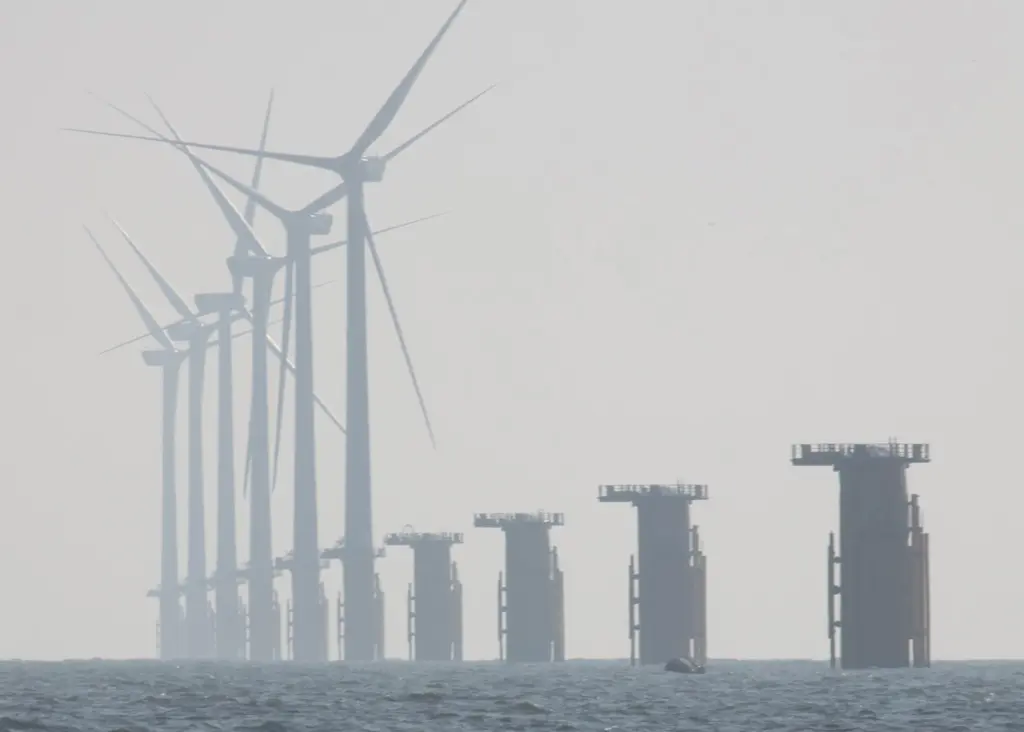
In his foreword to the report, Eddie O’Connor, founder and chief executive at Mainsteam, states part of their mission is to ensure what they call the ‘Value of Wind’ can be more readily understood. Referring to the “opaque” British electricity market (when considering renewable energy), he describes the task as “to more effectively counter the monotonous and wrong headed criticism of opponents of renewables, that they increase the cost of electricity for consumers”.
The price lowering effect of wind energy within the ‘Merit Order’ system is highlighted, whereby consumer demand is satisfied initially from plant with the lowest marginal cost of generation. Zero fuel costs puts wind and solar at the top of the merit order (with generation costs). The most efficient thermal plant, followed by more expensive fossil plant is subsequently brought on line as consumer demand increases.
Reference is made to Ireland which, despite having peak demands around one tenth the UK’s, has roughly twice the amount of installed wind plant. A 2011 study demonstrated the price lowering effect in Ireland, where wind generation of electricity lowered total wholesale costs by €74m, more than enough to offset the €50m cost of support schemes for wind. The British opaqueness, referred to when comparing the Merit Order effect with for example Ireland, is due to UK utilities mainly supplying to themselves, with savings internalised. It is hoped that current market reform proposals by the UK government should increase the transparency.
Significant advantages of offshore wind are highlighted in the work of the Offshore Valuation Group, which claims the UK could be a net exporter of energy from offshore resources by 2050. There are also potential benefits for the UK from investment in offshore wind, in terms of both contribution to GDP and balance of trade. Further economic benefits will follow from a properly interconnected electricity network linking the UK to neighbouring markets. The subject of grid capability is in the news currently, following claims that Germany’s grid infrastructure is not capable of meeting the demands of renewables, particularly offshore wind, with suggestions some projects will be delayed if the issue is not addressed adequately.
The report’s headline conclusions state investment in offshore wind in the UK will increase GDP by 0.2% by 2015, doubling to 0.4% by 2020 and 0.6% by 2030. Job creation will see 45,000, 97,000 and 173,000 full time jobs created in the same periods respectively. By 2030 offshore wind is expected to deliver an increase in net exports of £18.8bn, sufficient to fill nearly 75% of the UK’s current balance of trade deficit.
By Peter Barker
Related Articles
 OTHER NEWS
 FEATURES & VIDEOS
 MARINE CIVILS