![MaritimeJournal[Seawork]](https://www.maritimejournal.com/wp-content/uploads/2026/09/MaritimeJournalSeawork.svg)



The EU looks at renewable energy post 2020
The EU has published an Impact Assessment of various options open to Member States, at a time of increasing calls for the establishing of renewable energy policies beyond 2020.
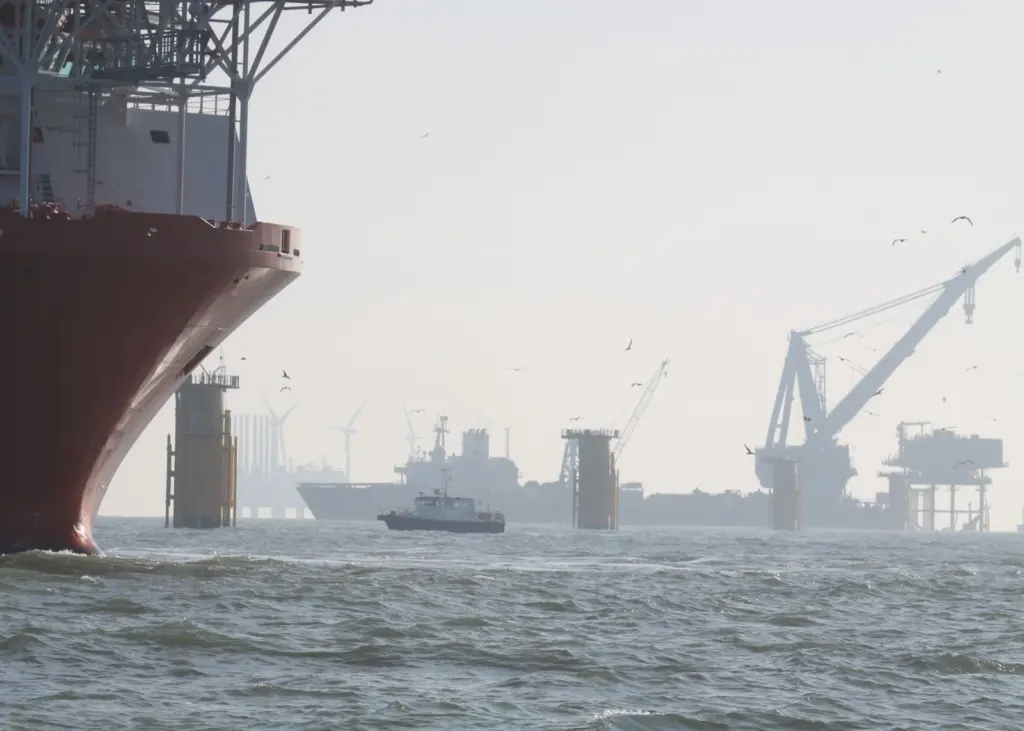
The rapid expansion of renewable energy, including offshore wind, where economies of scale and technology improvements have progressed faster than previously foreseen, has led to Member States increasingly reforming support schemes, sometimes failing to follow EU best practise, creating investor uncertainty, exasperated by the current financial and economic crisis.
It is now considered that the EU 2020 renewable energy target may not in itself be sufficient to promote long term renewable energy investment post-2020. Presentation of a post-2020 Renewable Energy Roadmap was originally planned for 2018. However, investor uncertainty and progress faster than anticipated means stakeholders need to consider planning for policy dependent projects beyond 2020 today.
Six challenges are identified: uncertainty from the lack of renewable energy objectives beyond 2020, different support schemes across Europe raising concerns from the perspective of the single market, concerns that current internal market arrangements do not address the investment characteristics of renewables, the adequacy of the energy infrastructure, uncertainties about future technologies and the transition to a sustainable and secure energy sector and finally, public acceptance, including concerns about land use (relevant to onshore wind).
Four policy options are identified and analysed: First, a business as usual approach with no new EU policies for promoting renewables after 2020. Secondly, decarbonisation (without renewable target after 2020) from a strengthened greenhouse gas reduction target. Third, binding renewable targets and coordinated support post-2020 involving EU and national renewable targets for 2030, and the fourth option, an EU-wide renewable energy target backed up by a harmonised support scheme and electricity system management.
An assessment is then made of the impacts of the options. Economic impacts (of renewable deployment) are complex, including creation of economic activity, reduction of fossil fuel imports increasing energy security, and promotion of energy innovation. On the negative side, renewables can displace investment in the conventional sector, with the potential of higher energy prices. Environmental impacts include reductions in greenhouse gas emissions. Effects on biodiversity can be avoided if established environmental rules are followed. The social impacts are generally positive through the creation of new and better jobs.
A summary states option one would be least effective in addressing investors’ uncertainty about EU renewable energy policy post-2020. Option two would provide a clearer picture post-2020, with support schemes being more cost effective thanks to an EU market integrated approach. The technology-neutral nature of option two would have a weaker impact on technology innovation compared to other options which include specific energy technology measures. Greater certainty for investors, further cost effectiveness and greater technology innovation along with a positive effect on public acceptance issues are advantages of option three. Option four is seen to address post-2020 policy uncertainties while promoting market integration. While it would promote more concentrated renewable energy deployment rather than distributed generation, the last option risks raising support scheme and infrastructure costs.
By Peter Barker
Related Articles
 OTHER NEWS
 FEATURES & VIDEOS
 MARINE CIVILS