![MaritimeJournal[Seawork]](https://www.maritimejournal.com/wp-content/uploads/2026/09/MaritimeJournalSeawork.svg)


Closing the gap between electric vessels and port capacity
Maritime decarbonization is no longer a distant ambition.

Across Europe and much of the world, it has moved from policy discussions to real vessels in the water. Battery‑electric ferries now run daily routes, hybrid propulsion systems are spreading across multiple vessel classes, and hydrogen and alternative‑fuel projects are advancing at a pace that would have seemed unlikely only a decade ago. The transition is under way.
Yet a new constraint is becoming increasingly visible: vessels are evolving faster than the coastal infrastructure meant to support them.
Ports and terminals are the fixed points of maritime transport. Ships can be redesigned, routes can shift and propulsion systems can change, but ports remain anchored in place –often shaped by decades‑old assumptions about power demand, vessel behaviour and operational patterns. As electrification accelerates, ports are discovering that their physical layouts and electrical systems were never built for high‑capacity charging, distributed‑energy logistics, or the rapid turnaround times electric vessels require.
Europe’s progress and pressure points
Europe offers some of the clearest examples of both momentum and friction.
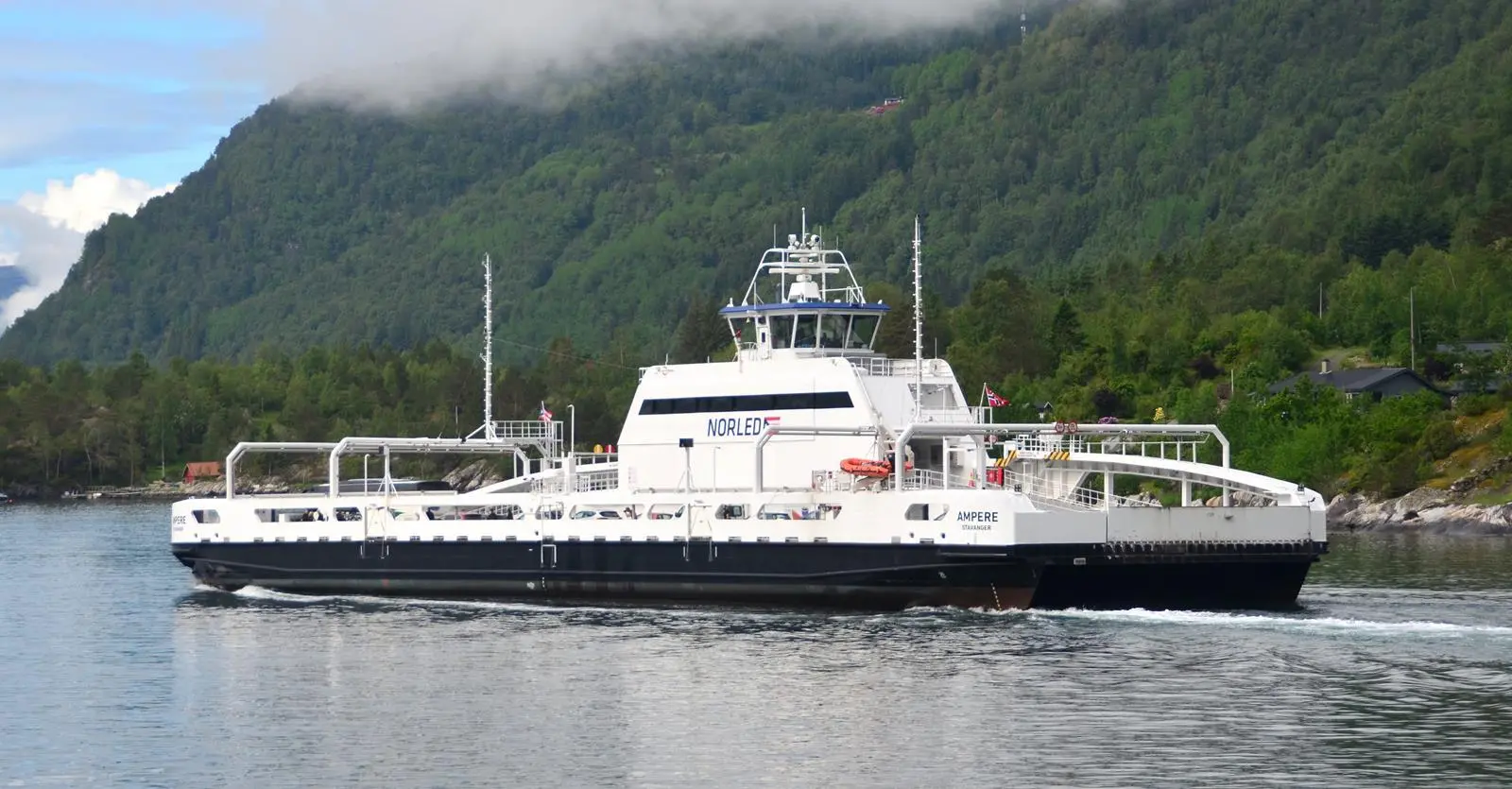
Norway stands at the forefront. When Norled launched the MF Ampere in 2015, it demonstrated that battery‑electric ferry service was not only possible but commercially viable.
Since then, dozens of electric ferries have entered service, supported by purpose‑built charging systems at terminals across the country. These projects show that zero‑emission operations work – and they also reveal how complex it is to retrofit existing port infrastructure to meet new demands.
High‑capacity grid connections, automated charging interfaces and grid‑stability planning all require significant investment and long‑term coordination.
Larger European ports face similar challenges at a different scale. The Port of Rotterdam has launched major initiatives around shorepower, alternative fuels and energy‑transition planning. These efforts aim to cut emissions from vessels at berth while preparing the port for a future defined by low‑carbon transport.
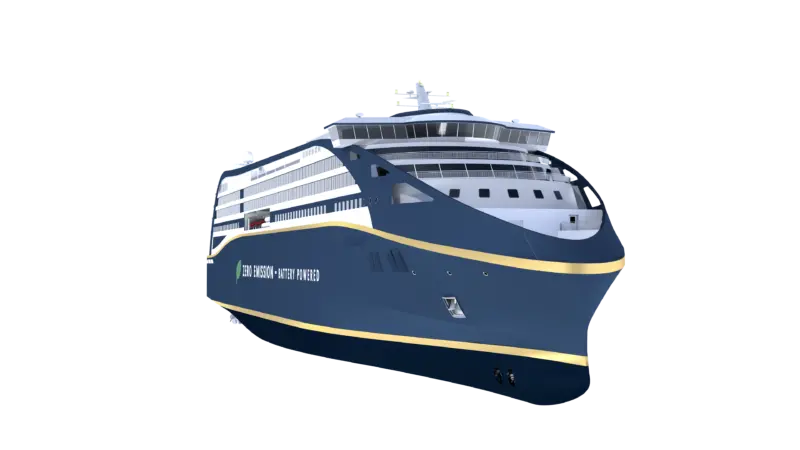
One recent milestone underscores the pace of vessel innovation: the large battery‑electric fast ferry built by Incat Tasmania for Buquebus – the largest fully electric ferry built to date. Its battery system, measured in tens of megawatt‑hours, rivals the daily electricity consumption of a small town. When vessels begin drawing power at this scale, port electrification becomes a systems‑level challenge involving grid capacity, buffering, scheduling and the physical footprint required to support these functions.
As vessels push into new performance ranges, a clear pattern is emerging across the maritime sector. Shipbuilders and operators are proving that large electric vessels are technically feasible, but the coastal infrastructure needed to support them is not keeping pace. In many regions, ports simply cannot expand their electrical or physical capacity fast enough to match the speed of vessel innovation.
At the same time, ports must manage rising cargo volumes, shifting logistics patterns, environmental regulation and ageing facilities. Expanding traditional port infrastructure is difficult and expensive, constrained by permitting, urban proximity, dredging requirements and long construction timelines.
In many ways, the future of maritime transport has already arrived. The question now is whether coastal infrastructure can evolve quickly enough to support it.
A new approach to coastal capacity
Relying solely on fixed shoreline facilities is no longer sufficient.
Deployable offshore or near‑shore systems offer a complementary path – one that extends port capacity without requiring major shoreline expansion. These systems do not replace traditional ports; they expand what ports can do and where they can do it.
This is the foundation of Blue Vector Technology, an infrastructure approach under development by Blue Vector Ocean Alliance.
Blue Vector Technology is built around patent‑pending modular concrete floating platform systems designed as deployable coastal infrastructure. Floating structures already support many offshore industries, but this concept introduces capabilities tailored for large‑scale port and energy operations.
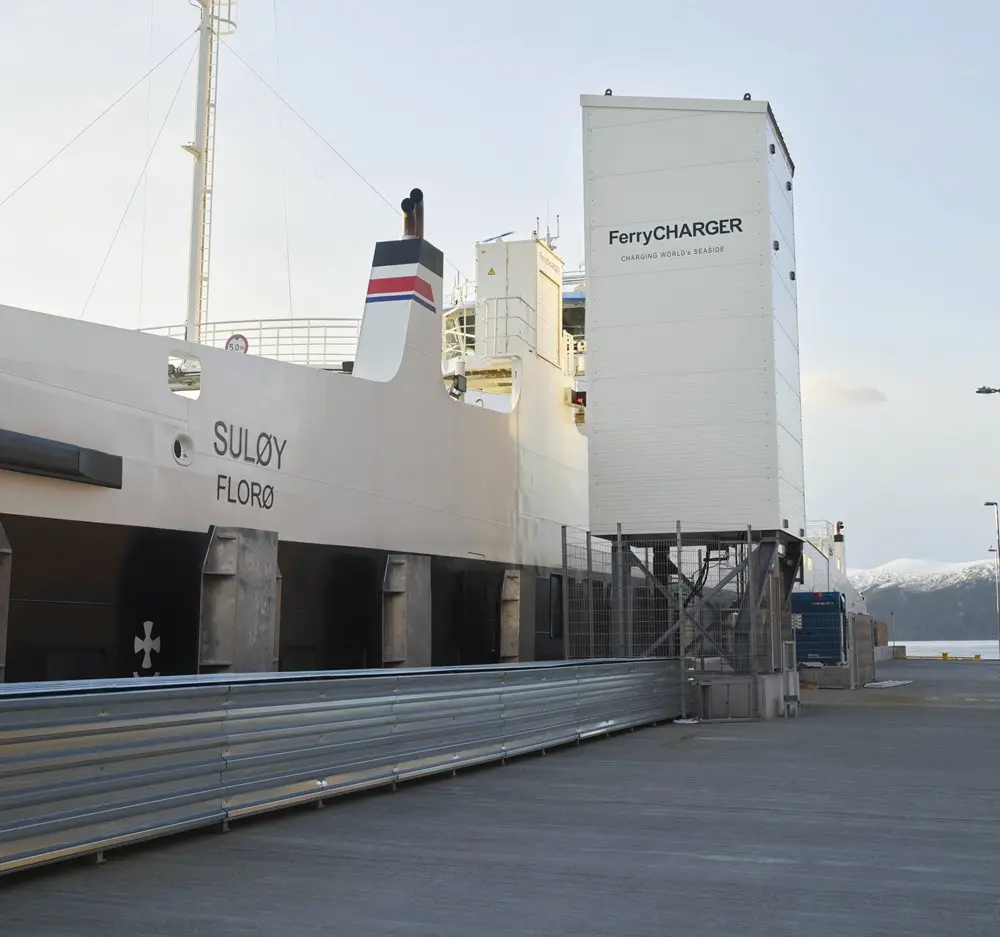
Source: Blue Vector Ocean Alliance
Electric ferry Suløy operated by Fjord1 charging at a FerryCHARGER station in Florø, Norway. The Norwegian Electric Systems installation delivers roughly 5MW of shore power, enabling rapid charging between crossings.
These self-sustained platforms maintain precise GPS position without traditional anchors through integrated control systems. They support large and changing loads while remaining virtually level and stable, adjusting buoyancy as equipment, cargo or energy systems are added or removed.
In severe weather, the platform lowers its profile to reduce wind and wave exposure while maintaining stability.
The platforms also function as self‑sustained energy infrastructure, capable of producing and buffering more energy than they consume. Depending on configuration, they can support large‑scale hydrogen production, hydrogen storage and buffering, high‑capacity electrical charging for vessels and other integrated energy modules required for zero‑emission maritime operations.
A distinguishing feature of the system is its patent‑pending passive eco‑restorative design. Integrated features encourage marine habitat development and assist natural water‑filtration processes while the platform operates as part of the coastal infrastructure system.
By promoting clearer water and reducing turbidity around operational areas, the system lowers sediment disturbance and reduces maintenance‑dredging requirements – helping ports limit both operational disruption and long‑term maintenance costs.
Together, these capabilities create floating operational nodes that support charging, cargo handling, energy production and maritime logistics offshore, near shore, in blue water or wherever capacity is needed.
Reducing barriers to deployment
Unlike traditional port construction, which requires dredging, shoreline reinforcement and gruelling permitting cycles, modular floating infrastructure can be deployed with minimal seabed disturbance.
Positioning is maintained through integrated control systems and mooring strategies rather than permanent shoreline integration.
Depending on configuration, these platforms are designed to serve as:
- Offshore charging hubs for electric vessels
- Cargo staging and transfer points
- Renewable‑energy integration nodes
- Hydrogen production and storage modules
- Logistics support facilities outside congested port basins
Europe as a testing ground
Europe’s leadership in maritime decarbonization makes it a natural proving ground for these ideas. Lessons from Norway’s electric ferry network, Rotterdam’s energy‑transition initiatives and ongoing innovation across the continent offer valuable insight into the challenges ahead.
Coastal regions of Italy and Greece stand to benefit significantly from deployable infrastructure.
Both countries rely heavily on inter‑island and coastal ferry networks – systems that are ideal candidates for electrification but constrained by limited grid capacity, historic port layouts and protected shorelines where expansion is difficult.
Floating offshore charging and energy platforms could supply the electrical capacity these routes require without altering sensitive waterfronts or disrupting tourism‑dependent harbours. In regions where geography creates natural bottlenecks, deployable systems offer a way to add capacity exactly where it is needed.
As vessel technology continues to advance, the central question is no longer whether maritime decarbonization will happen, but how quickly infrastructure can evolve to support it.
Deployable floating coastal infrastructure represents one path towards that evolution.
Michael Priv is the founder of Blue Vector Ocean Alliance. He is a construction engineering specialist and insurance professional with more than 40 years of experience in loss analysis and infrastructure evaluation across complex built environments.
His current work applies that knowledge and experience to deployable coastal infrastructure, focusing on solutions that reduce operational risk for ports while supporting electrification, hydrogen logistics, and environmental restoration across Europe and beyond.
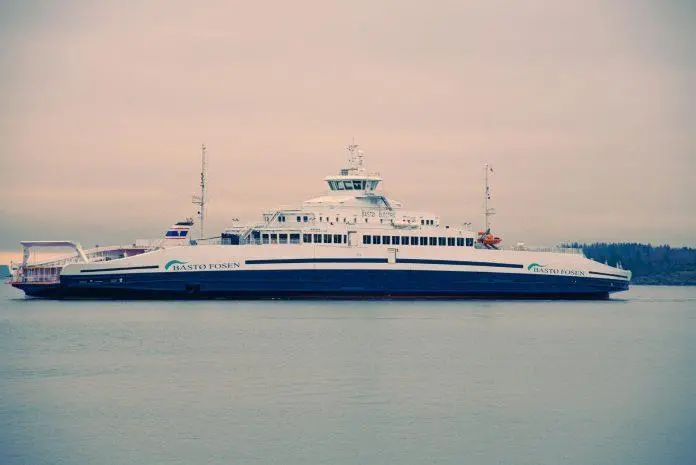
Battery-electric ferries are already operating on regular routes in Norway and other regions, demonstrating that vessel electrification is technically viable. Infrastructure readiness at ports is now emerging as the next constraint.