![MaritimeJournal[Seawork]](https://www.maritimejournal.com/wp-content/uploads/2026/09/MaritimeJournalSeawork.svg)





MEPC completes 66th meeting
The IMO’s Marine Environment Protection Committee (MEPC) met for its 66th session from 31 March to 4 April 2014, at IMO Headquarters in London.
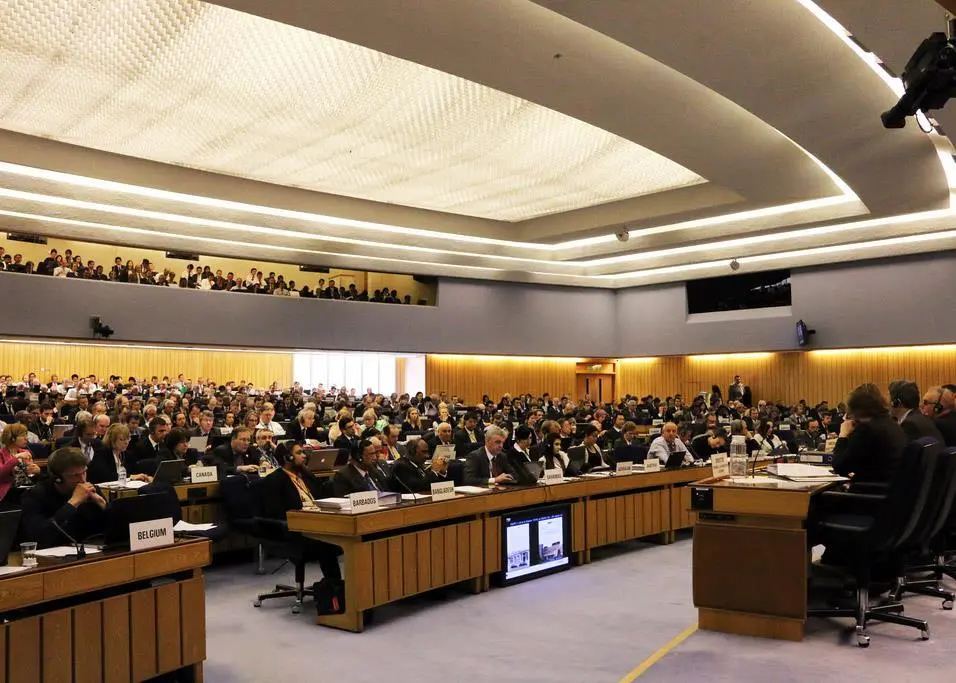
Among the items adopted by the committee were amendments to the MARPOL Convention to set a date for the implementation of Tier III standards within ECAs and to make the IMO Member State Audit Scheme mandatory.
MEPC adopted amendments to MARPOL Annex VI, regulation 13, on NOX, concerning the date for the implementation of Tier III standards within emission ECAs.
MEPC 66 additionally reviewed environmental provisions in the draft Polar Code and associated draft amendments to make the Code mandatory, and discussed the implementation of energy-efficiency regulations and the ballast water management and ship recycling conventions.
But, the global shipping industry is concerned about “serious” implementation problems associated with the IMO Ballast Water Management (BWM) Convention, which governments chose to gloss over at the recent MEPC meeting.
Voicing its concern in a detailed written submission, the industry – represented by the International Chamber of Shipping (ICS), BIMCO, Intecargo, Intertanko, World Shipping Cargo (WSC), CLIA and IPTA – addressed concerns about the “lack of robustness” of the current IMO type-approval process.
Industry concerns also included the criteria to be used for sampling ballast water during Port State Control inspections and the need for ‘grandfathering’ of existing type-approved equipment that has already been fitted.
But, governments at the meeting decided not to address these proposals until after the Convention has entered into force. The industry concerns were shared by a number of flag States.
As a result, the MEPC has decided to look into conducting a study of the problems raised. It is thought that this proposed study will take at least three years to complete, with no guarantee as to what actions might come from it.
Once the Convention enters into force, shipowners will collectively be required to invest billions of dollars in ballast water treatment equipment.
The shipping industry says it maintains that legal changes need to be made to make the ballast regime “truly global and fit for purpose”.
It therefore intends to make another full submission outlining concerns and proposing a possible way forward to the next IMO MEPC meeting in October 2014.
In the meantime, the shipping industry says it cannot recommend that further member states ratify the BWM Convention until confidence building measure on resolving implementation concerns have been set in place.
The MEPC also adopted, among others:
· Amendments to MARPOL Annex I, the Code for the Construction and Equipment of Ships carrying. Dangerous Chemicals in Bulk (BCH Code) and the International Code for the Construction and Equipment of Ships Carrying Dangerous Chemicals in Bulk (IBC Code), on mandatory carriage requirements for a stability instrument for oil tankers and chemical tankers, expected to enter into force on 1 January 2016;
· Amendments to MARPOL Annex VI concerning the extension of the application of the Energy Efficiency Design Index (EEDI) to LNG carriers, ro-ro cargo ships (vehicle carriers), ro-ro cargo ships, ro-ro passenger ships and cruise passenger ships with non-conventional propulsion; and to exempt of ships not propelled by mechanical means and independently operating cargo ships with ice-breaking capability, expected to enter into force on 1 September 2015.
Related Articles
 ACCESSORIES & EQUIPMENT
 ENVIRONMENT
 MARINE CONSTRUCTION