![MaritimeJournal[Seawork]](https://www.maritimejournal.com/wp-content/uploads/2026/09/MaritimeJournalSeawork.svg)





Cougar set loose to prowl seabed jungle
A Saab Seaeye Cougar XT ROV is to be a vital investigative tool in the Caspian Sea, sorting through the hazardous jungle of old pipes and cables on the seabed before new pipelines can be laid.
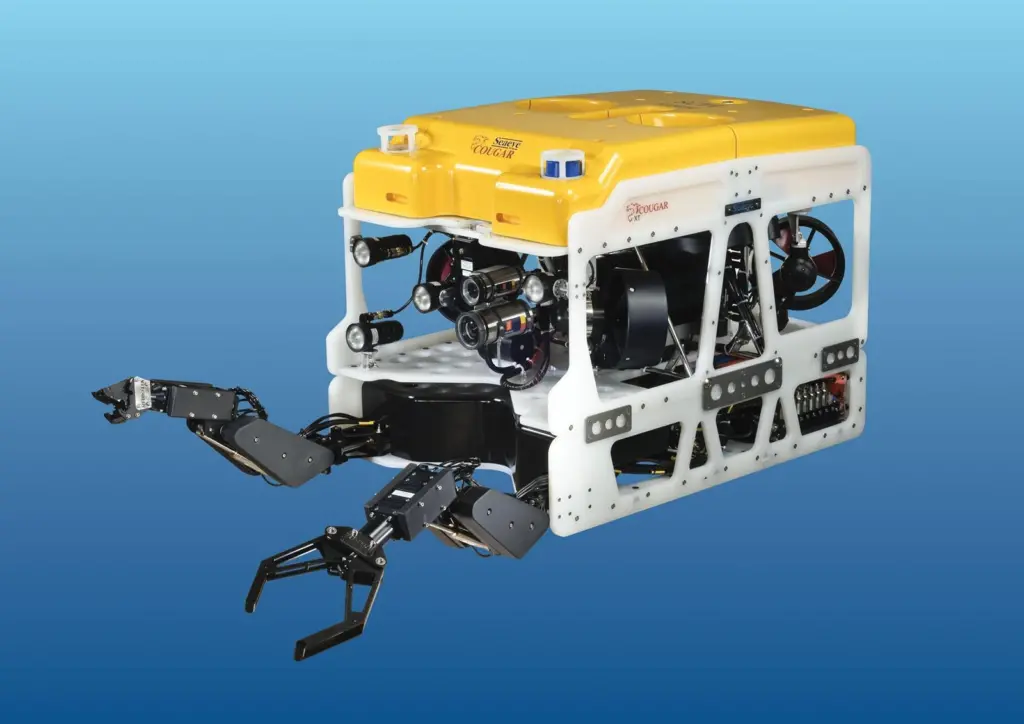
After a favourable experience operating the vehicle elsewhere, engineers of the State Oil Company of Azerbaijan (SOCAR) decided to deploy the Cougar XT in the Caspian Sea for their underwater applications.
The ROV will be used for diving and pipeline inspection current SOCAR projects, and for future seabed inspection as new pipes are laid. In addition to pipeline inspection and seabed survey, it will be used for a variety of tasks including the inspection and survey of vessels and platform legs.
SOCAR has taken a high specification version of the 2,000m rated Cougar XT with an upgraded video package, including two Kongsberg high definition mono low-light cameras, two Kongsberg colour zoom cameras, pan and tilt platform, and LED lighting. A suite of Tritech equipment including a Super SeaKing sonar with a dual frequency profiling sonar head, a side scan sonar and altimeter is also fitted, along with a Tritech bathy system.
The Cougar XT comes with two five-function heavy duty manipulators, a grabber jaw, camera boom adaptors for the manipulators with Seaeye colour camera fitted, a water jetting system, cleaning brush assembly, 4” hydraulic rotary disc cutter, 38mm anvil cutter, Cygnus ultrasonic thickness gauge, and CP probes. Three removable skids are supplied; a tooling skid, wheeled skid, and an AX ring skid with AX ring removal tool and additional buoyancy.
The ROV will be launched from a Saab Seaeye stainless steel tether management system fitted with a camera and upgraded MUXs. Deploying the Cougar will be a crane style launch and recovery system, supplied with a bullet/swivel assembly and lock latch assembly, together with an A60 Zone ll rated ROV control cabin.
SOCAR said they were attracted to the Cougar concept because it is technologically advanced with a proven and trusted track record. It also significantly extends the operational expectations of an electric work ROV into a wide range of light work tasks at a low cost, is easy to handle, needs fewer crew, can be mobilised quickly and has a reduced demand for deck space.
Related Articles
 OTHER NEWS
 MARINE CIVILS
 MARINE CIVILS