![MaritimeJournal[Seawork]](https://www.maritimejournal.com/wp-content/uploads/2026/09/MaritimeJournalSeawork.svg)


Dirty diving brings merciful results
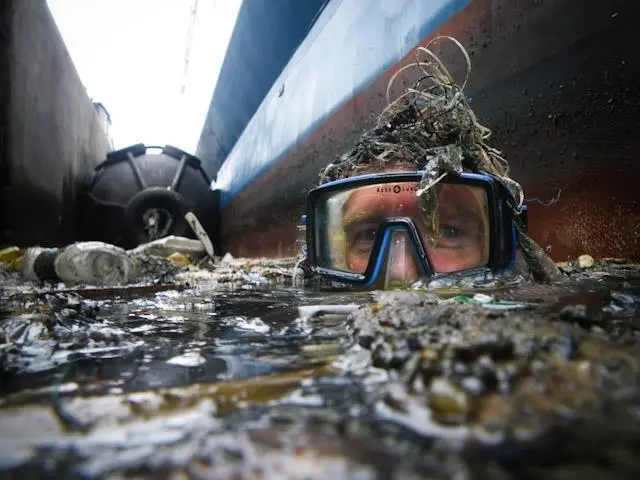
Divers volunteering on board the Africa Mercy, the world’s largest charity hospital ship, plunge into murky, polluted water every week to prevent obstructions from blocking the ship’s seawater intake valves.
The Africa Mercy has been converted from a Danish rail ferry to a modern self contained hospital ship, complete with operating theatres, X-ray and CT scanner and laboratory. There is capacity for 78 in-patients with four wards and a small intensive care unit as well as housing 450 volunteers.
The running and maintenance of the ship is essential for humanitarian work to continue. The Africa Mercy’s machinery is cooled by seawater pumped in via intake valves on the sides of the ship. Without a continuous intake of cool water, the generators that power the ship and the various facilities onboard, including the hospital, would all cease to function, preventing the life saving surgeries to take place.
The Dive Team currently consists of nine divers and Olly Peet is the dive team coordinator. At the beginning of each week, Olly contacts the various divers to find out who is available, as the divers all have other jobs that take priority on the ship.
Olly said, ‘The Dive Team must be quick to respond to clear the vents of any blockage. It can be an extremely strenuous process. Some days rubbish completely surrounds the floating hospital ship. Plastic bags and other refuse get sucked into the vents and restrict the flow of water into the valves. Within minutes, the air conditioning shuts down, and the entire ship is in danger of losing all power.
‘Diving is extremely dangerous, the water is usually so cloudy, and visibility is very poor, which sometimes makes it difficult to find the intake valves. The sewage discharged from the Africa Mercy is fairly sterile, but it’s the sewage from other ships in the port that is a problem.
‘The equipment quickly gets old and worn out and we are always on the look out for full face dive masks that would drastically decrease the health risks. The dive masks prevent us from getting any water in our noses, eyes, or mouths.’
Judy Polkinhorn of Mercy Ships UK added that without the divers the work could not continue, saying ‘We are very grateful to them for their commitme and praise their bravery for taking the plunge into the murky waters.’
The international charity has treated more than 230,000 people in village medical clinics, performed more than 41,000 surgeries, 205,000 dental treatments and completed over 1,000 community development projects focusing on water and sanitation, education, infrastructure development and agriculture.
Related Articles
 OTHER NEWS
 MARINE CIVILS
 MARINE CIVILS