![MaritimeJournal[Seawork]](https://www.maritimejournal.com/wp-content/uploads/2026/09/MaritimeJournalSeawork.svg)



Icelandic connection moves forward with Swedish support
Following an energy sharing scheme between Iceland and the UK first agreed in 2012, Atlantic Superconnection Corporation plans to build a 1000km cable between Iceland and the United Kingdom. Sweden’s MMT has recently begun the route survey contract it was awarded in June.
The scheme, once complete, will be the longest sub-sea interconnector in the world, bringing 1.2 GW of sustainable power to 2m British homes.
The ‘IceLink’ project is backed by Atlantic Superconnector’s CEO, veteran city financier Edi Truell. It has the potential to deliver reliable, clean, low-cost power at scale, and that makes economic sense to British energy consumers, British industry and the Treasury. The proposal could bring as much energy to Britain as the country’s most modern nuclear power station, without the burden of decommissioning and at a fraction of the cost.
In 2012 the UK government signed an MoU with Iceland on sharing energy. IceLink power could provide solid ‘baseload’ power and would be the foundation for intermittent solar and wind, quickly ramping up and down in response to fluctuations in their supply. Atlantic Superconnector says it would do so at a price that is comparable or better than other renewable sources.
HVDC technology is used in the Xiangjiaba- Shanghai power link in China, which delivers 6.4 GW of electricity over a distance of over 2000km and the world’s longest underwater cable, the 580km NorNed (Norway-Netherlands) interconnector. At 1000km, the IceLink would become the longest undersea HVDC cable in the world.
Sweden’s MMT will provide bathymetric and geophysical mapping along the entire route corridor, between Iceland to England.
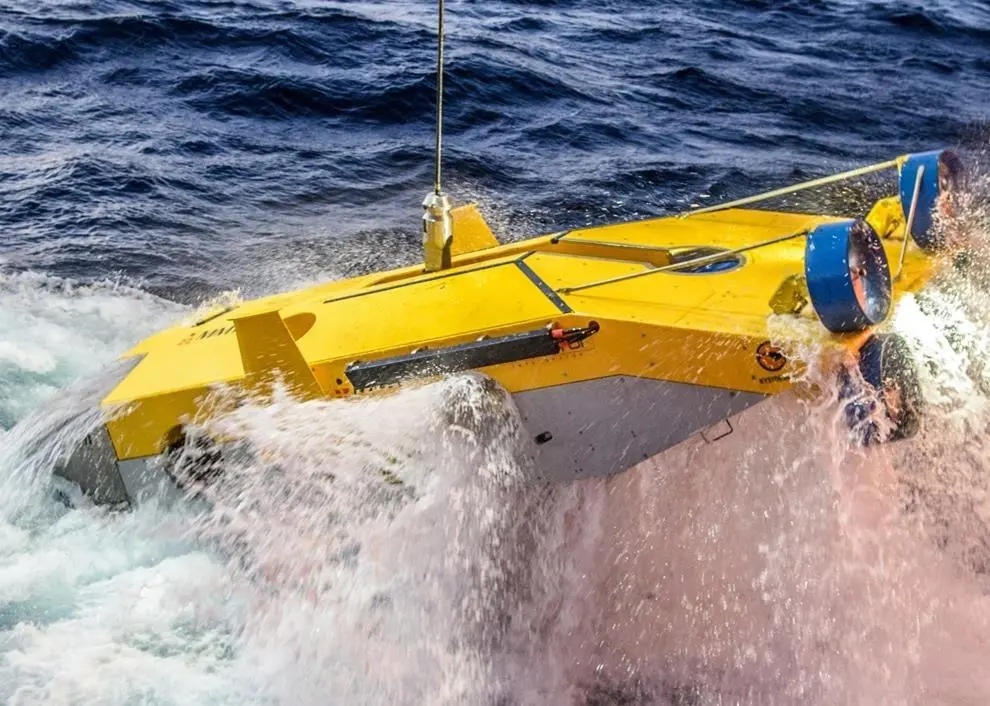
MMT and Reach Subsea have mobilized the Surveyor Interceptor ROV onboard Stril Explorer that will conduct the seabed survey on the deepest part of the route. MMT´s Survey and ROV vessel Franklin will continue the survey in the UK waters with a fully equipped ROTV.
The survey is taking place during two months this summer and the route is approximately 1470km long. The water depth and seabed conditions vary greatly along the route with maximum depths of approximately 1,100m. The survey is the first step in assessing the feasibility of a High Voltage Direct Current (HVDC) electrical Interconnector between the United Kingdom and Iceland.
MMT´s CEO Stefan Eliasson comments upon the contract award: “This is a very exciting project for us at MMT since we are taking the Surveyor Interceptor ROV out on its first HVDC route survey and in deep water. We are delighted for ASC´s confidence in our new mapping technology and can´t wait to be part of the early assessment of this historical project!”
By Jake Frith
Related Articles
 OTHER NEWS
 MARINE CIVILS
 MARINE CIVILS