![MaritimeJournal[Seawork]](https://www.maritimejournal.com/wp-content/uploads/2026/09/MaritimeJournalSeawork.svg)






New diver locator beacon from Mobilarm
Australian marine safety equipment manufacturer Mobilarm Limited is developing a new lightweight VHF locator beacon available for commercial, sports and professional divers around the world.
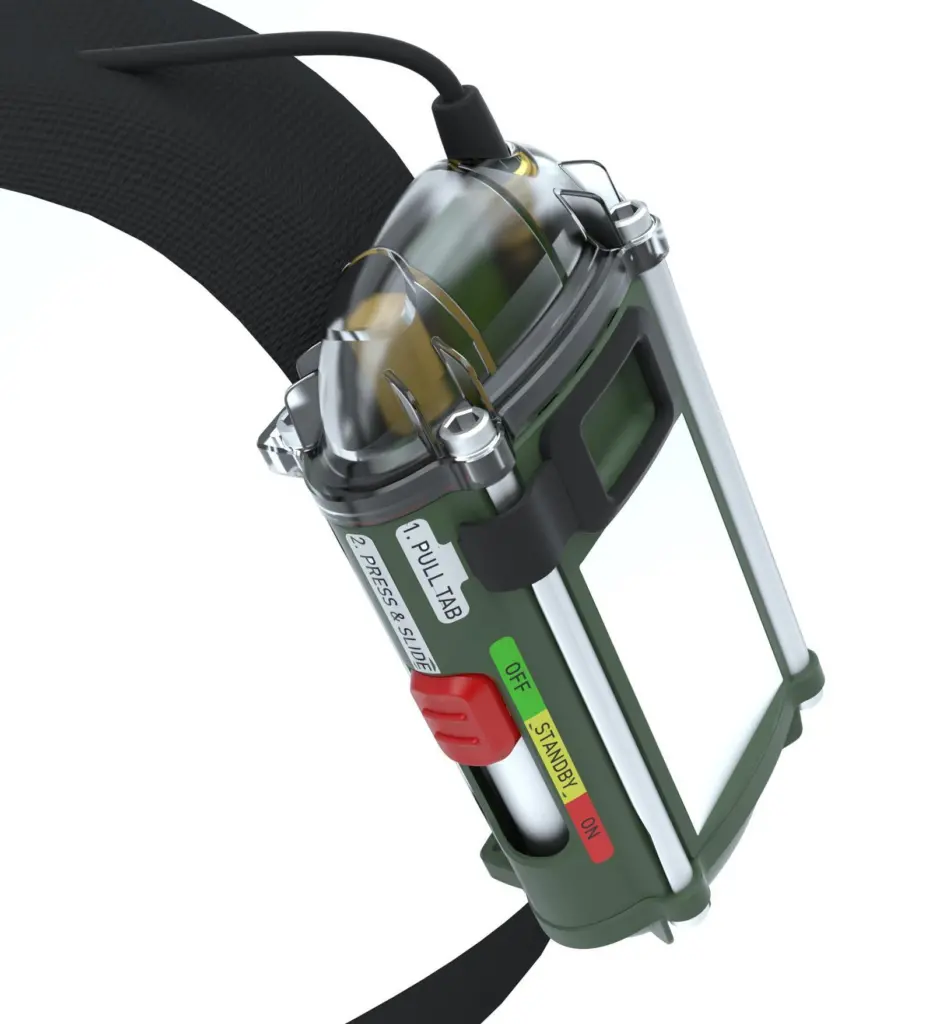
The global marine safety technology specialist will release a small, lightweight locator beacon for divers, based on the defence submarine escape and abandonment emergency locator beacon, the Mobilarm V200, which was designed under contract with the US Navy for submariner emergency escape use.
The new dive locator beacon, which Mobilarm expects to ship mid-2011, will be up to 50% smaller and lighter in comparison to the existing submariner beacon, making it suitable for both professional and recreational divers. The new dive locator beacon will enable above water GPS location and automatic distress alerting over VHF radio should divers find themselves stranded from their boat.
According to the Professional Association of Diving Instructors (PADI), scuba divers can be hard to spot in the water, even at relatively short distances from a boat or shore if conditions are rough. Signalling devices are important safety equipment that can help scuba divers be seen and heard if they need assistance.
‘The successful 2003 low budget movie Open Water is based on the true story of two scuba divers accidentally stranded by a commercial dive operator. The divers vanished, believed drowned, off the Great Barrier Reef in January 1998, said Lindsay Lyon, CEO at Mobilarm. ‘Regretfully, similar events have occurred around the world a lot more often than people know. The global requirement for a purpose built diver emergency locator beacon is significant.’
The Mobilarm V100 VHF locator beacon, from which the new submariner and dive versions are derived, is a versatile Maritime Survivor Locating Device. The pocket-sized unit is attached to clothing or integrated into lifejackets and will automatically activate when the wearer has gone overboard, sending out a Mayday message and real time GPS coordinates of the casualty’s current position via VHF Voice and DSC. In independent trials, Mobilarm’s VHF beacons have outperformed existing technology with their ability to help rescue teams locate and track people in the water and plan their rescue more effectively.
Related Articles
 OTHER NEWS
 MARINE CIVILS
 MARINE CIVILS