![MaritimeJournal[Seawork]](https://www.maritimejournal.com/wp-content/uploads/2026/09/MaritimeJournalSeawork.svg)


Rapid response propeller repair
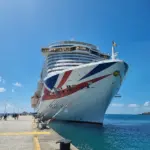
After a 293m cruise ship started experiencing problems with its rudder recently, its owners asked Hydrex to perform a detailed underwater inspection during the ship’ s stay in the Azores and to design a plan for any possible underwater repairs.
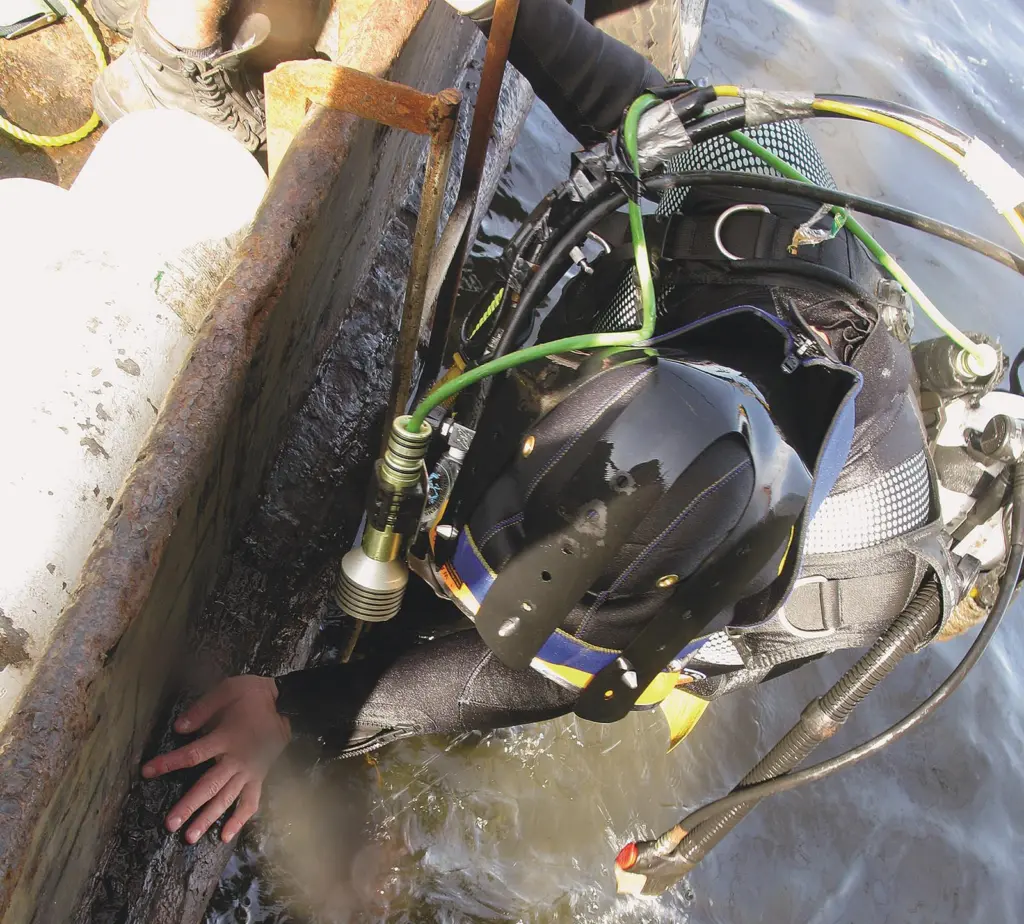
At the same time it was also requested to arrange for the replacement of a propeller blade that had been damaged and repaired earlier but was still causing speed loss.
An inspection team was mobilised from Antwerp to the Azores where they met up with the ship’s crew and a representative of the rudder manufacturer to discuss the possibilities of performing a repair immediately after the inspection was carried out.
The survey revealed that the lower pintle of the hinged flap rudder was missing, which caused the bottom of the flap to shift out of its normal position, thereby blocking the mechanism. Luckily the hinges had not come apart completely, which would have meant that the entire flap would have inevitably detached itself from the rudder.
In cooperation with the manufacturer it was decided to have a new pintle made with a conic top to make sure that the rudder and the flap would align themselves automatically during the insertion of the pintle insofar as this would still be necessary.
The damaged blade and the remainder of the propeller were also thoroughly inspected to make a full assessment of the scope of the replacement. It was decided to perform both repairs during the vessel’s next scheduled stop in Kiel, Germany.
The first part of the pintle repair consisted of the re-alignment of the rudder and the flap. This was done transversally with a hydraulic jack and longitudinally with chain blocks. Next the diving team inserted the new pintle and stopper plate.
In the meantime another team started the blade replacement on the fixed pitch build up propeller by extracting the bolts and removing the damaged blade. The new blade was then positioned and specially designed bolts were used to secure it. These bolts were designed in cooperation with Aegir Marine Propulsion Systems. After the bolts were put on torque, they were secured with wire. This re-established the propeller’s optimal performance.
Related Articles
 OTHER NEWS
 MARINE CIVILS
 MARINE CIVILS