![MaritimeJournal[Seawork]](https://www.maritimejournal.com/wp-content/uploads/2026/09/MaritimeJournalSeawork.svg)


Raymarine backs global seabed mapping drive
Raymarine has joined forces with the Seabed 2030 project to advance seabed mapping and support safer vessel navigation across global subsea operations.
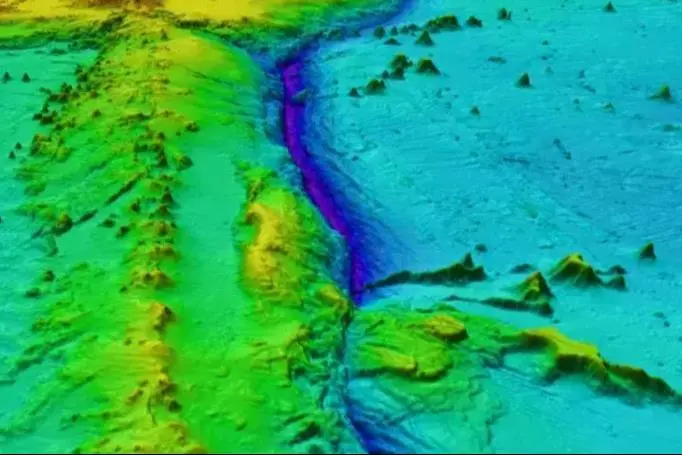
The collaboration between Raymarine and The Nippon Foundation–GEBCO Seabed 2030 Project was announced at the Ocean Floor Explore symposium.
“We’re proud to support Seabed 2030 in its mission to accelerate the complete mapping of the world’s oceans,” said Grégoire Outters, general manager at Raymarine.
“This collaboration reflects our commitment to safer navigation, better science and a more sustainable future for the maritime industry.”
Bathymetric data
As part of the partnership, Raymarine will share crowdsourced bathymetric data gathered from thousands of vessels equipped with its sonar systems.
This unique dataset will enhance seabed mapping resolution in under-surveyed regions, strengthening the knowledge base for subsea operations, marine conservation and climate modeling.
Jamie McMichael-Phillips, director of the Seabed 2030 Project, said Raymarine’s data contribution demonstrates how technology partnerships can accelerate global understanding of the ocean floor.
Through collaborations like this, the project aims to enhance vessel navigation, ocean sciences and sustainable subsea operations worldwide.
Seabed 2030 aims to map 100% of the world’s ocean floor by 2030, promoting innovation in ocean sciences and sustainable maritime activity.
The project, supported by The Nippon Foundation and the General Bathymetric Chart of the Oceans (GEBCO), is officially endorsed by the United Nations Decade of Ocean Science for Sustainable Development.
Currently, only 27.3% of the ocean floor has been mapped to modern standards.
Related Articles
 OTHER NEWS
 MARINE CIVILS
 MARINE CIVILS