![MaritimeJournal[Seawork]](https://www.maritimejournal.com/wp-content/uploads/2026/09/MaritimeJournalSeawork.svg)


Bomb-laden WWII wreck to have masts removed after 82 years
Marine salvage firm Resolve Marine will begin one of the UK’s most sensitive wreck salvage projects in September when it starts removing three masts that have become an iconic sight for residents on the Thames Estuary.
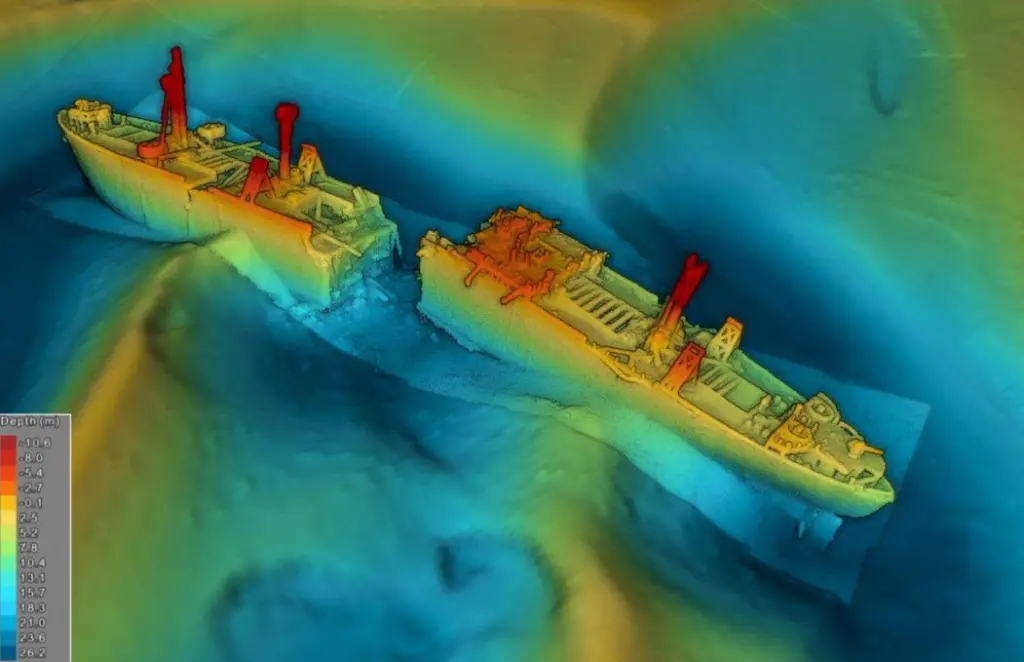
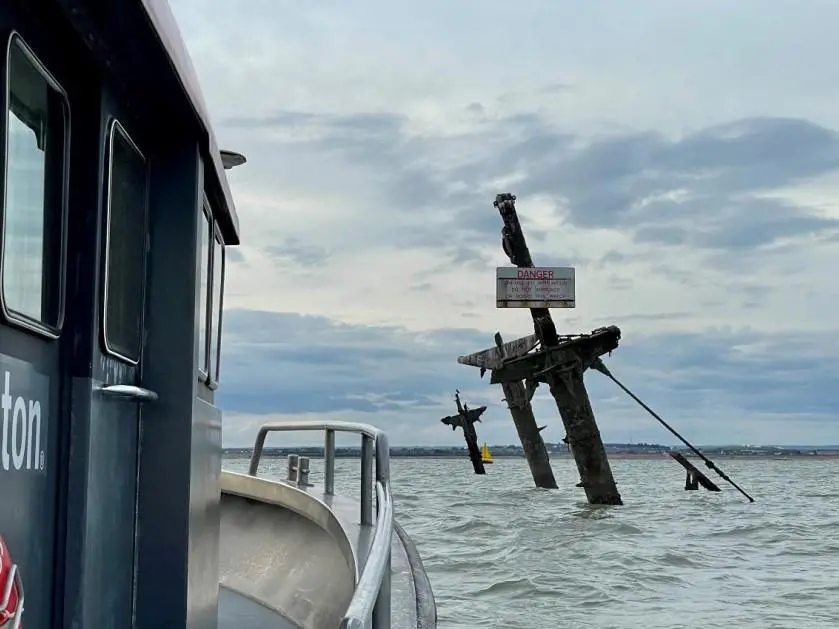
The World War II Liberty ship SS Richard Montgomery has lain on the seabed on the eastern end of the Nore Sandbank in the Thames Estuary, about 1.5 miles north of Sheerness, Kent, where it has remained since grounding in August 1944.
It still contains an estimated 1,400 tonnes of wartime explosives, but they are not considered the main problem: the decision to remove the masts has been driven by concern that the weathered steel structures could eventually collapse onto the deteriorating wreck.
Years of hydrographic surveys and risk assessments have been carried out and analysts now believe the masts can be safely removed under controlled conditions.
The operation, which was announced by the UK Government on 14 July, will need specialists to build an underwater working platform before they cut the masts, below sea level, over several weeks.
Resolve Marine will undertake the operation under continuous oversight and in accordance with strict safety procedures. Detailed planning has also been carried out with harbour authorities, emergency services and other stakeholders to minimise disruption while maintaining the existing exclusion zone around the wreck. Mariners will be advised of any temporary navigation arrangements through the normal navigational channels.
“Resolve Marine is pleased to take part in this project and support the UK Government on the SS Richard Montgomery,” said Nolan Conway, Project Manager at Resolve Marine. “Drawing on our extensive experience in complex marine operations, we are committed to executing this work safely, efficiently and in close collaboration with all stakeholders.
“This historic project represents a significant milestone in the ongoing management of one of the United Kingdom’s most closely monitored wreck sites.”
Operation begins
The £9.5 million (€11.1 million) government-funded project marks the first major physical intervention on the wreck for many years and site preparations are due to begin later his month, with the main engineering works scheduled to start in early September.
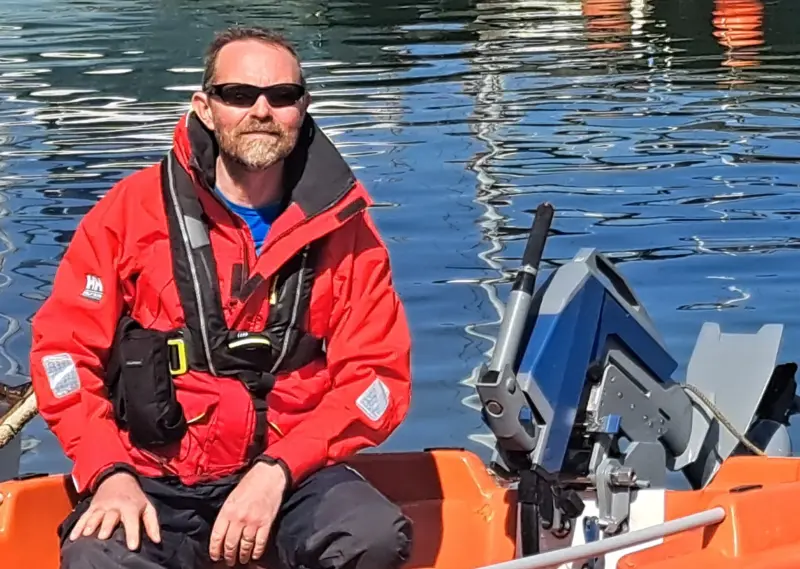
Robin Rickard, Managing Director of explosive ordnance specialist Exord and the Department for Transport’s strategic explosives ordnance adviser for the project, said: “Through extensive technical assessment, survey work and risk analysis, we have helped develop an approach that enables these important works to be undertaken safely and in line with recognised industry best practice.
“The removal of the masts represents a significant milestone in the long-term management of the wreck. We will continue to provide specialist support throughout the operation to ensure risks from explosive ordnance are managed appropriately and the works can be delivered safely.”
The masts, which have protruded above the surface of the Thames Estuary for more than eight decades, will be transported to The Historic Dockyard Chatham for conservation before eventually going on public display.
The SS Richard Montgomery had sailed safely across the Atlantic carrying around 7,000 tonnes of munitions bound for the Allied war effort before grounding less than two miles from the Kent coast.
Salvage teams succeeded in removing around half of the cargo before the vessel flooded completely and the operation was abandoned, leaving an estimated 1,400 tonnes of explosives in the forward holds.
The wreck, designated under the Protection of Wrecks Act 1973, remains one of the UK’s most closely monitored maritime hazards. A permanent exclusion zone surrounds the site, while Medway Ports operates continuous radar surveillance under contract to the Maritime and Coastguard Agency. Regular surveys have been undertaken for decades using Ministry of Defence divers, multibeam sonar, laser scanning and ultrasonic hull thickness measurements to monitor the vessel’s structural condition and the surrounding seabed.
Recent hydrographic surveys indicate that while the wreck remains stable overall, localised seabed erosion continues around parts of the vessel. The latest monitoring found seabed changes of up to approximately two metres adjacent to the forward section, while the continued increase in the tilt of the bow reinforces the need for ongoing surveillance.
Despite long-standing public concern over the remaining explosives, successive government surveys have concluded that the wreck remains stable.
Related Articles
 OTHER NEWS
 ACCESSORIES & EQUIPMENT
 SPECIAL REPORTS