![MaritimeJournal[Seawork]](https://www.maritimejournal.com/wp-content/uploads/2026/09/MaritimeJournalSeawork.svg)




Offshore USVs – the better, safer option?
The use of Unmanned Surface Vessels (USVs) for survey work has rocketed, and for good reason.
As Frank Relou of Sea Machines says, stricter survey tracks means fewer runs back and forward to cover gaps in data, and the combination of “accuracy and boredom” isn’t a good combination for human crew. This issue only grows with distance from harbour.
It matters, because according to CEO Trond Crantz of Argeo, investment in the offshore energy sector is growing at a massive rate; and as James Cowles of L3 Harris says, commercial customers are saying that right now, offshore wind is the place to be.
When Kristoffer Fortun of Maritime Robotics says he has seen rising demand for unmanned missions “that reach further, deeper into the blue”, he’s talking about a substantial driver.
More payload needs bigger vessels
With this comes a demand for even clearer, more detailed images, requiring larger, higher-spec sensors and enough energy for longer-range operations: but also more bulk to carry it all, he points out.
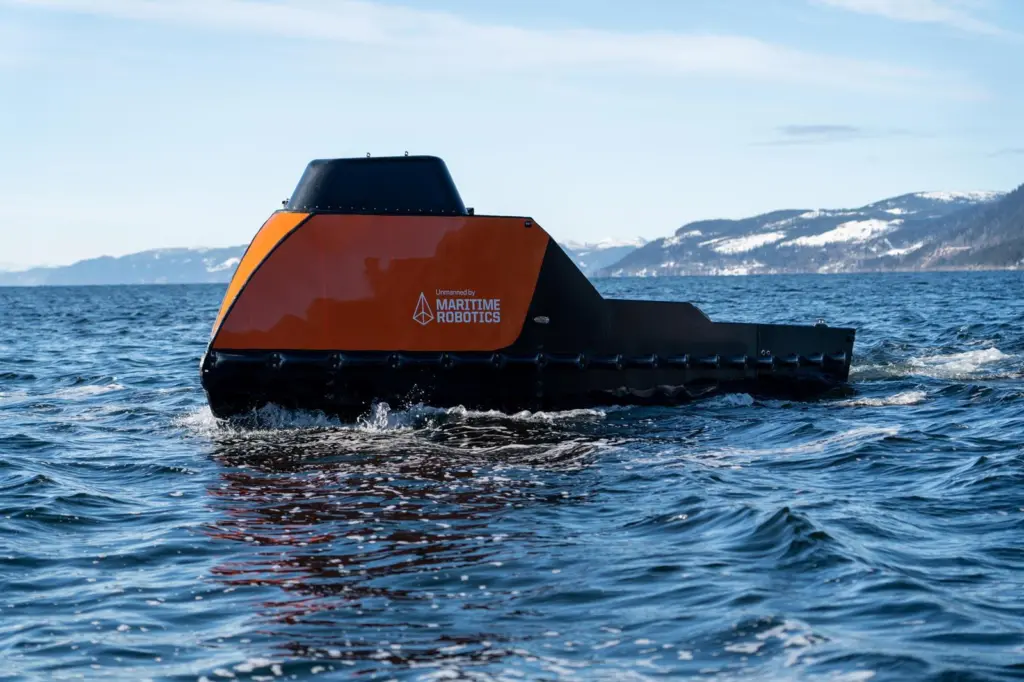
For example, to support Argeo’s offshore inspection and mapping services, Maritime Robotics had to move from its established 2m, nearshore unmanned survey craft to a 9m, 25-day-endurance USV.
The purpose-built Mariner X is a monohull rather than a multihull, with lines reminiscent of a miniature PSV (Platform Supply Vessel), including a low-drag inverted bow designed to slough through the water.
That’s a direct Oil & Gas crossover, admits Fortun, and says there’s another service vessel addition: it’s fitted with a Seakeeper gyro stabiliser to mitigate the pitch-and-roll motion of steeper seas.
The response by L3 Harris is arguably even more dramatic – at least where size is concerned.
“We’re expanding very much out of our traditional 4 to 8m market and starting to move into the 15m and 24m space,” says Cowles.
In fact, the company’s 15m USV – which should enter build this year – will potentially have more than 2,000nm endurance, be able to reach the next generation of wind farms 100 or 150 miles offshore and then continue “ploughing up and down for days and days on end, sucking up data”, he says.
It will have a smaller towed platform (of users’ choice) hitching a ride: automatically launched and recovered from the stern, and this will help keep the sensor data as clean as possible.
Remote and autonomy
There is, however, another issue that goes hand in hand with larger, completely unmanned designs. As Fortun says, while a collision with a small survey USV tends not to be critical “if you’re doing 12 knots with 7 tonnes, you have some damage potential”.
Managing this requires another look at the ‘remote vs autonomy’ question.
Relou says shorter-range remote surveys can use cost-effective 4G and 5G systems, but for missions further away from shore, most customers rely on satellite links “which we have packaged to use a really limited bandwidth”.
However, there’s still unavoidable delay in these signals: he added the inherent latency means that if you need to communicate back and forth to manage a potential incident, “then you’re already probably too late”.
As a result, onboard edge computing is becoming more relevant to COLREGS compliance.
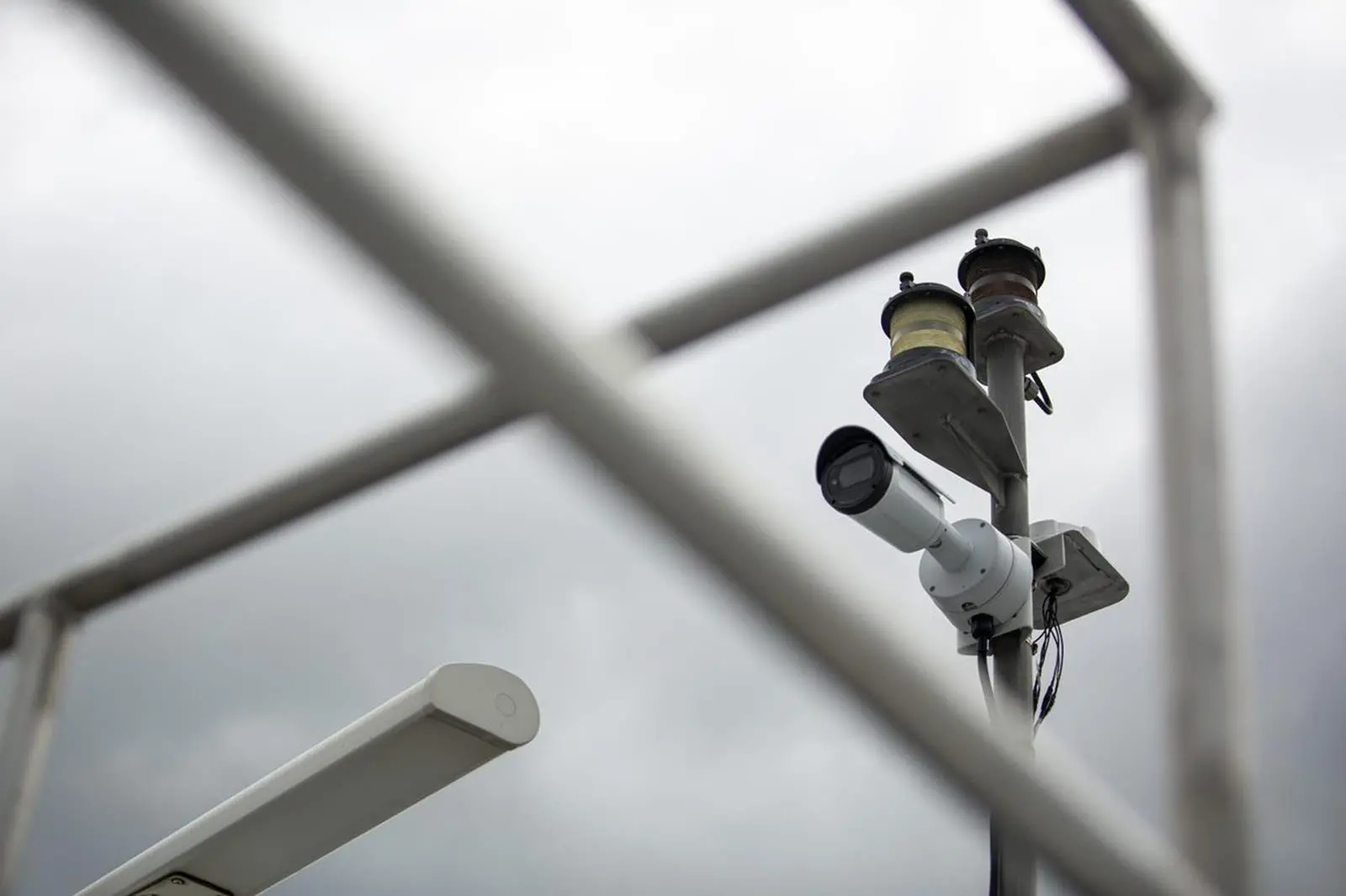
For example, Relou says the Sea Machines system lets the autonomous command and control system make all decisions, such as collision avoidance manoeuvres, adding that recently developed ‘computer vision’ adds another dimension, replicating (as far as possible), the human eye and brain.
While basic fall-back procedures can be built into these systems – such as simply stopping –responses can be somewhat more complex and require juggling different priorities: for example, avoiding an oncoming vessel when there’s a grounding risk, says Nigel Lee of Robosys.
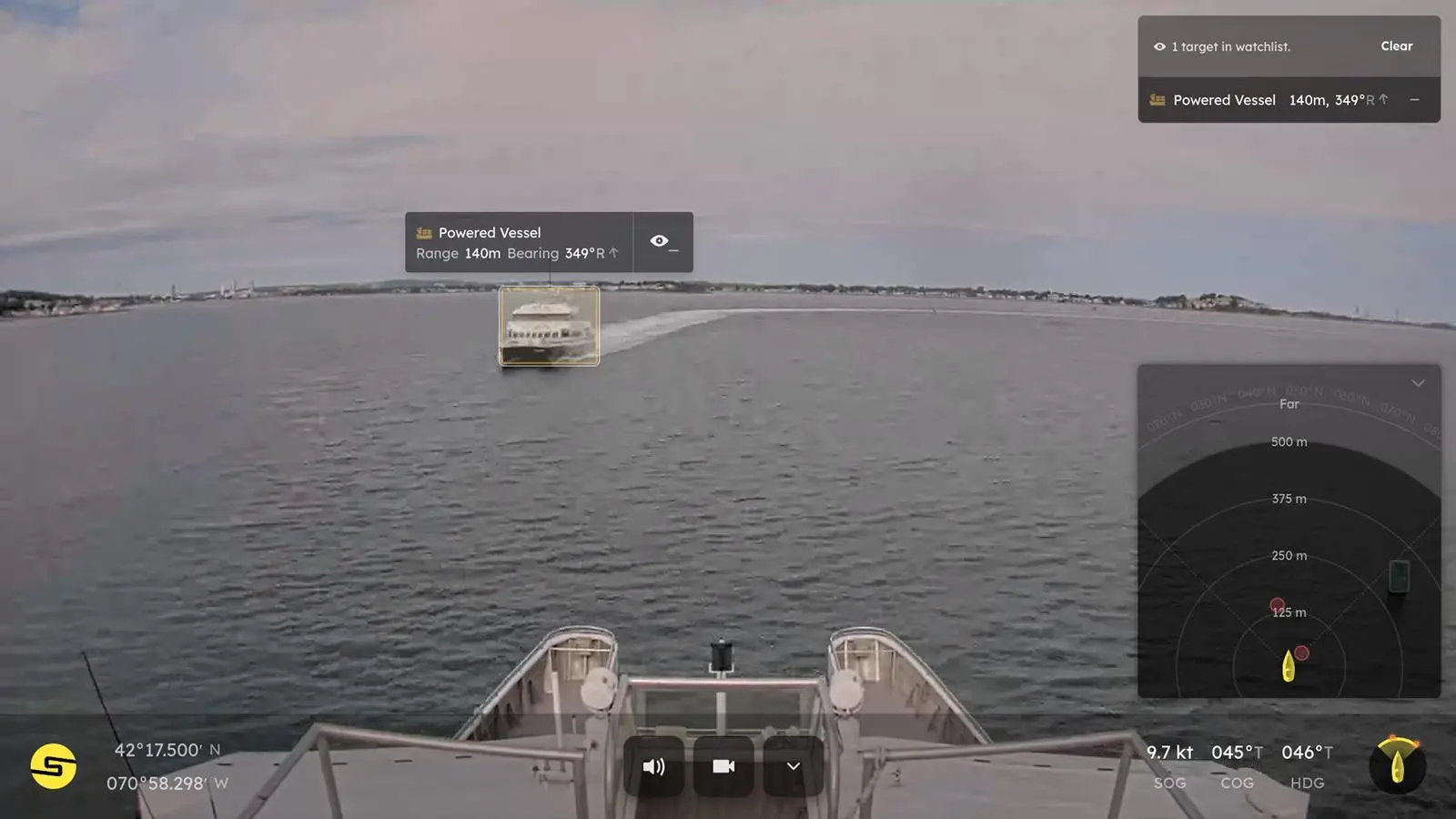
“You really should know whether what’s out there is a fishing boat, a yacht under sail or a power-driven vessel,” he says.
While AIS can provide some identification, if that’s missing, the USV should still recognise the other’s capabilities and manoeuvre accordingly, he says.
All this is pushing the development of integrated ‘perception’ systems capable of differentiating between various vessels (as well as navigational aids, man-made structures and marine detritus) from high-res camera images as well as other input. But those systems need a lot of data sets and training, requiring resources and time.
Not everyone entirely agrees with this ‘recognition’ requirement. While L3 Harris has put a lot of work into machine vision and learning to yield safe navigational autonomy, Cowles makes the point that if you get close enough to the other vessel for recognition to be an issue, whether it’s a sailing boat or a power boat, you’ve got too close.
Togetherness
It will take a while for both trust – and rules – to become fully established, says Lee.
Relou concurs, and says the main business for Sea Machines is largely centred on workboat retrofits.
“The majority of these are still minimum-manned rather than completely autonomous,” he says.
So, many look toward using autonomous systems in a supporting role. For example, a large US National Oceanic and Atmospheric Administration contract saw Sea Machines technology onboard a 9m workboat: deployed alongside a crewed mothership, it neatly demonstrated it could deal with variable shallows, obstructions and unpredictable seas.While this approach doesn’t yield the fuel or CO2 savings accruing to a fully unmanned mission, the USV still significantly increased the operator’s on-water productivity, roughly doubling its coverage.
Indeed, Cowles underlined that using USVs as “force multipliers” remains a key consideration for L3 Harris, and explained that while both the 15m platform and its bigger sister can work completely unmanned, the 24m USV will retain some provision for crew, partly to meet particular demands, and pragmatically, to carry out repairs at sea.
This larger boat has a rather different remit as it will host the kind of work-class ROVs normally seen on a 60m-plus platform supply vessel: capable of offshore inspection, repair and maintenance (IRM) missions, it stands to deliver “massive efficiencies”, said Cowles.
However, unlike smaller USVs, which have been successfully designed for energy storage, L3 Harris’ larger platforms will rely on combustion engines.
In fact, the onboard power demand has particular relevance for all concerned in this arena: Fortun admitted that even if Maritime Robotics’ Mariner X had a battery and was plastered with solar panels, it couldn’t complete its three-and-a-half week, 4-knot missions: as a result, it’s also diesel-driven “as at this point, we cannot go fully electric”.
Still, Fortun stressed that this USV is a replacement for a fully crewed survey vessel going from 12m3 of fuel a day down to less than 100 litres, which yields a 95% drop in CO2.
Like Relou, Cowles recognises the discomfort and boredom inherent in most missions.
“People reach a certain age and say, ‘I don’t want to be sat on a boat for 30 days… I want to go home to a cooked meal’,” he says.
“Autonomy’s here,” says Cowles. “It’s proven, it’s ready. It’s going to save time – and be safer”.
AUVs
It’s a very different arena, but there is also a growing demand for extremely clever unmanned underwater vessels, according to Stene Førsund of Kongsberg Discovery.
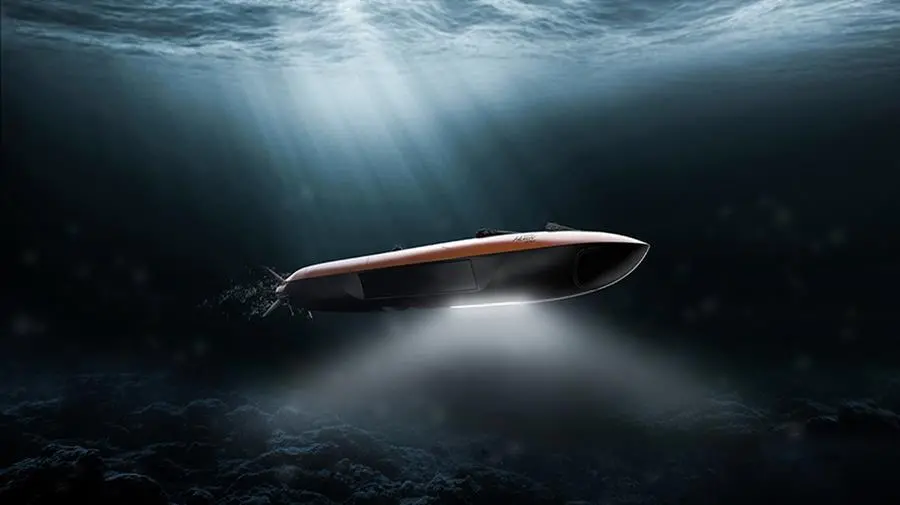
For example, Kongsberg’s 4m Hugin Edge has enough onboard intelligence to lift the requirement for detailed, specialist knowledge about the machine itself: the AUV can be left to calculate waypoints, operational parameters and sensor configuration given objectives such as sounding density and so forth. This gives its operators the freedom to move to ‘goal-based’ planning rather than get caught up by the nuts and bolts of the mission.
Førsund says useful decisions can be made autonomously, as this allows updating plans on the hoof. The Edge AUV is “pretty smart”, he said: “If it sees an object of interest it can come back for a detailed inspection, take pictures and so on.”
It might seem that the drive towards better onboard intelligence applies as much to craft under the water.
“While you can carry out some tasks remotely, what we’re really seeing is that the capacity [to respond to new information] should be built into the autonomy,” Førsund says.