


Securitas and Stena Line
Port security is a hot topic in the mainstream news, with stories of thousands of immigrants trying to enter Europe daily and the ever worsening security situation with regard to terrorist threats. These situations are, of course, the extreme, but what about the more general, day-to-day challenges faced by security officers who work on the ports? Maritime Journal spoke to Securitas which provides security across all Stena Line’s European ports, including Holyhead, Loch Ryan, Fishguard, Belfast and, more recently, Birkenhead in the UK.
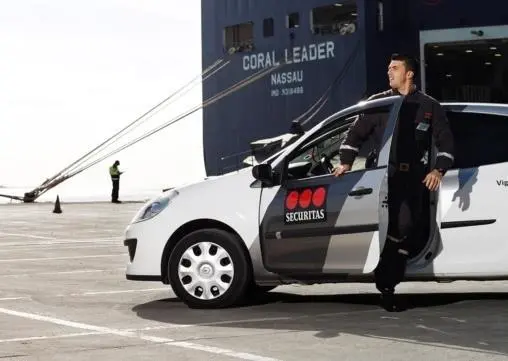
Stena Line transports 14.6 million foot passengers, three million cars and over two million freight vehicles per year. Since 1998, Securitas has provided services for Stena Line including screening of passengers and cargo, port patrols and alarm monitoring, as well as general guarding in the terminals.
In Holyhead and Gothenburg, Securitas and Stena Line have developed two security centres, equipped with state-of-the-art technology, to monitor security across Europe. CCTV, access control and other technical surveillance systems are connected to these centres. Any security alert from a port or ship, wherever it may be in Europe, is delivered into these centres and the necessary action is then put into place.
Ron Lea, Port and Maritime Services Manager at Securitas, explained the challenges the security officers face on a daily basis.
“One of the main challenges is keeping passengers happy… Some really appreciate the security process they have to go through prior to boarding but it can be difficult to manage the expectations of boarding passengers. However, it is imperative that procedures are followed implicitly to ensure compliance of legislation, whilst maintaining both the security and safety of passengers. Worldwide Maritime Legislation is adopted differently from country to country and our officers are trained to carry out procedures accordingly.
“Being constantly aware that the ‘ship is about to sail’ can cause conflict for officers between knowing what procedures should be followed and pressure from passengers to get them through security at speed. Boarding is really all the passenger cares about and the security process, even in today’s environment, is often thought to be unnecessary.
“Maintaining the right gender mix of officers is also a challenge. All search processes have to have a minimum of one male and one female officer present at all times. Sounds easy but, in the event of sickness, for example, our off duty officers need to be flexible to cover shifts or this can result in major delays.
“Searches sometimes, of course, result in the discovery of prohibited articles or even items that are classified as dangerous goods. Whilst not on the scale of the problems at Calais, there are also occasions where a certain number of tickets have been booked and then a greater number of passengers arrive hidden in various places within the vehicles.”
By Jake Frith