



Second Ukrainian arrested for 2022 Nord Stream pipeline attack
A second arrest has been made in connection with the 2022 Nord Stream gas pipelines sabotage, German prosecutors have said.
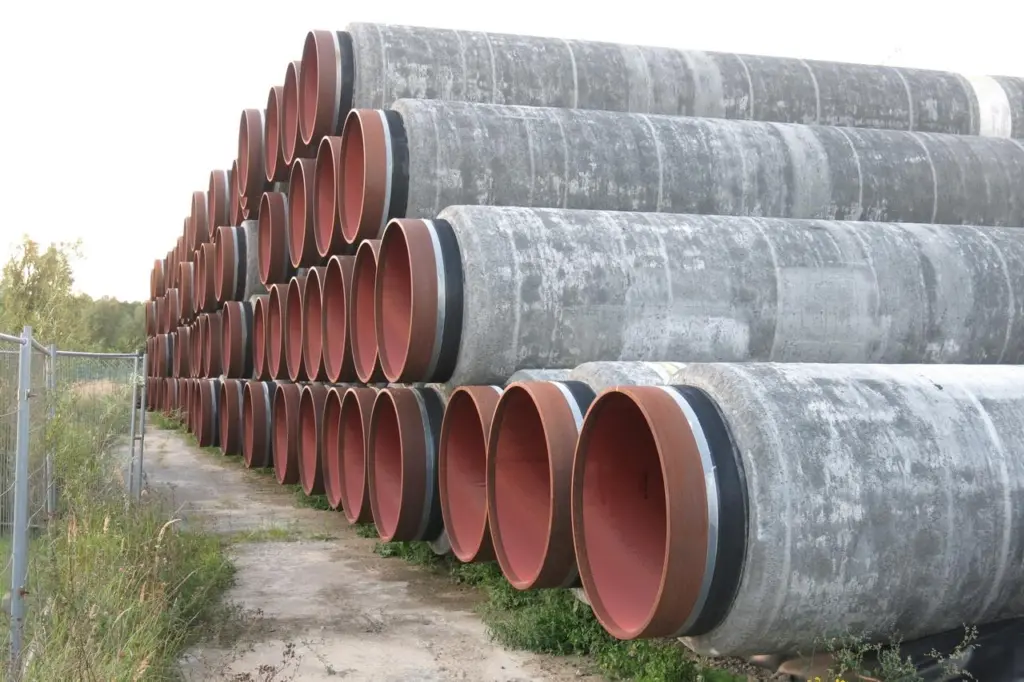
A second arrest has been made in connection with the 2022 Nord Stream gas pipelines sabotage, German prosecutors have said.
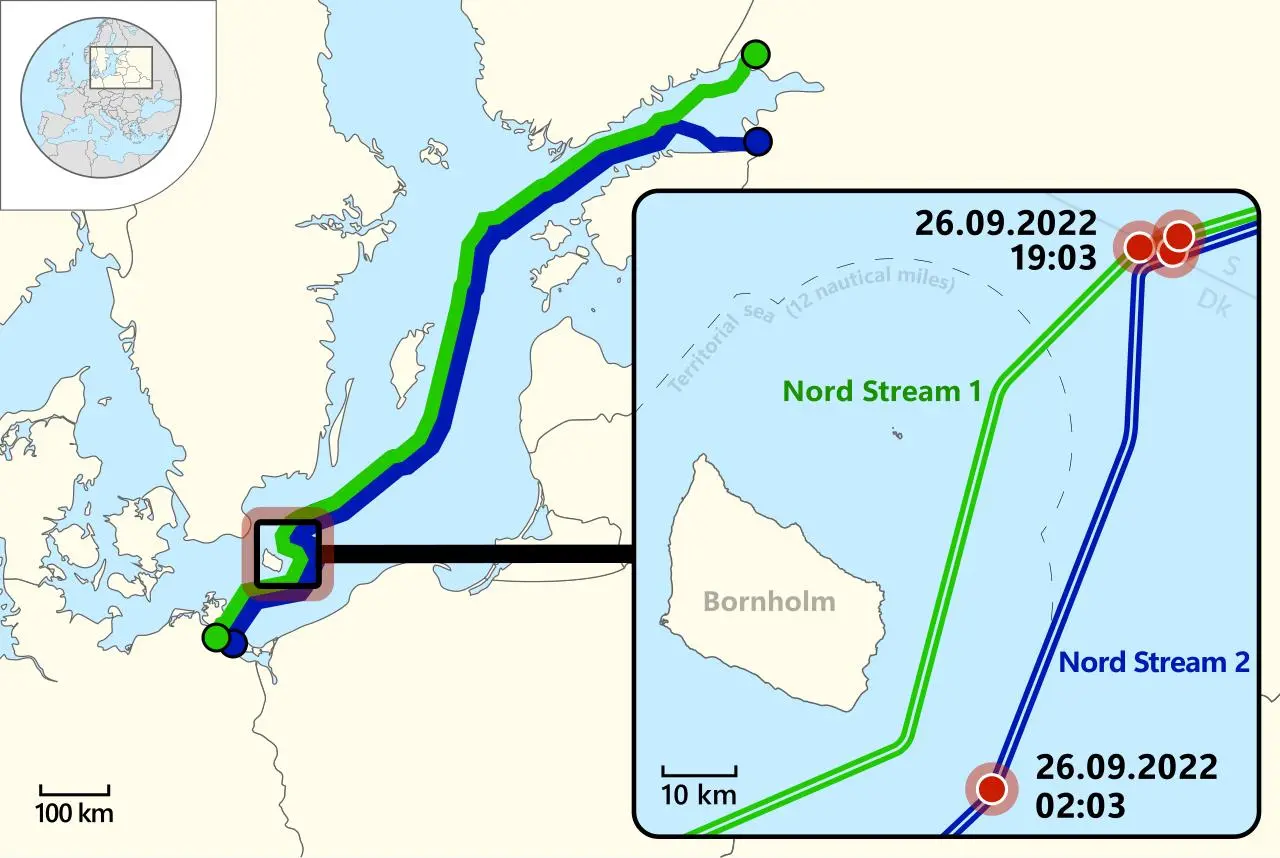
Germany’s Office of the Federal Prosecutor (Generalbundesanwalt beim Bundesgerichtshof) says it has arrested a Ukrainian national on suspicion of ‘jointly causing explosions, anti-constitutional and destruction of buildings and structures’ to three of the four Nord Stream 1 and 2 pipeline strings in the Baltic Sea near the Danish island of Bornholm.
The pipelines were rendered inoperable, severing infrastructure designed to carry Russian gas to Germany. An estimated 443,000–486,000 tonnes of methane escaped, making the incident a major environmental release as well as a significant attack on critical European energy infrastructure, according to the scientific journal Nature.
Nord Stream 1 had been used to transport approximately half of Germany’s annual natural gas demand for energy production.
The arrested individual has been named by prosecutors as ‘Vladimir Z’, and was arrested in Pula, Croatia, by local police.
“Vladimir Z is a trained scuba diver,” the prosecutors said. “The suspect participated in the necessary dives. To this end, he and his co-perpetrators departed from Rostock on board a sailing yacht. Intermediaries had previously rented the yacht from a German company with falsified IDs.”
First arrest
On June 30, 2026, the office filed an indictment against another Ukrainian national, named ‘Serhii K’, claiming to have ‘sufficient grounds’ for suspecting he was also involved.
He had been arrested by Italian police in Rimini on 21 August last year.
“The objective of the operation was to permanently disrupt gas supplies through the pipelines and prevent Russia from using the revenue from natural gas trade to finance its war effort,” the prosecutors said. “To carry out the plan, a group comprising several professional divers, a skipper and an explosives expert was formed under the leadership of the accused.
“On 4 September 2022, Serhii K. entered Germany via Poland using a forged Ukrainian passport. He then boarded a sailing yacht suitable for the open sea, with the other members of the group. The yacht had previously been chartered from a German company in Rostock by intermediates using fake IDs.
“The accused and his accomplices transported large quantities of high-performance, military-grade explosives through international waters to a location near the Danish island of Bornholm, where the pipelines run along the seabed.
“Until 22 September 2022, the group led by Serhii K. placed various explosive devices fitted with time fuses on the pipelines. The explosive devices detonated on 26 September 2022, causing severe damage to both pipelines.”
Subsea surveillance and protection
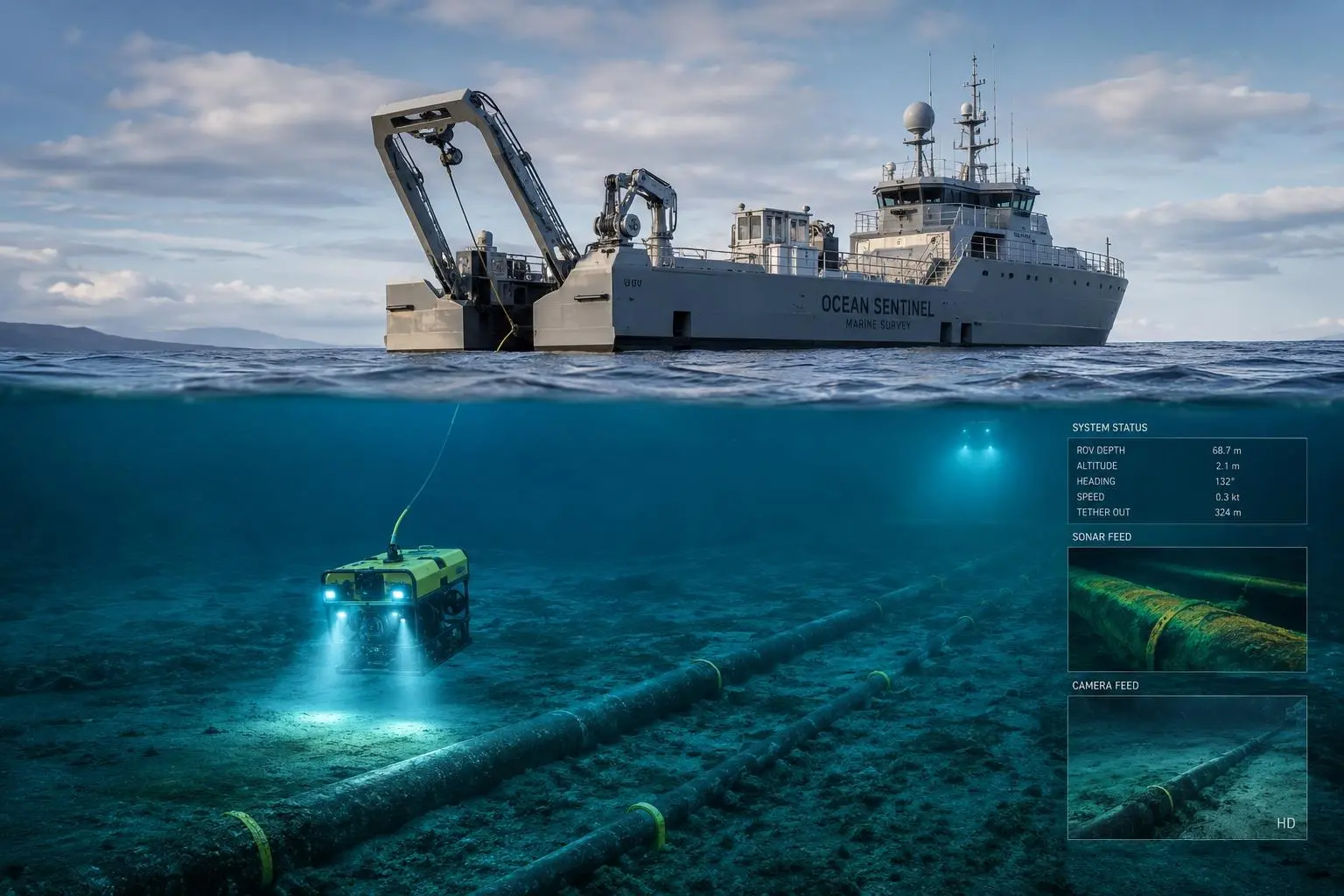
Subsea infrastructure protection has risen up the security agenda of allies in Europe, who have called for regional defences.
NATO has strengthened surveillance and coordination of critical undersea infrastructure through initiatives including Baltic Sentry and its undersea-infrastructure coordination structures. The EU is implementing a 2026 Cable Security Toolbox, combining risk mapping, monitoring, resilience measures and investment in cable-repair capacity. Together, the measures aim to improve detection, deterrence and rapid recovery.
The North Sea cooperation framework brings Belgium, Denmark, Germany, the Netherlands, Norway and the UK together to share information, assess vulnerabilities and strengthen protection of critical subsea infrastructure.
Europe has seen a cluster of suspected sabotage and unexplained damage to subsea infrastructure, particularly in the Baltic. In October 2023, the Newnew Polar Bear damaged the Baltic connector gas pipeline and telecom cables between Finland and Estonia. In November 2024, the C-Lion1 Finland-Germany cable and BCS East-West Sweden-Lithuania cable were severed.
In December 2024, the Eagle S damaged Estlink 2 and four telecom cables. Further cable damage was reported in January 2025 and December 2025, although investigations have not established sabotage in every case.