



A research team from the One Ocean Foundation has successfully completed a groundbreaking deep-sea expedition in the Caprera Canyon off northeastern Sardinia, reaching depths exceeding 1,000 metres.
Using advanced ROV technology, the team documented exceptional benthic biodiversity and gathered vital ecological data.
Led by University of Insubria researcher Ginevra Boldrocchi the expedition involved collaboration with marine zoologist Francesco Enrichetti from the University of Genoa and engineer Guido Gay, founder of Fondazione Azionemare.
The ROV missions uncovered unique communities, including protected black corals and gorgonian forests, alongside complex geological formations.
“Our findings reveal the extraordinary richness of life in these deep waters, which remain vulnerable to human impacts such as abandoned fishing gear,” said Boldrocchi.
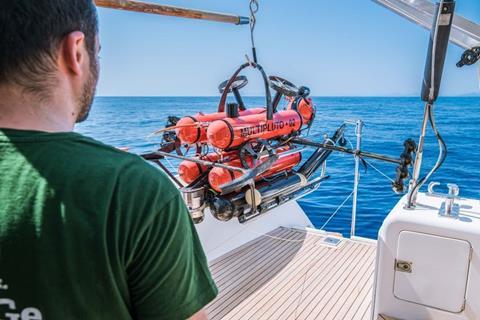
The remotely operated vehicles, Multipluto and Pluto Palla, engineered by Gay, are compact, battery-powered ROVs designed for ultra-deep exploration.
Multipluto, capable of diving to 4,000 metres and weighing only 60kg, captured more than 11 hours of footage documenting coral habitats entangled with fishing gear even at great depths.
“These ROVs offer a cost-effective, highly manoeuvrable way to explore fragile marine ecosystems without heavy infrastructure,” said Gay.
This project is part of Rolex’s Perpetual Planet Initiative and recognised by Mission Blue as a ‘hope spot’. One Ocean Foundation aims to establish a fisheries restricted area in the Caprera Canyon and designate it a marine protected area by 2030.
“Our work provides crucial scientific evidence to support conservation policies aligned with Italy’s National Biodiversity Strategy 2030,” said Boldrocchi.